
Bookkeeping and tax support play a major role in helping legal firms maintain strong financial records. Law firms handle many financial tasks each day, such as client billing, trust account tracking, payroll, tax filings, and expense management.
Even a small mistake in records can create reporting issues and compliance risks. Strong financial records help firms make better business decisions and maintain client trust.
Law firms must follow strict professional and ethical guidelines to ensure proper management of client funds and accurate financial recordkeeping. Careful tax bookkeeping methods can help firms avoid errors and improve financial reporting.
Many legal firms now rely on professional support to maintain organized financial systems. Proper financial processes help reduce mistakes, improve reporting accuracy, and support long-term growth. This is why many firms depend on bookkeeping and tax support.
What You Will Learn From This Blog
- Why bookkeeping and tax support matter in legal practices
- How accurate financial records help law firms
- Benefits of tax bookkeeping in legal operations
- Ways bookkeeping processes improve financial accuracy
- Important tax bookkeeping practices for legal firms
- Common bookkeeping mistakes law firms should avoid
- How outsourced bookkeeping and tax support can help legal businesses
Understanding the Importance of Bookkeeping and Tax Support in Legal Practices
Financial Records Support Daily Operations
Law firms process client payments, legal fees, operating costs, and staff payments every day. Organized records help firms monitor these activities and reduce confusion.
Client Trust Accounts Need Careful Tracking
Legal firms often manage trust accounts that contain client money. These accounts require detailed tracking and regular review to avoid compliance problems.
Tax Rules Continue To Change
Tax laws and filing requirements may change over time. Firms need updated bookkeeping and tax support to keep financial records accurate.
Better Reports Improve Decisions
Financial reports help firm owners understand revenue patterns and expenses. Better reporting creates better business planning.
Errors Can Lead To Financial Risk
Missing transactions or incorrect entries can create tax and reporting issues. Proper accounting methods reduce these risks.
Financial Accuracy Builds Firm Stability
Strong financial records help firms plan growth and maintain healthy operations over time. Reliable financial systems also help firms build confidence in long-term business planning.
Key Benefits Of Tax Bookkeeping For Law Firms
Better Financial Visibility
Tax bookkeeping creates a clear view of financial activity for legal firms. Firm owners can review income and expenses with greater confidence regularly.
Reduced Reporting Errors
Accurate bookkeeping and tax recordkeeping reduce duplicate entries and missing financial transactions significantly. Organized bookkeeping systems help improve consistency across financial reporting activities.
Improved Tax Compliance
Strong bookkeeping systems help firms prepare for tax obligations and deadlines. Proper records also help reduce risks linked with tax filing mistakes.
Easier Audit Preparation
Clear financial records help firms respond faster during reviews or audits. Organized documentation supports smoother audit processes and quicker information access.
Better Cash Flow Tracking
Cash flow reports help law firms monitor incoming and outgoing business funds. Better cash monitoring helps firms maintain financial stability and payment planning.
More Time For Legal Work
Administrative work often takes time away from important client service activities. Organized bookkeeping helps reduce workload and supports better time management.
Ways Bookkeeping And Tax Processes Improve Financial Accuracy
Regular Financial Reviews
Monthly bookkeeping and tax financial reviews help identify issues before they become larger problems. Frequent reviews also help firms maintain stable and accurate financial records.
Accurate Data Entry Methods
Consistent financial recording practices reduce reporting mistakes and data entry errors. Proper entry methods also help improve overall reporting accuracy and consistency.
Automated Accounting Systems
Modern tax bookkeeping systems can reduce manual entry and improve record consistency. Automated systems also help save time and reduce human reporting mistakes.
Strong Documentation Practices
Supporting documents, such as receipts and invoices, help maintain complete records. Organized records also help firms locate financial information during reviews quickly.
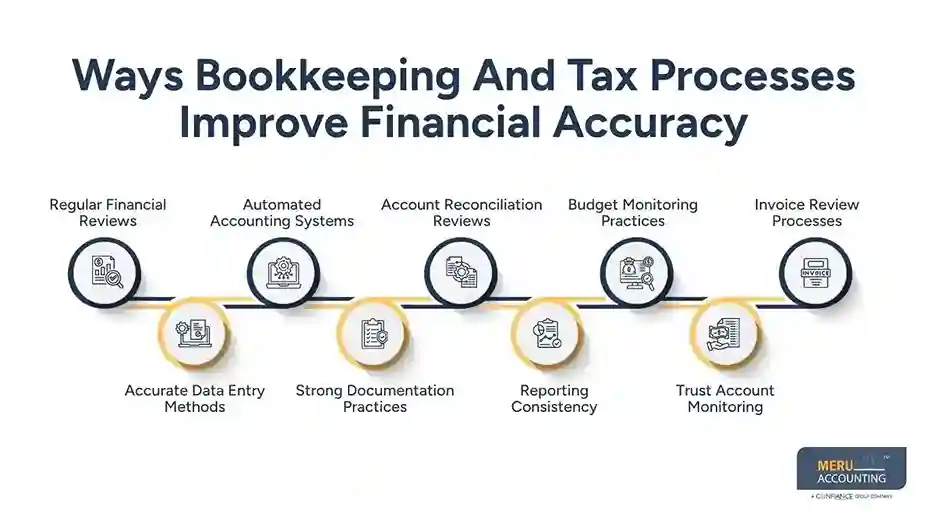
Account Reconciliation Reviews
Reviewing accounts helps firms identify unusual transactions and reporting issues quickly. Regular reconciliation also helps improve accuracy across business financial records.
Reporting Consistency
Regular reporting creates a clear picture of financial performance and activities. Consistent reporting also helps support better planning and business decision-making processes.
Budget Monitoring Practices
Budget tracking helps firms compare planned expenses with actual spending amounts. Regular budget reviews also help control costs and improve financial planning.
Trust Account Monitoring
Trust account reviews help legal firms maintain accurate client fund records. Proper monitoring also reduces risks linked with compliance and reporting issues.
Invoice Review Processes
Invoice reviews help firms verify billing details before client payments occur. Regular invoice checks also help reduce mistakes and improve billing accuracy.
Essential Tax Bookkeeping Practices Every Law Firm Should Follow
Separate Personal And Business Expenses
Mixing business and personal spending creates accounting problems and reporting confusion. Separate accounts improve financial organization and support accurate bookkeeping practices.
Review Trust Accounts Frequently
Trust account records require regular bookkeeping, tax review, and balancing for better accuracy. Frequent reviews help firms identify issues and maintain compliance requirements properly.
Keep Financial Documents Organized
Invoices, tax forms, and receipts should remain properly stored and maintained. Organized documents help firms locate records quickly during audits or reviews.
Monitor Tax Deadlines
Missed filing dates can create penalties, stress, and unnecessary financial concerns. Regular deadline tracking helps firms complete tax tasks on scheduled dates.
Maintain Accurate Billing Records
Proper billing records support financial accuracy and help reduce client disputes. Accurate billing systems also improve payment tracking and collection activities significantly.
Perform Monthly Reviews
Routine financial reviews help detect problems early and maintain reporting accuracy. Monthly reviews also help firms monitor financial health and business performance.
How Outsourced Bookkeeping And Tax Services Support Legal Firms
- Outsourced teams often have experience handling legal industry accounting needs, helping improve accuracy and compliance.
- Law firms can focus more on client service as internal workload is significantly reduced through outsourcing support.
- External bookkeeping and tax teams use structured reporting systems that improve financial visibility and record organization.
- Tax preparation becomes easier with professional support and well-organized financial records throughout the year.
- Outsourced services help reduce costs compared to maintaining full in-house accounting and finance teams.
- Standardized accounting processes used by external teams improve consistency and overall financial record quality.
Mistakes Law Firms Should Avoid In Tax Bookkeeping Management
Ignoring Small Errors
Small accounting mistakes may create larger issues later in reporting. Ignoring them early can affect overall financial accuracy and compliance.
Delaying Financial Reviews
Waiting too long to review reports may allow errors to continue unnoticed. Regular reviews help detect issues before they become serious problems.
Mixing Trust And Operating Funds
Trust account mistakes can create legal and compliance concerns for firms. Keeping funds separate helps maintain proper financial control and transparency.
Missing Tax Filing Dates
Late filing may lead to penalties and added stress for law firms. Timely filing helps maintain compliance and avoid unnecessary financial risks.
Using Incomplete Records
Missing invoices and receipts create gaps in financial reporting and analysis. Complete records help ensure accurate bookkeeping and reliable financial data.
Avoiding Professional Help
Managing all bookkeeping and tax tasks without support can increase financial risk significantly. Professional tax bookkeeping support helps improve accuracy and reduce workload pressure.
Why Choose Meru Accounting?
Meru Accounting provides strong financial support to law firms by understanding the specific accounting needs of legal practices. With industry-focused experience, we help firms maintain accurate bookkeeping, structured financial records, and reliable reporting systems.
Our services are designed to support daily financial operations while improving overall accuracy and control. We offer complete financial support, including bookkeeping, payroll assistance, tax preparation, reporting, and overall financial management.
Our bookkeeping and tax team also ensures organized record systems that help law firms manage daily transactions with clarity. Along with this, we use modern accounting software tools to improve efficiency and reduce errors in financial processes.
Every law firm has different operational needs, so we provide customized service plans based on specific requirements. Our strong focus on accuracy, supported by proper review processes, helps maintain reliable financial records. This approach allows law firms to reduce financial risks and maintain better long-term financial stability.
Our Expert Perspective
Over time, many law firms have focused most of their energy on case work and client service while financial systems receive less attention. In our experience working with service-based businesses, small bookkeeping gaps often grow into larger financial reporting issues when they are not addressed early.
We have observed that firms that maintain regular financial reviews and structured tax support tend to face fewer reporting errors and stronger compliance control. A consistent and well-managed bookkeeping system helps law firms maintain financial clarity, reduce risk, and improve overall operational stability.
Key Takeaways
- Accurate bookkeeping helps law firms reduce reporting errors
- Organized records support tax preparation and compliance
- Financial reviews help identify issues early
- Trust account tracking requires careful management
- Outsourced bookkeeping and tax support can reduce workload
- Better records support stronger business decisions
- Financial accuracy helps improve long-term firm stability
FAQs
Law firms manage many financial activities each day. Bookkeeping and tax support help keep records accurate and organized.
Poor records can create reporting mistakes, tax issues, and compliance risks.
Monthly reviews are often useful because they help identify problems early.
Yes. Small firms often use outsourced services to reduce internal workload and improve financial organization.
Trust accounts contain client funds. Proper tracking helps firms maintain compliance and financial accuracy.