
Architecture firms today rarely work on a single project at a time. Most firms handle many projects across different teams, locations, and timelines. This makes financial control more complex than ever. Costs shift fast, project scopes change, and teams often work in parallel. Without a clear system in place, it becomes easy to lose track of where money is going and how each project is doing. This also puts pressure on project managers who must balance design quality with cost control. Bookkeeping for architects can become a key part of daily work in this situation.
It helps firms keep clean records, track project costs, and manage team spending in a simple and clear way. When done well, it also supports better planning and profit control. It also gives leaders a clear financial view without waiting for end-of-month reports.
What You Will Learn From This Blog
In this blog, you will learn:
- Why multi-project firms need strong accounting systems
- How bookkeeping for architects improves cost control
- The role of accounting for architects in teamwork
- Common problems firms face without proper tracking
- How clear systems support growth and profit
- How a better financial view improves fast decisions
Understanding Bookkeeping for Architects in Today’s Design Firms
Modern architecture firms are not just design studios. They are project-based businesses with complex workflows. Each project has its own budget, team, timeline, and client needs. This makes financial tracking more layered. As firms grow, even small tracking gaps can create bigger blind spots.
Bookkeeping for architects means recording and managing all financial data linked to projects. This includes labor costs, vendor payments, material costs, and overheads. It also tracks billable hours and client invoices. These records form the base for all financial choices inside the firm.
Unlike general bookkeeping, this system is built around projects, not just accounts. That means every cost is linked to a specific job or client. This helps firms see how each project is doing in real time. It also reduces confusion when many teams are working on similar tasks across different sites.
When firms use clear accounting for architects, they also gain a simple view of long-term trends, such as profit margins and cost leaks. This helps leaders plan future projects with more trust and less risk.
Key Challenges in Multi-Team and Multi-Project Accounting for Architects
Managing many teams and projects at once brings several financial challenges. These issues become more clear as firms grow and take on more work.
Mixed Project Costs
Costs often get mixed between projects. For example, one supplier bill may cover materials for more than one site. Without proper tracking, it becomes hard to split costs the right way. This can lead to wrong project profit reports and confusion during checks.
Unclear Time Tracking
Design teams, engineers, and site teams often work on many jobs in the same week. If time is not tracked well, billing errors can happen. Over time, this also affects client trust and internal cost planning.
Delayed Financial Updates
Many firms update their books only at the end of the month. This delay means leaders do not see real-time project costs. As a result, choices are often made using old financial data.
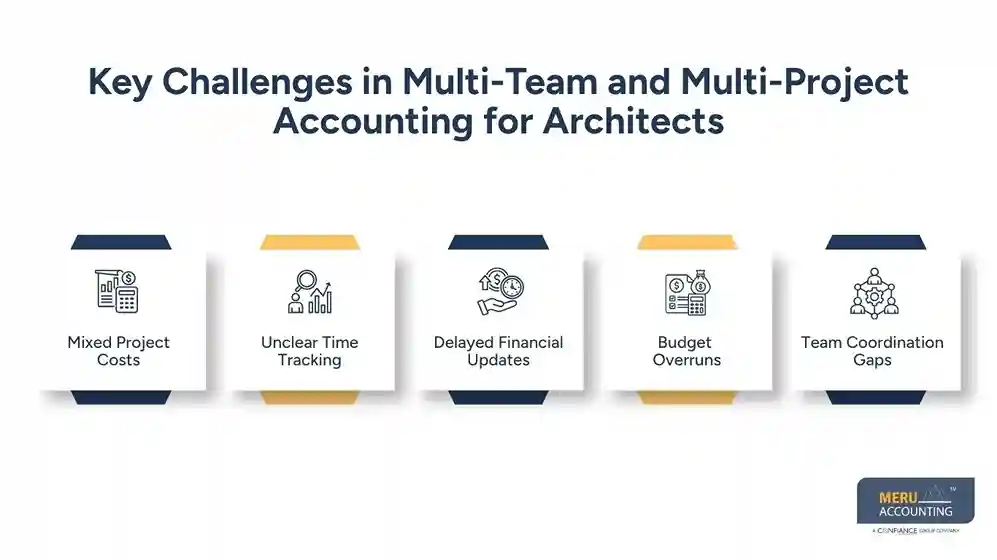
Budget Overruns
Without live tracking, projects may go over budget before anyone notices. This reduces profit and creates client stress. It also forces teams to make quick fixes later in the project cycle.
Team Coordination Gaps
Different teams may use different systems or methods. This leads to confusion and data gaps in financial records. It also makes it harder to compare team results in a fair way.
These challenges show why bookkeeping for architects is not just an admin task. It is a core part of project control and long-term business strength.
How Bookkeeping for Architects Improves Multi-Project Financial Tracking
Strong bookkeeping systems solve many of the issues above. They bring structure, clarity, and steady flow across all projects.
Clear Project Cost Tracking
Each project gets its own cost record. Every expense is tagged to a project code. This makes it easy to see where money is spent. It also helps managers quickly find high-cost areas before they hurt profit.
Better Time and Labor Control
When teams log hours by project, firms can see which jobs use more time than planned. This helps adjust future estimates. It also improves work-life balance across teams.
Real-Time Budget Updates
Modern systems allow near real-time updates. This helps managers take fast action if costs start to rise. It also reduces the risk of financial surprises at the end of the project.
Simple Invoice Management
Invoices are linked directly to project steps. This reduces delays and improves cash flow. It also ensures that billing matches real project progress without confusion.
Easy Profit Analysis
At any point, firms can see which projects are profitable and which are not. This is a key benefit of bookkeeping for architects. It also supports better decisions for future bids and contracts.
With these systems in place, firms move from guesswork to data-based control. This improves both speed and financial safety across teams.
Role of Accounting for Architects in Managing Multiple Teams Efficiently
While accounting focuses on daily records, it also helps firms understand financial health at a deeper level and supports long-term planning.
Team-Based Cost Control
Accounting systems break down costs by team. For example, design teams, site teams, and project managers can each be reviewed separately. This helps find which teams work well and which need support.
Resource Planning
Firms can see which teams are overloaded and which have space. This helps in better planning and work balance. It also reduces stress and improves project timing.
Profit Per Team and Project
Not all teams perform the same way across projects. Accounting helps show which teams bring higher value. This insight supports better staff and project assignment choices.
Better Forecasting
With past data, firms can plan future budgets with more accuracy. This reduces risk in new projects. It also helps firms set better prices for their services.
Proper bookkeeping for architects and accounting systems creates a strong financial base for firms handling many teams and projects at once. This mix improves both daily control and long-term growth.
Meru Accounting's Bookkeeping for Architects
Meru Accounting provides structured bookkeeping support specifically made for architecture firms that manage complex project loads.
We focus on clean project tracking, real-time reports, and clear cost split between teams and jobs. This helps firms avoid confusion and reduce manual mistakes. It also makes sure leaders always have the correct financial data ready.
With our bookkeeping for architects, firms can:
- Track each project cost in detail
- Monitor team spending across jobs
- Improve billing speed and accuracy
- Reduce financial delays
- Get clear monthly and project reports
- Keep steady records across all teams and locations
Their approach to accounting for architects is built to support growth. Instead of just recording numbers, they help firms understand what those numbers mean for future plans. This helps firms make smarter choices when scaling work.
This makes financial management easier even for firms handling many large projects at the same time. It also reduces need for manual tracking systems that often cause errors.
Our Expert Insight
From experience, most architecture firms struggle not because of lack of work, but because of lack of clear cash flow. This becomes even more clear as teams grow and take on many projects at once. When bookkeeping for architects is done well, project managers gain control over budgets. They can see issues early, fix cost leaks, and avoid last minute surprises. This also helps improve team work between design and finance groups.
Another key insight is that small errors add up fast. A missed invoice or wrong cost split can affect project profit. Over time, these small gaps reduce total growth and limit expansion. Strong accounting for architects helps fix this by building a system of checks and clear reports. It creates compliance rules across teams and improves responsibility at every level. It also helps firms build a more steady and stable business model.
In short, clean data leads to better design choices and stronger business results. It also gives firms the confidence to take on bigger and more complex projects.
Key Takeaways
- Architecture firms manage many projects at once, making financial control complex
- Bookkeeping for architects helps track costs at a project level
- Multi-team setups need clear systems to avoid cost mix-ups and report errors
- Accounting for architects supports team-based financial planning and resource balance
- Real-time tracking improves profit view and reduces budget risk
- Strong systems help firms grow without losing money, control, or accuracy
FAQs
Bookkeeping for architects is the process of recording and managing all monetary data linked to architecture projects. It includes costs, billing, payroll, and project expenses. It ensures every financial action is tied to a clear project.
It helps firms track each project separately. This reduces confusion and makes it easier to manage budgets across many jobs. It also improves financial accuracy when teams work on different projects at the same time.
Accounting for architects helps break down costs by team and project. This allows firms to balance work and control spending better. It also helps show differences in team performance.
Yes. With clear tracking, firms can spot cost issues early and avoid overspending. This leads to better profit control. It also helps improve pricing plans for future projects.
Yes. Even small firms benefit because they often grow fast. Good systems make scaling easier and reduce accounting errors from the start. It also helps them build strong financial habits early.