Outsourcing bookkeeping runs through a clear step-by-step path that helps with smooth money control. It starts with a check of the firm’s needs, then moves to pick the right partner, and set up safe ways to share data. After that, the team works on tasks like logging deals, matching bank records, making reports, and staying on track with tax rules. Steady updates and open talk keep the owner in charge while saving time and cutting down on mistakes.
Introduction to Bookkeeping Outsourcing
Running a business means handling many jobs like sales, staff, support, and money. Bookkeeping is one key job, but it takes time and care. That is why many firms now choose bookkeeping outsourcing.
Outsourcing means hiring a skilled team to manage your books. These experts record each sale, bill, and payment for you. You can stay focused on growth while they take care of the numbers.
With outsourcing, you save time and costs, avoid errors, and get clear records. It also gives you access to the best tools and advice without the need for full-time staff. This helps you plan ahead with ease and make smart choices for your firm.
Why Businesses Outsource Accounting Services
Outsourcing is not just for big firms. Small and mid-size firms now trust outsourced accounting firms to keep their books safe. Here’s why:
1. Save on Cost
A full-time bookkeeper needs pay, tax, and perks. With outsourcing, you pay for what you use. No extra spend.
2. Better Accuracy
Experts who work in accounting every day know the rules inside out. They help reduce mistakes and keep your books clean.
3. More Time for Core Work
When you outsource accounting, you free up time. This helps you focus on sales, customers, and growth.
4. Easy Access to Tools
Outsourced teams use the latest software to work fast and stay safe. You get tech perks without the high cost.
5. Scalable Support with Outsource Accounting
As your business grows, your needs grow too. When you choose to outsource accounting, you can easily scale services up or down to match your business growth and get the right assistance.
Process of Outsourcing Bookkeeping for Businesses
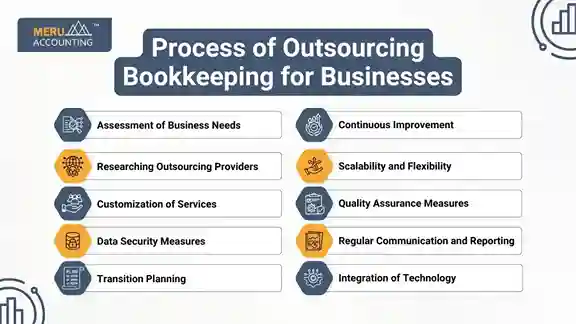
Outsourcing your books is more than just hiring help. It’s a step-by-step process that ensures smooth, secure, and accurate work. Here’s how the bookkeeping outsourcing process works:
1. Assessment of Business Needs
Begin by knowing what your firm needs. Think about how many bills, payments, and reports you handle each month. This helps you know the right tasks to outsource.
2. Researching Outsourcing Providers
Next, look for the right firms. Choose those with strong reviews, proven results, and tools that match your work. Check their support and how they talk with clients.
3. Customization of Services
No two firms are the same. A trusted outsourced accounting partner will offer custom plans that match your tasks. You get to pick what they handle and how often.
4. Data Security Measures
Your money data must stay safe. A good partner uses tools like strong logins, secure files, and sets access rules to guard your data.
5. Transition Planning
Plan your switch. Set a timeline, list the key steps, and assign tasks. Train the new team if they need to learn your system. Smooth shifts lead to fewer errors.
6. Integration of Technology
Good firms use smart technology. Cloud tools help you work faster and stay updated. Make sure the service blends well with your apps and tools.
7. Regular Communication and Reporting
Stay in touch. Weekly or monthly chats help clear doubts and track results. Reports must be clear and show the real state of your accounts.
8. Quality Assurance Measures
Always check the work. Set times to review records and fix issues fast. This builds trust and keeps your numbers right.
9. Scalability and Flexibility
Needs to change as you grow. Choose a team that can shift with your firm. Add or drop tasks as needed without stress.
10. Continuous Improvement
Always try to improve. Ask for updates, get feedback, and try new tools. A good outsourced accounting setup keeps getting better.
If you want to manage your financial information more efficiently, contact an outsourcing firm that provides a wide range of bookkeeping and accounting services.
Benefits of Partnering with Outsourced Accounting Firms
Working with the right outsourced accounting firms can bring lasting value to your business. Here are the key benefits you can expect:
1. Smart Growth
Good books help you track profits, cut waste, and plan for the future. That means more growth, with less guesswork.
2. Year-Round Support
The best outsourced accounting firms offer help all year, not just during tax season. They keep your books updated and ready at any time.
3. Expert Advice
When you need help with taxes, cash flow, or budgets, the team is ready to provide clear answers and useful advice.
4. Custom Plans
Each business is unique. A good firm will tailor their services to fit your size, goals, and tools.
5. Risk Reduction
Experts help catch errors early and keep your financial data safe, reducing the chance of costly mistakes or fraud.
Common Challenges in Bookkeeping Outsourcing
Even though bookkeeping outsourcing makes life easy, firms may face some small issues. Knowing these challenges early helps you plan better and avoid stress.
Communication Gaps
When you outsource accounting work, clear talk is key. If updates are not shared on time, it can cause mix-ups. To fix this, set regular calls or emails with your outsourced accounting firms.
Data Safety Concerns
Money data is very private. Some firms fear leaks or hacks when they outsource. This is why it is vital to pick outsourced accounting firms that use strong locks, cloud tools, and safe sharing methods.
Wrong Fit of Service
Not all firms need the same plan. If you choose a service that does not match your size or style, it can lead to wasted money. Always ask for custom options before you sign up.
Hidden Costs
Some outsource accounting deals look cheap at first, but later add extra fees for reports, updates, or support. Always check the cost plan in detail so you know what you will pay.
Time Zone Barriers
If you hire outsourced accounting firms from a different country, time gaps may slow down chats or work. To solve this, agree on fixed times for updates and use shared online tools.
Training and System Match
Your firm may use tools or formats that the outsourced team does not know. This can cause delays in the start. To avoid this, give them clear notes, short training, or guides before they begin.
Tips for Successful Bookkeeping Outsourcing
Bookkeeping outsourcing gives the best results when done with care and clear planning. Here are some key steps that help you make the most of it.
Set Clear Goals
Before you outsource accounting tasks, know what you want to achieve. It could be saving time, cutting costs, or getting better reports. Clear goals guide your partner to give the right support.
Choose the Right Outsourced Accounting Firms
Not all providers offer the same quality. Look for outsourced accounting firms with strong reviews, skilled staff, and safe tools. The right choice saves you from future issues.
Keep Open Communication
Good results come when both sides talk often. Share updates, ask for reports, and set a fixed time for calls. Open talk builds trust and avoids mistakes.
Monitor Progress
Do not just hand over tasks and forget them. Check reports often and review how the team works. This ensures that your outsourced accounting plan stays on track.
Build Long-Term Partnership
Think of bookkeeping outsourcing as more than short-term help. A steady, long-term partner learns your firm well and adds more value over time.
How to Find the Best Outsourced Accounting Provider for Your Business
Pick the right partner to keep books neat and quick. Good outsourced accounting firms show these signs:
Check Their Work Past
Pick a firm with strong skills and good notes. Ask if they have helped firms like yours to know your needs well.
Ask About Tools
Make sure the firm uses top and simple apps like QuickBooks, Zoho, or Xero. This keeps the work smooth and clear.
Look for Quick Help
Fast talk is key. Your firm must be easy to reach and fast to reply when you have needs or want help.
Request a Trial Before Outsourcing Bookkeeping
Test first, then buy. Many firms give a free test or a short plan. This shows if their work and service fit your firm.
Bookkeeping outsourcing is a smart choice for firms that want to save time, cut costs, and stay focused on their main tasks. It helps keep your records neat and current without daily stress. When you outsource to a trusted firm like Meru Accounting, you get expert help and correct reports. Partner with us to manage your books while you grow your business with peace and control.
FAQs
- Why should a business outsource accounting?
Outsource accounting helps save time, cut costs, and keep money records right by using skilled help. - How does outsourcing improve efficiency?
It lets businesses focus on their main work while experts handle the books with care and speed. - Is outsourcing financial work safe?
Yes, good outsourced accounting firms use strong steps like data locks and safe file sharing to keep info safe. - What should you check in outsourced accounting firms?
Look at their experience, reviews, tech tools, data safety, and cost before you pick one. - Can outsourced accounting fit business needs?
Yes, many firms give plans that change to fit what your business needs.