Business accounting for small business gives owners a clear view of sales, costs, cash, debt, and tax needs. Accurate and up-to-date financial records make it easier to identify cash flow issues and plan for upcoming bills before funds become limited. Small firms may not have a full finance team, so a clear accounting routine is essential.
Business accounting for small businesses does not need to be hard. A sound chart of accounts, daily records, bank checks, and monthly reports can give owners a firm base. The aim is not just to record past sales. The aim is to know where money comes from, where it goes, and what needs action next.
What You Will Learn From This Blog
- How business accounting for small businesses supports daily financial management.
- How to establish an organized accounting system from the start.
- How to record and monitor sales, expenses, bills, and cash flow.
- How to use financial reports for informed business decisions.
- Which accounting mistakes can create tax and cash flow problems.
- When professional accounting services may be appropriate for your business.
What Is Small Business Accounting and Why Does It Matter?
Understand Small Business Accounting
Small business accounting is the process of recording, organizing, checking, and reporting a company’s financial transactions. Effective business accounting for small businesses covers sales, expenses, invoices, payroll, bank activity, assets, debts, and other financial transactions.
Importance of Accounting For Small Businesses
Track Income And Expenses
Accounting records show how much money the business earns and where it spends that money. Sales, rent, wages, stock, fees, loans, and other costs should be recorded under the right accounts.
Monitor Cash Flow
Profit and cash are not the same. A business may show a profit while unpaid invoices or upcoming bills leave limited cash in the bank. Regular cash reviews give owners a clearer view of available funds.
Prepare For Tax Filing
Accurate financial records provide the information needed for tax reporting and review. Tracking sales, expenses, payroll, and other transactions throughout the year reduces the need to rebuild records before filing deadlines.
Measure Business Performance
Financial reports show how the business performs over time. Profit and loss statements, balance sheets, and cash flow reports can show changes in revenue, expenses, assets, liabilities, and available cash.
Support Financial Decisions
Business accounting for small businesses gives owners reliable financial information for important decisions. The figures can guide choices about pricing, hiring, stock purchases, borrowing, expansion, and cost control.
How To Set Up Small Business Accounting Properly
Create a Suitable Chart of Accounts
Start with account categories that match the business’s actual activities. Include sales, direct costs, payroll, rent, bank fees, loans, assets, and other regular transactions to keep financial reports clear.
Separate Business and Personal Finances
Use separate bank accounts and cards for business transactions. Keeping personal spending outside the business accounts makes records easier to review and gives a clearer view of business finances.
Establish a Record-Keeping Routine
Set a regular schedule for recording transactions, reviewing bank activity, and closing accounts each month. A consistent process keeps financial data current and supports accurate business accounting for small business operations.
Organize Financial Documents
Keep invoices, receipts, bank statements, payroll records, loan documents, and other financial paperwork in an organized system. Proper documentation provides support for accounting entries and tax reporting.
Control Accounting System Access
Give employees access based on their responsibilities within the accounting system. Set clear rules for who can enter, edit, approve, and review transaction
How To Manage Daily Small Business Accounting Tasks
Record Sales Each Day
Consistent sales records make business accounting for small businesses more accurate and easier to review. Check cash, card, bank, and online sales against the sales system so gaps can be found early.
Record Bills And Costs
Enter supplier bills as they arrive. Add the due date, amount, vendor, and account code so owners can see what must be paid and when.
Check Bank Activity
Review bank entries for deposits, fees, card charges, loan payments, and other items. Daily or weekly checks can flag items that were missed or entered twice.
Track Client Dues
Keep a list of open client bills and their due dates. Follow-up can start before an old bill becomes a cash issue for the firm.
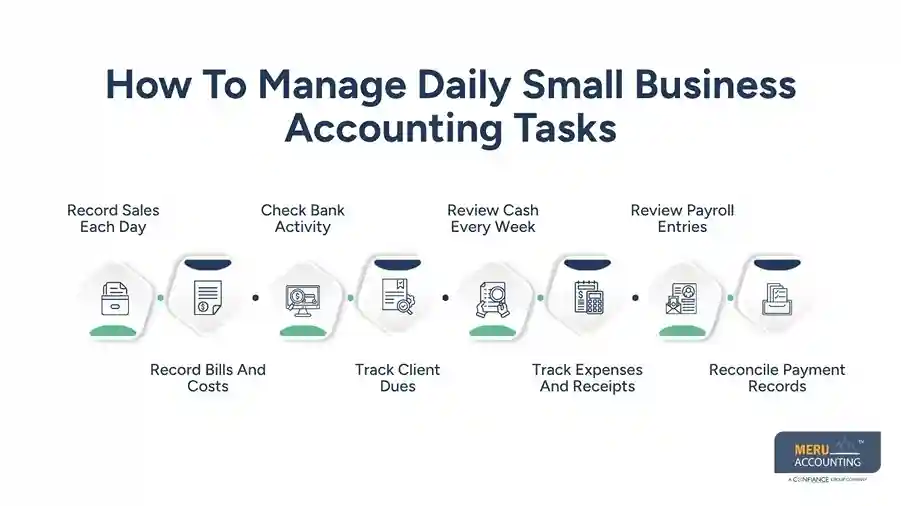
Review Cash Every Week
Business accounting for small businesses should include a short cash review each week. Compare cash on hand with near-term wages, rent, tax, loan, and supplier needs.
Track Expenses And Receipts
Record business expenses as they occur and keep the related receipts. Match each expense with the right account so monthly reports show clear and useful cost data.
Review Payroll Entries
Check wages, payroll taxes, benefits, and other staff costs after each pay run. Compare payroll records with bank payments to catch missing or incorrect entries.
Reconcile Payment Records
Compare sales records with bank deposits, card payments, and payment platform reports to support accurate business accounting for small businesses. Matching these records can reveal fees, refunds, missing deposits, or duplicate entries.
Accounting Tips For Small Business Owners
Set a Monthly Close Date
Choose a fixed date each month to complete the accounting records. Review sales, costs, bank data, bills, payroll, and key account balances before finalizing the monthly financial reports.
Review Profit By Month
Do not judge results from one busy or slow week. Compare monthly sales, gross profit, net profit, and key costs across several months.
Watch High-Cost Areas
Look at costs that take a large share of sales. For a shop, stock may be key. For a service firm, wages may take the largest share.
Keep an Emergency Cash Buffer
Set a cash goal for fixed bills and near-term needs. The right amount will vary by firm, so owners should base the goal on their own cash cycle.
Review Reports Before Big Choices
Accounting tips for small businesses should include a report check before major spending. Review cash, debt, profit, and unpaid bills before taking on a new cost.
How Accounting Software Can Simplify Small Business Accounting
Automate Bank Feeds
Many accounting tools can support business accounting for small businesses by importing bank transactions directly into the accounting system. Owners or bookkeepers can then review, match, and categorize these transactions instead of entering each item manually.
Create Recurring Bills
Regular costs such as rent or software fees can often be set as repeat entries. A review is still needed before payment to catch changes in price or terms.
Send Digital Invoices
Online invoices can show the amount due, date, and payment terms in one place. Some tools also track unpaid bills and send payment notices.
Build Monthly Reports
Business accounting for small businesses becomes easier to review when reports can be made on set dates. Common reports include profit and loss, balance sheet, and cash flow reports.
Limit Manual Data Entry
Use links between banks, payment tools, payroll systems, and sales tools where the setup fits the firm. Less manual entry can cut keying errors and save staff time.
optional anymore
on running the business
Common Small Business Accounting Mistakes To Avoid
Mixing Personal And Business Costs
A personal item should not be posted as a business cost just to raise expenses. Keep separate accounts and ask a tax expert when an item is not clear.
Ignoring Unpaid Bills
Old client dues can make cash look better on paper than it is in hand. Review aging reports often and act on late bills.
Missing Bank Reconciliations
A bank balance alone does not confirm that financial records are accurate. Reconcile each account regularly and review unmatched transactions before finalizing the monthly financial reports.
Waiting Until Tax Time
Business accounting for small businesses should run all year. Waiting until tax season can leave missing bills, unclear entries, and weak records that take time to fix.
Using Poor Account Codes
Posting many different costs into one broad account can make reports hard to read. Use account codes that fit the type and purpose of each cost.
How Meru Accounting Supports Business Accounting For Small Businesses
Accurate Financial Records
Business accounting for small businesses needs records that are complete and easy to review. Our team checks entries and account balances to keep the books in proper order.
Monthly Bookkeeping Support
Meru Accounting manages routine bookkeeping tasks on a regular schedule. Our team can record transactions, reconcile accounts, and keep financial records organized.
Financial Report Preparation
Meru Accounting can prepare key reports such as profit and loss, balance sheet, and cash flow statements. These reports give owners a clear view of business results.
Tax-Ready Records
Well-kept records can make tax work easier at the end of the year. Our team keeps income, expenses, and other key records arranged for review.
Flexible Accounting Services
Every small business has different accounting needs. Meru Accounting can provide bookkeeping and accounting services based on the firm’s size, transaction volume, and reporting needs.
Our Expert Perspective
Business accounting for small businesses works best when financial tasks follow a set routine. Our experience shows that owners gain more value from regular account checks than from trying to fix months of records at once.
A simple monthly process should cover sales, expenses, bank activity, unpaid bills, payroll, and account balances. Owners should also review key reports before making large spending or hiring decisions.
Accounting tips for small business owners should focus on actions that can be followed each month. Clear records, separate business accounts, timely reconciliations, and regular report reviews form a strong base for sound financial management.
Key Takeaways
- Keep your business and personal money in separate accounts to maintain clear financial records.
- Record sales, expenses, bills, and payments on time to keep your books accurate.
- Reconcile your bank and card accounts regularly to find errors or missing transactions.
- Review your profit, cash flow, debt, and unpaid bills every month to track financial health.
- Keep receipts, invoices, bills, and other source records for tax and financial review.
- Use accounting software to reduce repeated data entry and make routine accounting tasks easier.
- Review your financial reports before making major spending or investment decisions.
- Consider professional accounting help when bookkeeping takes too much time or becomes difficult to manage.
FAQs
Business accounting for small business means recording, checking, and reporting the firm’s money activity. It covers sales, costs, cash, bills, assets, debt, and other financial entries.
Small business accounting gives owners clear financial records. Those records can show profit, cash needs, unpaid bills, and costs that need review.
Daily records are best for sales and payments, while bank checks can be done each week. A full review should be done at least once each month.
Software can handle many record and report tasks, but it does not replace expert judgment. Tax rules, unusual entries, reviews, and key financial choices may still need an accountant.
Accounting tips for small business owners include keeping separate accounts, recording costs on time, checking bank data, tracking unpaid bills, and reviewing monthly reports.
optional anymore
on running the business