
Managing business finances requires a strong understanding of both cash inflow and profit because they directly impact a company’s financial stability and growth. Although these terms are often used together, they represent different financial aspects.
Cash inflow refers to the money entering a business through operating activities, investments, financing, or other sources, helping companies manage current and short-term financial commitments. On the other hand, profit is the amount remaining after subtracting business expenses from total revenue earned.
A business can have positive cash flow without being profitable if it receives money from sources such as loans, investments, or owner contributions, as these are recorded as liabilities or equity rather than income. Similarly, a profitable business may experience negative cash flow if money is withdrawn for personal expenses, loans, or investments.
Effective bookkeeping helps businesses track these transactions, understand cash movement, maintain accurate records, and make better financial decisions to improve profitability and long-term success.
What You Will Learn From This Blog
- The difference between cash inflow and profit, and its impact on business stability
- How bookkeeping helps monitor cash movement, expenses, and financial records
- Why businesses can face cash flow issues despite earning profits
- Ways to improve cash inflow, manage expenses, and maintain liquidity
- How financial statements help track profitability and support business growth planning
What is Cash Inflow?
Cash inflow is the money that comes into your business. This can come from several sources, such as:
- Sales: Revenue from selling goods or services.
- Loans: Money borrowed from a bank or lender.
- Investments: Money put in by owners or shareholders.
- Asset Sales: Cash received from selling business assets like equipment or land.
Cash inflow is the real movement of money into your business from different sources.
What is Profit?
Profit is the money a business earns after subtracting its costs. This includes:
- Cost of Goods Sold (COGS): The costs tied to making products or offering services.
- Operating Expenses: Regular costs like rent, salaries, and utilities.
- Taxes and Interest: Payments made to the government or lenders.
Profit shows if your business is making money after all expenses.
How Bookkeeping Tracks Cash Inflow
Bookkeeping creates organized financial records that show every transaction. These records give businesses a clear view of their money movement and financial health.
Recording Every Transaction
Each sale, payment, and expense needs proper entry. Accurate records prevent confusion and make it easier to review financial details when required.
Managing Accounts Receivable
Accounts receivable records show money that customers still need to pay. Keeping these records updated allows businesses to manage pending payments.
Monitoring Bank Activities
Bank records are matched with bookkeeping entries to check accuracy. This process helps identify missing payments, incorrect entries, or unusual transactions.
Reviewing Financial Reports
Reports such as cash flow statements provide information about money movement. Business owners can use these reports to understand financial trends.
Maintaining Clear Records
Organized books reduce errors and make financial information easier to access. This gives owners a better base for business planning.
How Bookkeeping Improves Business Profit
Bookkeeping plays an important role in increasing business profit because it shows how money is earned and spent. Clear financial records allow companies to find areas where changes are needed.
Controlling Unnecessary Costs
Expense records show where money is being spent. Businesses can review these costs and remove expenses that do not add value, allowing them to protect their business profit and improve financial efficiency.
Improving Pricing Decisions
Accurate financial details allow owners to understand product costs. This information supports better pricing choices and protects profit margins.
Finding Strong Revenue Sources
Bookkeeping reports show which products, services, or activities bring better returns. Owners can focus more on areas that create stronger results.
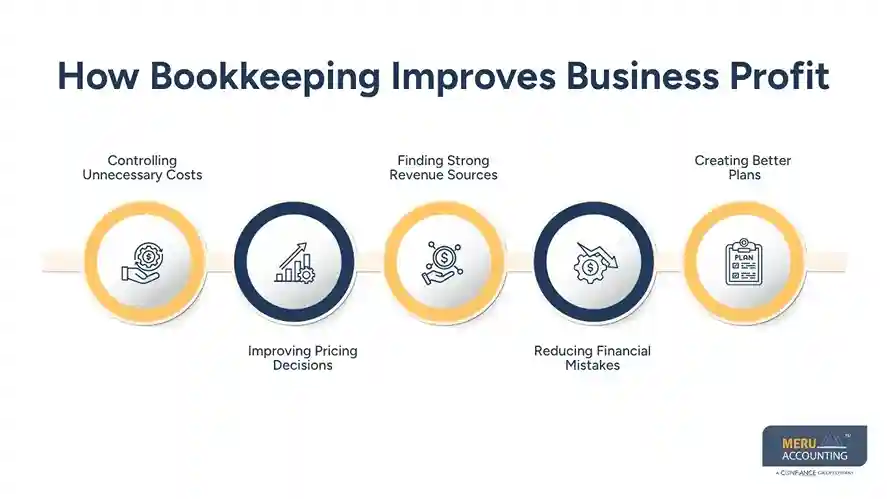
Reducing Financial Mistakes
Errors in records can create wrong decisions. Regular bookkeeping reduces mistakes and keeps financial information accurate.
Creating Better Plans
Reliable reports give businesses a clear picture of their position. This allows owners to prepare budgets and set practical goals.
Cash Inflow vs Profit: Key Differences
While cash inflow and profit both matter, they have key differences. Understanding these can help you manage your business finances better and build a stronger foundation for sustainable business profit.
Timing Difference
The main difference is when cash comes in.
- Cash Inflow: Money is received soon after a sale or action.
- Profit: Profit is recorded when the sale happens, but cash might not be received until later.
For example, you sell a product today. You make a sale, but the payment is due in 30 days. The income is recorded today, but the actual payment will be received later.
Cash vs. Non-Cash Transactions
Not all actions affect cash flow.
- Cash Inflow: Records actual money movements.
- Profit: Includes both cash transactions and non-cash items like sales on credit or depreciation.
If you sell goods on credit, your profit goes up, but cash doesn’t come in right away.
Focus of Each Metric
- Cash Inflow: Focuses on liquidity — how much cash is available to pay bills and meet short-term needs.
- Profit: Focuses on long-term financial health after all costs are considered.
Both matter, but they provide different views of your business’s financial health.
Impact on Business Operations
- Cash Inflow: Understanding the Cash Inflow vs Profit Differences is crucial for making sure both your short-term liquidity and long-term health are balanced.
- Profit: Profit shows that your business is efficient, but it doesn’t mean you have enough cash to cover bills.
A company can still face financial difficulties if it doesn’t manage incoming and outgoing money properly.
Cash Flow Can Be Positive Even When Profit Is Negative
It’s possible to receive money and still experience losses. This might happen if:
- You take out a loan or get an investment.
- You sell assets for cash, even if the business itself is losing money.
Profit Can Be Positive Even When Cash Flow is Negative
Similarly, a business can have a profit but still face cash flow problems. This happens when:
- You sell on credit and don’t get paid right away.
- You make big purchases or investments that drain your cash.
Even with a profit, you could run out of cash if your inflow isn’t strong enough.
Why Cash Inflow is Important
- Liquidity: Understanding Cash Inflow vs Profit Differences is important for keeping your business liquid while also aiming for profitability.
- Short-Term Decisions: Cash is needed to meet daily expenses. Without it, even profitable businesses can fail.
- Debt Management: Positive cash flow helps pay off loans on time.
Why Profit is Important
- Financial Health: By recognizing the Cash Inflow vs Profit Differences, you can make informed decisions about your business’s financial health.
- Planning: Profit is key to planning for growth and investments.
- Efficiency: Profitability shows how well your business is managing costs.
How to Monitor Cash Inflow and Profit
To stay on track, you need to monitor incoming cash and profit because they provide valuable insights into your company’s financial performance and future growth opportunities.
- Cash Flow Statement: This tracks cash entering and leaving your business, helping you manage liquidity.
- Income Statement: This shows your revenue, costs, and profit over time, helping you assess overall profitability.
- Balance Your Books: Regularly check both financial statements to make sure you have enough cash and are making a profit.
Additional Tips for Managing Cash Inflow and Profit
Understand Payment Terms
Many businesses sell on credit. This creates a gap between when you make a sale and when you get paid. If your customers pay on credit, manage that gap by offering discounts for early payment or by keeping track of overdue accounts.
Control Expenses
Even if you make a good amount of cash, expenses can get out of hand. Check your costs often and look for ways to cut back. This helps keep your profit up, maintain steady cash flow, and support improved business profit.
Set Cash Reserves
It’s smart to save some cash for slow months. Having a reserve can help your business cover costs when cash flow dips. This way, you won’t have to rely on loans or credit.
Forecast Cash Flow
Predicting cash flow helps you plan when cash will come in and go out. This lets you make smart choices about spending, projects, and managing cash.
Invest Wisely
As your business grows, you might want to invest. But be careful not to spend too much too fast. Make sure investments fit with your cash flow, or look into funding options that won’t harm your liquidity.
Monitor the Cash Conversion Cycle
The cash conversion cycle (CCC) tracks how long it takes to turn investments into cash. A shorter cycle means better cash flow management. Keeping this cycle quick helps maintain financial stability.
For cash flow to take place in a relentless manner without the need to fund the business with a working capital loan and thereby ensure business profit, certain points need to be kept in mind by a business entrepreneur as follows:
- ‘Prompt payment’ or ‘early payment’ discounts help in encouraging credit customers to make timely or ahead-of-schedule payments for the business products or services received. This ensures that customers don’t delay payments to businesses and helps with inadequate cash flow.
- When a client gives an order for the service or product, a request for making a deposit can be made as security and a source of funds for making the client’s order. This will suffice for making any extra expenses that the business may incur.
- Timely receivables for the business can be assured only when the invoice is raised on an immediate basis. Along with raising timely invoices, expectations from the outset need to be clearly specified by the business, which facilitates ‘amount receivable’ for facilitating good cash flow.
- One will be hindering an adequate cash flow by overlooking the overdue accounts. Hence, the automation of invoice remainders is essential to ensure that no overdue payment goes unnoticed.
How Meru Accounting Supports Cash Inflow Tracking and Business Profitability
Maintaining proper cash inflow records and understanding profitability requires accurate bookkeeping, organized financial data, and regular financial reporting. Meru Accounting provides professional bookkeeping and accounting services that help businesses maintain clear financial records and track their financial activities effectively.
Through structured bookkeeping practices, Meru Accounting manages transaction records, categorizes income and expenses, maintains accounts receivable and payable records, and prepares financial reports that give businesses better visibility into their cash position and profitability.
Meru Accounting offers services such as:
- Bookkeeping Services: Recording daily financial transactions, sales, expenses, and payments to maintain accurate business records.
- Cash Flow Reporting: Preparing financial reports that show cash movement and support better financial planning.
- Accounts Receivable and Payable Management: Maintaining payment records and tracking outstanding balances for better cash management.
- Expense Recording and Categorization: Organizing expenses to provide a clear view of business costs and profitability.
- Financial Statement Preparation: Preparing income statements, balance sheets, and cash flow statements for accurate financial analysis.
- Accounting Software Support: Using modern accounting tools to maintain efficient and updated financial records.
With reliable bookkeeping and accounting services, Meru Accounting enables businesses to maintain financial accuracy, understand financial patterns, and make informed decisions for sustainable growth and profitability.
Our Expert Perspective
From our experience, strong bookkeeping is essential to maintain a healthy balance between cash inflow and business profit. Many businesses remain profitable on paper but struggle with cash flow due to poor tracking and delayed receivables. Accurate records help improve liquidity, control expenses, and support better financial decision-making.
Key Takeaways
- Cash inflow shows the actual money entering a business, while profit reflects earnings after all expenses are deducted.
- Bookkeeping helps track every transaction, giving a clear picture of cash movement and financial health.
- A business can be profitable but still face cash shortages, or have strong incoming cash without real profit.
- Proper tracking of receivables, expenses, and reports helps improve both cash flow and business profit.
- Regular bookkeeping supports better financial decisions and long-term business stability.
FAQs
Cash inflow is the actual money received by the business. Profit is what is left after all expenses are paid.
Yes, this can happen if a business gets cash from loans or asset sales, even if it isn’t making a profit from its operations.
Cash inflow shows if a business can meet its needs, while profit shows if it is running well overall.
Yes, if it makes sales on credit or invests in things that use up cash.
Businesses should track both using income and cash flow statements regularly.
optional anymore
on running the business