Year-end tax filing can become highly complex for manufacturing firms due to inventory valuation, machinery depreciation, payroll taxes, vendor payments, and multi-state compliance requirements. Managing these financial responsibilities accurately while meeting strict filing deadlines often creates significant pressure for manufacturing businesses. A reliable CPA tax preparer helps manufacturing firms maintain accurate records, prepare compliant tax returns, organize financial documents, and reduce reporting errors during year-end filing.
Many companies also choose outsourced tax preparation services to reduce internal workload while improving efficiency, compliance management, and financial reporting accuracy.
Year-end tax filing involves more than simply meeting deadlines. Manufacturing firms must review operational expenses, evaluate inventory records, identify eligible deductions and tax credits, and prepare financial reports that support future business planning.
Professional tax support helps businesses complete filings accurately, reduce compliance risks, and maintain stronger financial control throughout the year-end process.
What You Will Learn From This Blog
- Why a reliable CPA tax preparer is important for manufacturing firms
- Common tax filing challenges faced by manufacturers
- How inventory accounting affects year-end taxes
- The benefits of outsourced tax preparation services
- Important deductions and tax credits for manufacturers
- Ways to reduce compliance risks and filing mistakes
- Why accurate financial reporting matters during year-end filing
- How professional tax support strengthens business planning
Understanding the Importance of a CPA Tax Preparer For Manufacturers
Complex Manufacturing Transactions
Manufacturing firms deal with inventory purchases, machine expenses, labor costs, and supplier payments throughout the year. A skilled CPA tax preparer reviews these records carefully and prepares accurate tax reports.
Industry-Specific Tax Requirements
Manufacturing businesses may qualify for special deductions and tax credits. Professional tax guidance helps businesses apply industry-related tax rules accurately and maintain proper compliance.
Accurate Financial Reporting
Year-end financial statements must match tax records and accounting reports. Proper reporting reduces confusion during audits and lender reviews.
Reduced Filing Errors
Tax filing mistakes may create penalties and compliance issues. Many firms choose outsourced tax preparation to reduce manual errors and improve reporting quality.
Better Audit Preparation
Manufacturing firms may face audits related to inventory valuation and production costs. A professional CPA tax preparer maintains supporting documents for audit readiness.
Stronger Financial Planning
Year-end tax reviews also provide insight into spending patterns, tax liabilities, and profit margins. These details support future financial planning.
How a CPA Tax Preparer Simplifies Year-End Tax Filing
Reviewing Financial Records
A professional CPA tax preparer reviews balance sheets, expense reports, payroll records, and income statements before filing tax returns. This process helps identify inconsistencies, missing entries, and reporting errors before submission.
Organizing Tax Documents
Manufacturing firms work with invoices, inventory logs, depreciation schedules, and vendor records. Organized documentation makes filing more accurate.
Preparing Accurate Tax Returns
Professional tax preparation reduces the risk of incorrect entries and missing information. Many businesses prefer professional support to maintain accurate and compliant tax filings.
Identifying Tax Savings
An experienced tax professional reviews deductions, depreciation benefits, and available tax credits to reduce tax liability legally. Better tax planning helps manufacturing firms improve cash flow and maintain stronger financial control.
Managing Multi-State Filing
Manufacturing firms operating in different states may face separate filing requirements. Tax professionals manage these obligations carefully.
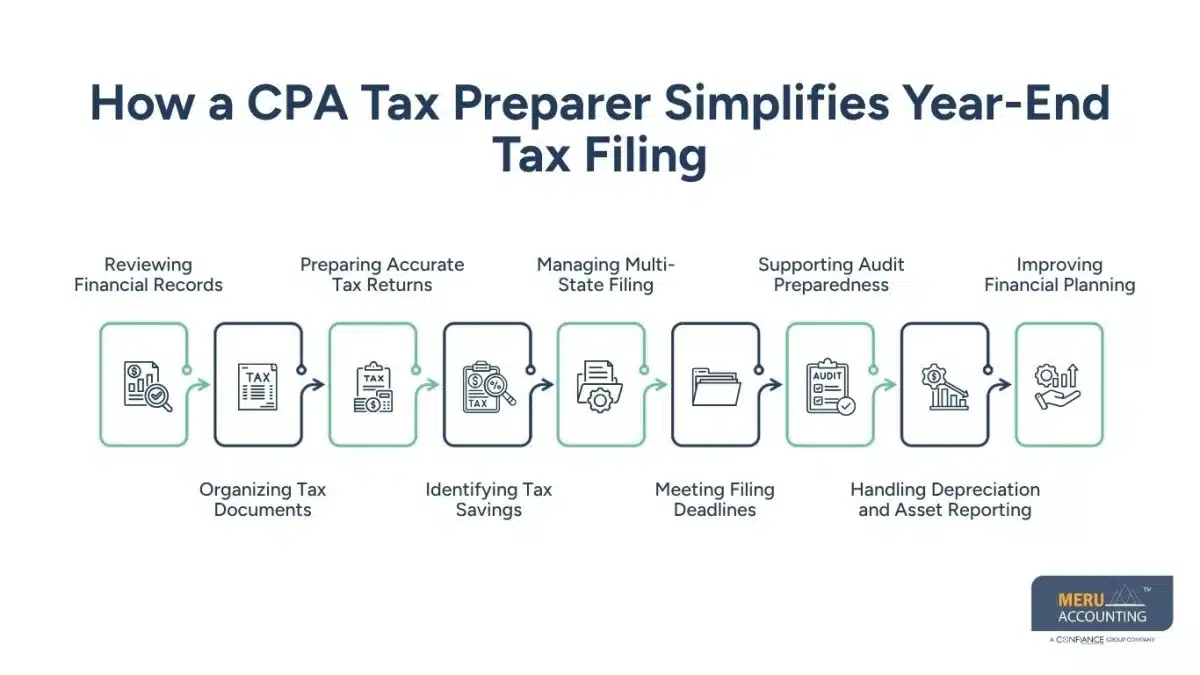
Meeting Filing Deadlines
Late filing may result in penalties and interest charges. Professional tax preparation ensures deadlines are managed properly.
Supporting Audit Preparedness
A CPA tax preparer maintains organized records and proper documentation for audit support. Strong recordkeeping allows businesses to respond quickly and confidently during tax reviews.
Handling Depreciation and Asset Reporting
Manufacturing firms often invest heavily in machinery, equipment, and production assets. Accurate depreciation calculations help maintain proper financial reporting and tax compliance.
Improving Financial Planning
Year-end tax filing also provides insights into business performance and future budgeting needs. Professional tax preparation supports informed financial decisions and better operational planning.
Why Year-End Tax Preparation is Critical For Manufacturing Businesses
Inventory Valuation Affects Taxes
Inventory valuation methods directly impact taxable income. Incorrect inventory records may lead to inaccurate financial reporting.
Cash Flow Planning Matters
Tax payments affect operational cash flow. Proper planning allows manufacturing businesses to prepare for upcoming tax obligations.
Machinery Depreciation Requires Accuracy
Manufacturing equipment often involves detailed depreciation calculations. A skilled CPA tax preparer applies correct depreciation methods.
Tax Rules Continue To Change
Tax regulations may change each year with updated compliance and reporting requirements. Businesses using outsourced tax preparation services often receive timely compliance guidance and professional regulatory updates.
Financial Reports Must Be Reliable
Lenders and investors review year-end financial statements carefully before making important financial decisions. Accurate reporting increases overall business credibility and improves stakeholder confidence significantly.
Future Planning Starts During Year-End
Year-end filing gives firms a clearer view of future tax obligations and operational expenses. Better financial visibility supports budgeting, forecasting, and long-term business planning.
What Tax Challenges Do Manufacturing Firms Commonly Face
Inventory Accounting Issues
Manufacturers must track raw materials, finished goods, and work-in-progress inventory. Errors in inventory accounting may create tax problems.
High Transaction Volumes
Manufacturing firms process thousands of financial transactions yearly. A reliable CPA tax preparer reviews these records carefully for consistency.
Payroll Tax Compliance
Labor expenses form a major part of manufacturing operations. Payroll taxes must match state and federal requirements.
Multi-State Tax Obligations
Businesses operating in several states may face different sales tax and income tax regulations. Professional tax support helps companies manage these filing requirements accurately and efficiently.
Equipment Expense Tracking
Machinery purchases require proper classification and depreciation treatment during tax preparation. Accurate expense tracking supports better financial planning and tax compliance.
Audit Risks
Manufacturing firms may face audits because of inventory valuation and production cost reporting. Proper documentation reduces these risks.
How a CPA Tax Preparer Handles Inventory and Cost Accounting
Reviewing Inventory Methods
Methods such as FIFO and weighted average affect taxable income calculations. A qualified CPA tax preparer ensures proper reporting.
Monitoring Production Costs
Labor expenses, manufacturing overhead, and raw material costs must be allocated correctly during year-end reporting. Proper cost allocation helps businesses maintain accurate profitability analysis.
Managing Cost Of Goods Sold
Incorrect cost of goods sold calculations may affect profits and taxes. Accurate accounting protects reporting quality. Well-managed cost records also improve tax compliance and financial transparency.
Verifying Inventory Records
Regular inventory reviews reduce mismatched records and accounting inconsistencies. Consistent verification supports better inventory control and reporting accuracy.
Maintaining Supporting Documents
A professional tax expert maintains organized documentation for inventory valuation and production costs. Proper record management also supports smoother audit reviews and tax verification processes.
Increasing Reporting Accuracy
Many firms choose outsourced tax preparation because external professionals often provide detailed financial reviews. Professional oversight helps manufacturing businesses maintain reliable and error-free reporting.
How Outsourced Tax Preparation Improves Compliance And Accuracy
Access To Skilled Tax Professionals
Manufacturing businesses receive support from trained experts through outsourced tax preparation services. Professional guidance helps firms manage complex tax requirements more efficiently.
Reduced Internal Workload
Outsourcing tax work allows internal teams to focus more on production and operations. Better workload distribution also improves overall business productivity.
Organized Financial Records
External tax teams often use structured systems to manage reports and tax documents. Proper organization supports accurate reporting and faster document retrieval.
Better Compliance Management
A reliable CPA tax preparer follows current tax regulations and filing requirements carefully. Professional monitoring helps businesses reduce compliance risks and reporting errors.
Faster Filing Process
Many businesses prefer professional tax support to complete filings accurately within deadlines. Efficient filing processes also help reduce last-minute financial stress.
Consistent Financial Reporting
Professional tax services maintain consistency across tax returns, accounting records, and financial reports. Consistent reporting improves financial transparency and business credibility.
What Deductions And Tax Credits Manufacturing Firms Can Claim
Equipment Depreciation Deductions
Manufacturing firms may claim depreciation deductions for machinery and production equipment. Accurate depreciation calculations help businesses reduce taxable income legally.
Research And Development Credits
Businesses investing in product development may qualify for research-related tax credits. Eligible activities may include testing, innovation, and process improvement projects.
Energy Efficiency Incentives
Energy-saving machinery and facility upgrades may provide tax advantages. Government incentive programs often support sustainable manufacturing investments.
Employee Benefit Deductions
Payroll taxes, health benefits, and retirement contributions often qualify as deductible expenses. Proper documentation helps businesses maintain compliance with tax regulations.
Inventory-Related Tax Benefits
Proper inventory valuation affects deductible expenses and taxable income calculations. Accurate inventory reporting also improves overall financial statement reliability.
State Manufacturing Incentives
Some states offer tax programs for manufacturing growth and job creation. A professional CPA tax preparer reviews eligibility requirements carefully. Professional guidance helps businesses maximize available state-level tax benefits.
Why Manufacturing Firms Choose Meru Accounting
At Meru Accounting, we provide professional accounting and tax support services for manufacturing businesses across various industries. We have experience managing year-end filing, financial reporting, inventory accounting, production cost tracking, and depreciation management. Our dedicated CPA tax preparer carefully reviews financial records to maintain reporting accuracy and reduce compliance risks.
Many manufacturing businesses choose our outsourced tax preparation services to reduce internal workload and improve operational efficiency. We use modern accounting software and structured reporting systems to maintain organized financial records and support accurate tax filing processes.
We also provide customized accounting and tax solutions based on the size, operational structure, and reporting needs of each manufacturing business. Our industry-focused support and compliance-driven services help businesses manage tax obligations with greater confidence and efficiency.
Our Expert Perspective
From our accounting and tax experience, manufacturing businesses require more than basic bookkeeping during year-end filing. Inventory valuation, machinery depreciation, and cost accounting directly affect tax accuracy and financial reporting quality.
We have observed that businesses using organized accounting systems and outsourced tax preparation services often experience fewer filing errors and better compliance management. Proper tax planning and accurate recordkeeping also support stronger financial control and long-term business stability.
Key Takeaways
- A reliable CPA tax preparer reduces filing mistakes and compliance risks
- Manufacturing firms face unique tax challenges related to inventory and production costs
- Accurate inventory accounting affects taxable income directly
- Outsourced tax preparation services reduce internal workload and improve reporting quality
- Manufacturing firms may qualify for valuable deductions and tax credits
- Organized financial records strengthen audit readiness and lender confidence
- Professional tax planning supports long-term financial management
- Year-end filing accuracy protects business stability and cash flow
FAQs
A CPA tax preparer understands manufacturing-related tax rules, inventory accounting, and depreciation methods. This reduces filing mistakes and improves tax accuracy.
Outsourced tax preparation means hiring external tax professionals to prepare and review tax returns instead of managing everything internally.
Inventory valuation affects taxable income and cost of goods sold calculations. Incorrect inventory records may create tax reporting errors.
Yes. Manufacturing firms may qualify for research credits, equipment depreciation benefits, and energy efficiency incentives depending on business activities.
Year-end planning helps businesses review expenses, manage cash flow, identify deductions, and prepare accurate financial reports for future decisions.