Depreciation is an important accounting concept that shows how the value of a fixed asset decreases over time due to regular use, wear and tear, age, or technological changes. Businesses invest in assets such as machinery, vehicles, furniture, computers, and buildings to support daily operations. Recognizing the gradual allocation of asset costs over their useful lives results in more accurate financial statements.
Understanding the allocation of asset costs is essential for making informed financial decisions, preparing reliable reports, and meeting accounting requirements. Proper accounting for depreciation ensures that asset values and expenses are recorded correctly, giving business owners, investors, and other stakeholders a clear view of the company’s financial position.
What You Will Learn From This Blog
- Understand the meaning of depreciation in accounting.
- Learn why businesses record the gradual allocation of fixed asset costs.
- Explore the most common methods used for accounting for depreciation.
- Understand the key factors that influence asset value allocation over time.
- Learn how a depreciation fund operates and its role in asset replacement planning.
- Discover why maintaining accurate fixed asset records is important for businesses.
- Find out how professional accounting services ensure accurate asset management and financial reporting.
Understanding Depreciation in Accounting
Depreciation is the accounting process of allocating the cost of a fixed asset over its estimated useful life rather than recording the entire cost when the asset is purchased. Assets such as machinery, office furniture, computers, vehicles, and buildings gradually lose value because of regular use, wear and tear, age, or technological changes. Proper accounting for depreciation ensures that the cost of these assets is recognized over the periods in which they generate income.
Recording the gradual reduction in an asset’s value provides a more accurate view of a company’s financial performance and financial position. The expense is reported in the income statement, while the accumulated amount reduces the asset’s carrying value on the balance sheet. For example, if a company purchases equipment for $50,000 with a useful life of five years and no salvage value, the straight-line method records $10,000 as an expense each year. Consistent accounting for depreciation allows businesses to prepare reliable financial statements and make better financial decisions.
Purpose of Creating a Depreciation Fund
It helps replace assets without loans. It ensures steady business cash flow. Regular savings prepare firms for future asset costs. This approach avoids sudden expenses and maintains asset planning efficiently.
Keeps the Business Running
Costly machines and tools lose value over time. Regular savings help buy new ones. This avoids cash flow issues and keeps work going without a break or financial strain.
Avoids Sudden Financial Pressure
Big repairs or new purchases can break the budget. A set fund means no stress. The business can buy new items quickly without needing loans or cutting other costs.
Supports Long-Term Planning
It helps track asset life and plan. Business owners know when funds are needed. This makes yearly budgets easier and cuts down on last-minute spending.
Supports Financial Discipline
Saving for assets builds a smart habit. It avoids panic when replacements are due. This steady plan helps managers think ahead and act without delay.
Understanding what is depreciation fund gives firms a clear way to handle long-term asset plans without risk or debt.
How the Depreciation Fund Works in Accounting
Recording Depreciation
The business calculates a fixed yearly amount for asset cost allocation. This amount is recorded annually in the accounting records. It reflects the reduction in the asset’s value due to regular use and the passage of time.
Creating the Fund
The recorded depreciation amount is transferred to a separate fund. This keeps it reserved only for asset replacement. It also separates business expenses from planned savings.
Investing in the Fund
Funds are often invested in secure, low-risk instruments. These include government bonds or fixed deposits. Investments help grow the fund and earn returns during the asset’s life.
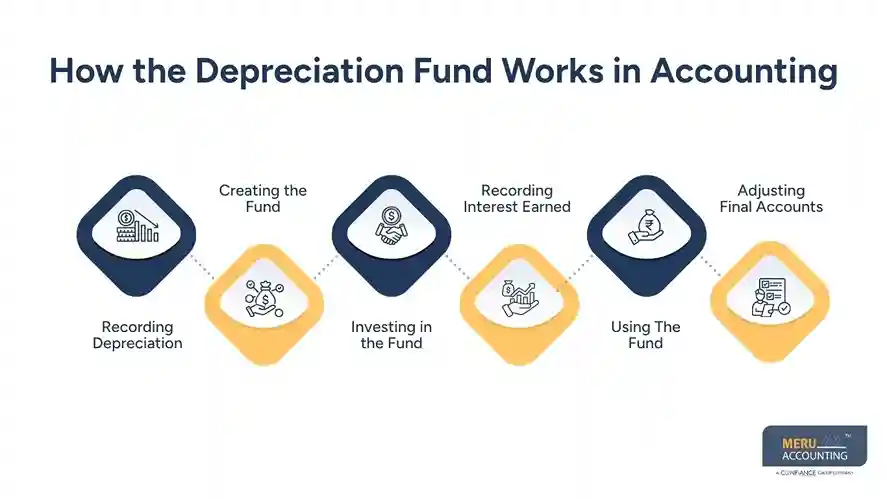
Recording Interest Earned
Interest earned from investments is added to the reserve fund, increasing the amount available for future asset replacement. Each interest transaction is properly recorded in the accounting records to maintain accurate financial reporting.
Using The Fund
When an asset reaches the end of its useful life, the accumulated amount is used to purchase a replacement. This planned approach avoids sudden financial pressure and allows normal business operations to continue without affecting cash flow.
Adjusting Final Accounts
At the end of the accounting year, all related transactions, including asset value reductions, fund investments, and interest income, are reflected in the financial statements. This ensures accurate reporting, greater transparency, and better audit readiness.
Benefits Beyond Capacity Expansion
Although additional staffing is a major advantage, outsourcing services provides long-term benefits.
They help firms standardize audit documentation, improve consistency across engagements, along with reducing administrative workload. With growth in firms, these improvements support sustainable expansion without placing excessive pressure on teams working internally.
Types of Assets Covered Under the Depreciation Fund
Machinery and Equipment
Heavy machinery loses value with use and age. This fund ensures businesses save money yearly. This allows them to replace machines without affecting other operating expenses or available capital.
Vehicles
Company-owned cars, trucks, or vans decline in value yearly. A fund built for vehicle replacement helps maintain a reliable fleet. It also avoids sudden expenses when multiple vehicles need changes.
Office Furniture
Desks, chairs, filing cabinets, and other furniture face regular wear. They require structured replacement plans. A fund built through regular savings allows smooth upgrades without financial strain or work disruption.
Computer Systems
Laptops and desktop systems become outdated within a few years. A depreciation fund supports planned upgrades. It ensures teams have access to efficient technology and protects productivity from system failure.
Factory Tools
Tools used in production lines wear out due to regular use. Saving for tool replacement avoids last-minute costs. It also keeps the assembly line functional and avoids unplanned downtime.
Electrical Appliances
Air conditioners, UPS systems, and generators degrade over time. A dedicated fund ensures these appliances are replaced without borrowing. It helps maintain working conditions and reduces long-term maintenance expenses.
Depreciation Fund vs General Reserve: Key Differences
Point of Difference | Depreciation Fund | General Reserve |
Primary Purpose | Used to save for replacing fixed assets after their useful life ends. | Created to meet future needs or strengthen the business’s financial position. |
Fund Usage | Meant only for asset replacement; cannot be used for other business activities. | It can be used for any purpose, like expansion, paying off debts, or emergencies. |
Source of Creation | Built through fixed yearly asset cost allocations recorded in the accounts. | Comes from retained profits or surplus after yearly earnings. |
Investment Practice | Often invested in safe funds to grow until asset replacement is due. | May or may not be invested, depending on business policy and goals. |
Accounting Treatment | Treated as a planned expense and recorded through regular accounting entries. | Treated as part of the profit appropriation in financial statements. |
Impact on Cash Flow | Reduces yearly available cash but supports smooth asset replacement later. | Does not affect cash directly unless funds are withdrawn for business use. |
Benefits of Maintaining a Depreciation Fund
Reduces Budget Shock
Replacing major assets can cost a large amount at once. A fund spreads this cost over time. It avoids sudden strain on annual budgets and improves cash management.
Improves Cash Flow Planning
Saving for asset replacement in small parts aids planning. The business can predict when money is needed. This avoids gaps in working capital and improves fund control.
Increases Financial Stability
With a dedicated fund, businesses avoid last-minute borrowing. This reduces interest payments and keeps the balance sheet strong. It also adds confidence in long-term planning and decisions.
Helps in Accurate Reporting
Depreciation charges match yearly asset usage and income. It helps show true profits and losses. The business avoids overstated profits and ensures reliable financial statements for stakeholders.
Avoid Business Loans
With money already saved, there’s no need for loans. Businesses don’t need to rely on external finance to buy new assets. This reduces debt and lowers financial risk.
Supports Smooth Operations
Planned asset replacement avoids disruptions in service or production. Employees continue working without waiting for broken tools or machines. The business maintains output levels and avoids delays.
Methods of Depreciation
Businesses can choose different methods to calculate depreciation based on the nature of the asset and how it is used. Selecting the right approach for accounting for depreciation leads to more accurate financial reporting and better financial planning.
Straight-Line Method
The straight-line method allocates an equal expense over the asset’s useful life. Many businesses prefer this approach because it is simple to calculate and records the same expense in every accounting period.
Declining Balance Method
The declining balance method records higher expenses during the early years of an asset’s life and lower amounts in later years. It is commonly used for assets that lose value more rapidly after purchase.
Units Of Production Method
The units of production method calculates the expense based on actual usage instead of time. The amount depends on the number of units produced or the hours the asset is operated.
Sum-Of-The-Years’-Digits Method
This method records larger expenses during the initial years and gradually reduces them over time. It is suitable for assets that generate greater value during the early stages of their useful life.
Double Declining Balance Method
The double declining balance method applies a higher rate during the early years of an asset’s life. Businesses often choose this approach for equipment that loses value quickly because of heavy use or technological changes.
Choosing The Right Method
The most suitable method depends on the asset type, expected usage, business requirements, and applicable reporting standards. Applying the same method consistently makes financial reports easier to understand and compare across accounting periods.
optional anymore
on running the business
Practical Example Of Depreciation
Example Scenario
A business purchases manufacturing equipment for $120,000. Installation costs $5,000, making the total asset cost $125,000. The equipment has an estimated useful life of 10 years and an expected salvage value of $5,000.
Step One: Determine Depreciable Cost
The depreciable amount equals the asset cost minus the salvage value.
- Asset Cost: $125,000
- Salvage Value: $5,000
- Depreciable Cost: $120,000
Step Two: Calculate Annual Depreciation
Using the straight-line method:
Annual depreciation = $120,000 ÷ 10 years
Annual Depreciation = $12,000
Step Three: Record The Expense
Each year, the business records a $12,000 expense in the income statement while increasing the accumulated amount on the balance sheet. This process keeps the carrying value of the equipment accurate throughout its estimated useful life.
Business Benefit
This approach gives management a clear view of asset values, operating costs, and future replacement needs. It also promotes consistent financial reporting and provides reliable information for planning and decision-making.
Why Choose Meru Accounting for Depreciation Accounting
Managing depreciation requires accuracy, consistency, and a clear understanding of accounting standards. At Meru Accounting, we ensure your asset records, financial reports, and calculations are maintained correctly, allowing your business to present reliable financial information and remain compliant with applicable reporting requirements.
Accurate Fixed Asset Records
We create and maintain detailed fixed asset registers that include purchase dates, acquisition costs, useful lives, salvage values, and calculation methods. Well-organized records simplify financial reporting, audits, and asset tracking.
Correct Calculations
Our team performs asset value calculations using methods that align with your business requirements and reporting framework. Every calculation is carefully reviewed to maintain consistency across accounting periods.
Reliable Financial Reporting
We ensure asset-related expenses and accumulated balances are recorded correctly in your income statement and balance sheet. This provides financial reports that accurately reflect the value of your business assets.
Tax-Compliant Schedules
Tax rules for fixed assets may vary across jurisdictions. We prepare schedules that align with applicable tax regulations, reducing reporting errors and strengthening compliance.
Modern Accounting Solutions
Our professionals use leading accounting software to manage fixed assets efficiently. Digital records simplify year-end reporting, financial reviews, and audit preparation.
Ongoing Professional Support
As your business grows, your fixed asset records also change. We regularly review asset schedules and update records whenever assets are purchased, sold, replaced, or retired, ensuring your financial information remains accurate throughout the year.
Our Expert Perspective
At Meru Accounting, we see depreciation as a key tool for reflecting the real value of assets over time rather than just an accounting requirement. In our experience, many businesses struggle with incorrect methods or assumptions, which can affect financial accuracy. A properly structured approach ensures better reporting, compliance, and long-term asset planning. It ultimately supports more informed financial decision-making and business stability.
Key Takeaways
- Depreciation spreads the cost of fixed assets over their useful lives.
- Proper accounting for depreciation creates reliable financial statements.
- Different calculation methods suit different business needs and asset types.
- Useful life and salvage value directly influence yearly expense calculations.
- A dedicated fund prepares businesses for future fixed asset replacements.
- Regular asset reviews reduce reporting errors and maintain accurate financial records.
- Well-maintained asset records strengthen budgeting, compliance, and financial planning.
- Professional accounting services ensure reliable asset management and financial reporting.
FAQs
Depreciation depends on cost, useful life, salvage value, and selected method.
Regular use, aging, wear, and technological changes reduce asset value gradually.
Machinery, vehicles, furniture, equipment, computers, and buildings usually require allocation.
It spreads an asset’s cost equally across its estimated useful life.
Accounting for depreciation records periodic asset value reductions in financial statements.
optional anymore
on running the business