Looking to hire a bookkeeper? Choosing the right one is very important for your business. But, do you know what to look for while choosing one? You need to look for several factors, like cost, time, and workload. This blog will show you the traits, skills, and process to follow when you want to hire a bookkeeper. It also helps you spot candidates who match your business goals.
When you want to hire a bookkeeper, focus on someone who can also give insight into spending and profits. They show where money comes from and where it goes. They help spot small issues before they turn into big problems. Early action keeps your finances safe and your business smooth. A top bookkeeper works with you to set goals and plan for the future.
What You Will Learn From This Blog
- Why you should hire a bookkeeper who keeps your books right and helps your business grow.
- The main traits, skills, and past work to look for when you pick a bookkeeper.
- A clear step-by-step way to hire, check, and keep the right bookkeeper for your team.
- Hiring steps to avoid and the gains of picking the right bookkeeper.
Why Hiring the Right Bookkeeper is Important
When you hire a bookkeeper, choosing the right one is important. Here’s why:
Accuracy in Financial Records
A bookkeeper keeps accounts correct and up to date. Mistakes can cost money and waste time. With clear records, you make smart choices on loans, buys, and key moves. Accurate books show trends early.
Timely Reporting
A skilled bookkeeper gives reports on time so you can act fast. When looking for a bookkeeper, check their ability to deliver clear reports under tight deadlines. They track profits, costs, and cash flow. Fast, clear reports help you spot issues, fix them early, and seize new chances.
Support for Growth
Clear books help track results and plan budgets with ease. A bookkeeper shows how cash is used well. They guide your growth, help plan projects, and reach goals faster without risk.
Cost Control
Bookkeepers track all spending to show where cash goes. If you are looking to hire a bookkeeper, find someone who notices patterns and recommends cost-saving measures. They spot waste and cut bills. This insight helps you invest smartly, save money, and keep profits high.
Better Decision-Making
Clean records and timely reports help you make strong choices fast. Good data helps plan projects, hire staff, and expand your business with confidence.
Peace of Mind
Correct accounts reduce stress and let you focus on your business. A reliable bookkeeper provides calm and control, freeing up time for growth and clients.
Financial Planning
Bookkeepers provide data to plan budgets and forecast cash flow. Good planning prepares your business for big investments and stable growth.
Key Qualities to Consider When You Hire a Bookkeeper
Here are some key traits to look for when you hire a bookkeeper:
Pay Close Attention
Small errors can lead to big problems. A bookkeeper must check each task with care and spot mistakes early. This helps keep books and reports right.
Good Work Habits
Bills, receipts, and files should stay neat and in good order. A good system saves time, helps you find files fast, and makes audits much easier.
Knows Business Bookkeeping Rules
The bookkeeper should know ledgers, journals, and bank checks. Skill with Xero, QuickBooks, or Zoho Books is a plus. They should follow all current business bookkeeping rules.
Clear Communication
Reports should be clear and easy to read. The bookkeeper must explain money data to bosses and team members. Good talks keep all staff well informed.
Honest and Reliable
Bookkeepers work with private money data. They must be honest and someone you can trust. You should feel sure your records stay safe and secure.
Good at Fixing Problems
They should find and fix errors fast. A good bookkeeper also finds better ways to do work and stop new problems.
Good Time Use
Tasks should be done on time, even in busy tax times. When you hire a bookkeeper, make sure they meet due dates and keep books right. Good time use keeps work on track and cuts stress. If you are looking for a bookkeeper, pick one who works well in busy times.
Ready for Change
A bookkeeper should learn new tools, rules, and reports with ease. A team member who can adapt will meet new business needs with no trouble.
Good with Numbers
They should spot trends, plan budgets, and track cash flow well. These skills also help find ways to cut costs and help the business grow.
Takes the Lead
Good bookkeepers fix issues before they grow. They find better ways to work, make daily tasks easier, and help save both time and money.
Skills to Check Before You Hire a Bookkeeper
Skills to check before you hire a bookkeeper:
Software Knowledge: Check familiarity with Xero, QuickBooks, Zoho Books, or similar tools. Excel skills are key. Knowing reporting tools is a plus.
Tax Knowledge: They should know local tax rules and deadlines. Awareness of tax-saving methods helps your business.
Bank Reconciliation: Matching books with bank statements prevents errors or cash issues. Regular reconciliation also guards against fraud.
Payroll Handling: Check their ability to manage salaries, deductions, and labor law rules. Accurate payroll keeps staff trust and avoids trouble.
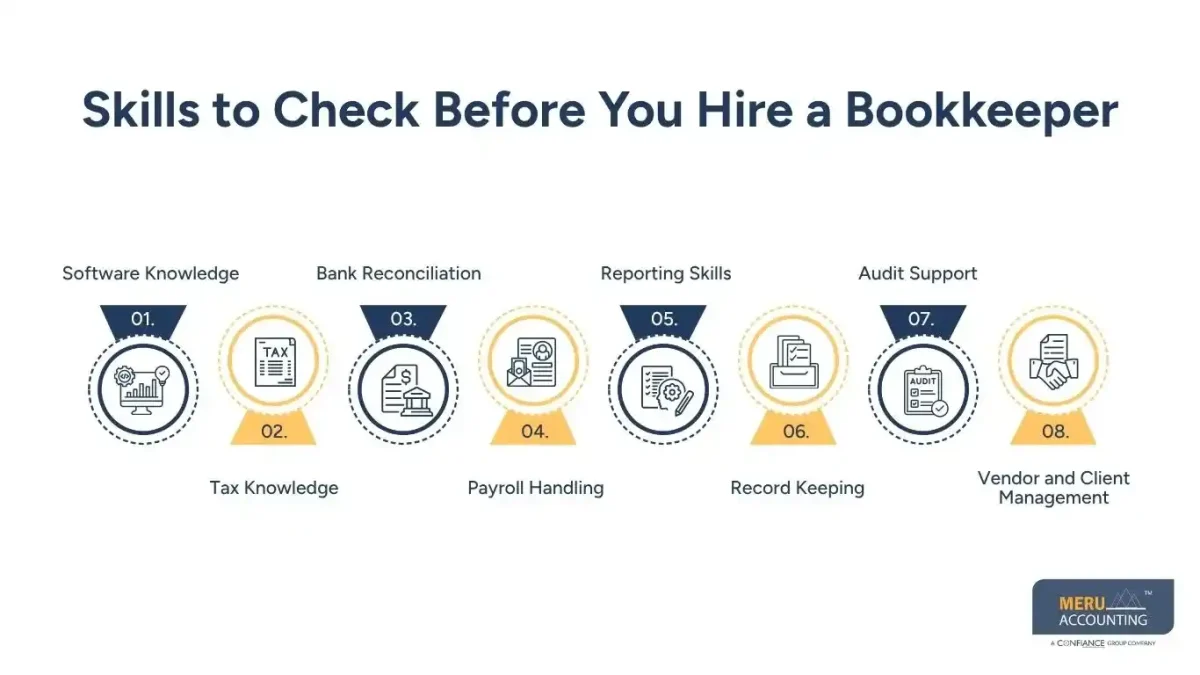
Reporting Skills: They should prepare balance sheets, profit & loss, and cash flow reports. Clear reports help managers make quick choices.
Record Keeping: Organized records make audits, reviews, and planning easier. Easy-to-access files save time.
Audit Support: They should help during audits, give correct info, and fix mistakes fast. Preparing summaries can save auditors’ time.
Vendor and Client Management: Track invoices, payments, and reconcile accounts with suppliers and clients. This prevents late payments and keeps relationships strong.
Steps to Hire a Bookkeeper
Here’s the best process you can follow to hire a bookkeeper:
Know What You Need: List the tasks, skills, and work history you need. Decide if the role is full-time or part-time. Clear goals help you hire the right person.
Write a Clear Job Post: List the job duties, software skills, and work needs to draw the right people. Share what your team is like to help bring in good bookkeepers.
Check Each Applicant: Read resumes for work history and proof of skills, such as a CPA or a business bookkeeping course. This is key if you are looking for a bookkeeper who meets your work needs. Past work in your field is a plus.
Hold Interviews: Ask about past jobs, how they fix errors, and real business bookkeeping. Use real work cases to test how they solve problems.
Check Past Work: Ask past bosses about work ethic, trust, and job quality. Past feedback can show work habits and close care for details.
Start with a Trial: Begin with a short trial to test skills, work speed, and team fit. A trial helps lower hiring risk and shows if both sides are a good fit.
Benefits You Get When You Hire a Bookkeeper Correctly
Here are some benefits you get when you hire a bookkeeper correctly:
Saves Time
- A bookkeeper handles daily entries, bills, and reports.
- You get more hours to grow your business.
Cuts Mistakes
- Accounts are checked and kept correct.
- Fewer errors mean less stress and no fines.
Keeps You Compliant
- Taxes and rules are followed on time.
- Deadlines are met and penalties avoided.
Supports Smart Decisions
- Reports show profit, cost, and trends.
- You can plan, invest, and save with confidence.
Improves Cash Flow
- Money in and out is tracked well.
- You avoid shortages and stay ready for growth.
Helps Business Grow
- Insight on costs and income guides your plan.
- You can expand with clarity and control.
Questions to Ask Before You Recruit a Bookkeeper
- How do you fix accounting errors?
- Which software do you use best?
- Can you manage payroll and taxes?
- How do you keep records easy to find?
- How do you stay updated on tax rules?
How to Retain a Good Bookkeeper
When you hire a bookkeeper, retaining a good one is very important. Here’s how you can do it:
Offer Fair Salary and Benefits
Good pay keeps staff motivated. If you are looking for a bookkeeper, competitive compensation helps retain skilled talent. Health benefits or flexible hours add loyalty.
Set Clear Tasks and Goals
Define duties to avoid confusion and boost output. Regular feedback helps them improve.
Provide Learning Opportunities
Training and certifications increase skills. Skilled bookkeepers add value over time.
Recognize Good Work
Praise accuracy, speed, and problem-solving. Recognition builds morale.
Keep a Respectful Workplace
Supportive culture keeps employees engaged. Respect ideas and contributions.
Common Mistakes When Looking for a Bookkeeper
Here are some common mistakes business owners make when they hire a bookkeeper:
Looking Only at Cost: Picking a bookkeeper based only on price can hurt your business. Skills and work history matter more than low rates.
Not Checking Software or Field Skills: Not making sure they know your software or line of work can slow tasks and lead to mistakes.
Skipping Past Work Checks: Not checking past jobs or work references can lead to hiring someone you cannot trust.
Hiring Too Fast: Rushing to fill the job without clear tasks or goals can cause mistakes and mix-ups.
Poor People Skills: A good bookkeeper shares clear reports and explains the numbers well. Poor people skills can hide key issues.
Knowing what to look for in a bookkeeper helps you hire a bookkeeper who is skilled, honest, and dependable. Focus on close work, trust, software skills, and good work habits. This guide helps you recruit a bookkeeper who keeps your books right, helps your business grow, and gives you peace of mind.
At Meru Accounting, we help businesses hire and manage skilled bookkeepers. Our team keeps your books right, follows all rules, and helps your business grow. We give expert help, software support, and ongoing business bookkeeping services built for your business. With Meru Accounting, you get more than a bookkeeper—you get a trusted partner who helps your business succeed.
Our Expert Insight
Do not hire a bookkeeper based only on price. The right hire does more than keep your books up to date. They give clear reports on time, help cut costs, track cash flow, and keep your books in line with tax law. Check job skills, past work, clear talk, and trust. This helps you build a strong base, grow with less risk, and make smart business choices.
Key Takeaways
- Hire a bookkeeper with the right skills, trust, and past work.
- Look for skill with Xero, QuickBooks, tax work, payroll, and clear reports.
- Use a clear hiring plan with job talks, work checks, and a short trial.
- Pick a bookkeeper with good people skills, work habits, and the will to fix issues.
- Do not hire based only on cost, or skip past job and work checks.
- Keep good bookkeepers with fair pay, job growth, and a good place to work.
- The right bookkeeper helps keep your books right, track cash flow, meet tax rules, and help your business grow.
FAQs
Record all transactions and keep accounts correct. They also help with business bookkeeping by checking that all money in and out is tracked.
Certification helps, but skill matters more. Good work and accuracy count more than a certificate.
Usually, monthly, based on your business size. Small firms may need weekly updates, larger ones may report more.
Yes, most do payroll along with other tasks. They make sure staff get paid on time, and taxes are correct.
Ask references and check past work. Look for honesty and care in handling money.
optional anymore
on running the business