
Real estate businesses handle large amounts of financial data every day. Rent collection, lease tracking, vendor payments, tax filing, and expense management all require careful attention. As firms expand their portfolios, these tasks become more difficult to manage internally. This is why many businesses now choose to outsource real estate accounting for stable and scalable growth.
When firms outsource real estate accounting, they often gain better financial control, timely reporting, and lower operating costs.
Property firms also face changing tax laws and reporting rules, making professional accounting support necessary for smooth operations.
According to a report by Deloitte, outsourcing finance functions remains a common strategy among growing businesses because it reduces operational costs and increases reporting efficiency.
Real estate firms are using the same approach to maintain accurate financial records while focusing on investment and property management decisions.
What You Will Learn From This Blog
- Why firms choose to outsource real estate accounting services
- How outsourcing reduces accounting costs for property businesses
- Ways outsourced accounting increases reporting accuracy
- The role of analysts in property investment management
- Risk control methods used in outsourced accounting systems
- Important factors to consider before selecting an accounting partner
- How Meru Accounting supports real estate firms with accounting services
Introduction To The Real Estate Accounting
Real estate accounting is the process of managing and recording all financial activities related to property businesses. It includes tracking rental income, vendor payments, mortgage expenses, taxes, maintenance costs, and other daily financial transactions.
These records are important because they give property firms a clear understanding of their business performance and overall profitability. Proper accounting also allows companies to maintain organized financial data for future planning and decision-making.
Property firms often manage multiple lease agreements, tenant deposits, and recurring monthly payments. Real estate accounting ensures that rent collections, lease charges, and tenant-related transactions are recorded accurately without missing important details, which is a key reason firms outsource real estate accounting.
In addition, businesses must monitor expenses such as repairs, insurance, utilities, and management fees. Organized accounting systems classify these costs properly, making tax filing and financial reporting easier and more reliable.
Real estate accounting also plays an important role in compliance and investment management. Property businesses must follow tax regulations and maintain proper documentation to reduce filing errors and avoid penalties during audits or inspections.
Financial reports such as balance sheets, cash flow statements, and profit reports allow owners and investors to review occupancy trends, rental income, and overall property returns. Accurate financial statements also build trust with lenders, investors, and other business stakeholders.
Why Property Firms Prefer to Outsource Real Estate Accounting for Scalability
Reduced Internal Workload
When firms outsource real estate accounting, internal teams spend less time on bookkeeping and financial reporting. This allows management to focus on business growth and tenant relations.
Better Access To Skilled Accountants
Outsourced accounting providers often employ experienced professionals with knowledge of property accounting standards and tax compliance requirements.
Faster Business Expansion
Growing property firms may struggle to hire and train accounting staff quickly. Outsourcing gives businesses access to ready accounting teams without long recruitment delays.
Easier Multi-Property Management
Companies managing several properties need organized accounting systems. Outsourced providers use structured processes to manage records across multiple locations.
Better Reporting Timelines
Timely financial reports allow firms to make informed investment decisions. Outsourced teams follow reporting schedules to maintain consistent financial visibility.
Flexible Service Structure
Property firms can increase or reduce accounting support based on business needs. This flexibility is one reason many firms prefer to outsource real estate accounting during expansion periods.
Cost Efficiency Benefits of Outsource Real Estate Accounting
Lower Staffing Expenses
Hiring in-house accountants involves salaries, benefits, training costs, and office expenses. Outsourcing reduces these fixed operational costs significantly.
Reduced Software Costs
Accounting providers already use accounting platforms and reporting tools. Property firms avoid spending large amounts on separate accounting software systems.
Lower Training Requirements
Real estate tax laws and accounting standards change regularly. Outsourcing removes the burden of continuous staff training and compliance education.
Better Budget Planning
Most outsourced accounting services operate on fixed pricing models. Predictable service costs help firms manage budgets more effectively.
Fewer Reporting Errors
Accounting mistakes often lead to penalties and financial loss. Experienced outsourced teams reduce costly errors through review systems and process checks.
Efficient Resource Allocation
When firms outsource real estate accounting, they can redirect resources toward property acquisition, tenant service, and portfolio expansion activities.
Management teams also gain more time to focus on business operations and investment growth strategies, supported by insights from what does a real estate analyst do in evaluating property performance and financial health.
How Outsource Real Estate Accounting Improves Financial Accuracy and Compliance
Structured Data Entry Systems
Professional accounting firms follow organized processes for recording transactions. This reduces duplicate entries and missing financial records.
Accurate Bank Reconciliation
Regular reconciliation ensures that company records match bank transactions. This process identifies errors and unauthorized transactions quickly.
Compliance With Tax Rules
Property businesses must follow tax filing deadlines and reporting rules. Outsourced experts stay updated with changing regulations and filing standards.
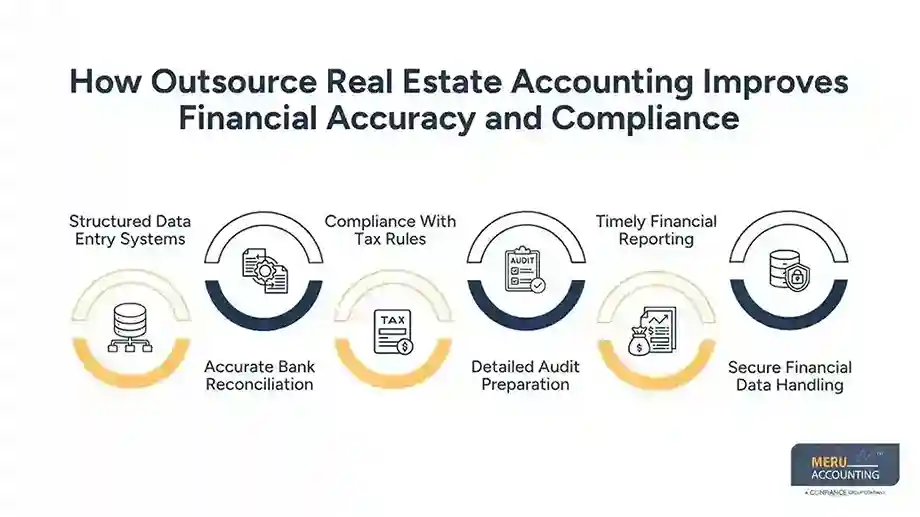
Detailed Audit Preparation
Well-maintained records make audits easier and less stressful. Outsourced accounting teams organize documents properly for inspections and reviews.
Timely Financial Reporting
Monthly and quarterly reports provide accurate financial visibility. Timely reporting allows property firms to identify income gaps and expense trends.
Secure Financial Data Handling
Professional accounting firms often use secure cloud systems and controlled access methods to protect financial information from misuse. Regular data backups and monitoring systems also reduce the risk of financial data loss or unauthorized access.
What Does a Real Estate Analyst Do in Property Investment and Management?
Market Performance Analysis
Many property owners ask, what does a real estate analyst do in daily operations? One major task involves studying property market trends and rental demand.
Property Income Evaluation
Analysts review rental income, vacancy rates, and operating expenses. This information helps investors understand property performance.
Investment Risk Review
Understanding financial risk is another key responsibility. Analysts examine debt levels, market conditions, and cash flow stability. This process reduces uncertainty in investment decisions and long-term planning.
Property Valuation Assessment
A key part of what does a real estate analyst do includes reviewing property values using market data, income methods, and comparable sales. This ensures more accurate pricing decisions for buying or selling assets.
Portfolio Performance Reporting
Analysts compare property performance across multiple locations. These reports assist management teams in identifying strong and weak investments.
How Real Estate Analysts Support Firms That Outsource Real Estate Accounting
Data Review For Better Reporting
Analysts review accounting reports prepared by outsourced teams, which also answers what does a real estate analyst do in terms of financial monitoring and reporting oversight. This creates stronger financial visibility for business owners and investors.
Budget Planning Assistance
Analysts study income and expense patterns to assist with property budgeting and future investment planning, which is a key part of what does a real estate analyst do in real estate financial management.
Accurate budget planning also allows firms to control spending and maintain stable cash flow.
Occupancy Trend Monitoring
Occupancy data directly affects property income. Analysts track vacancy trends to identify areas that need operational attention.
Financial Decision Support
When firms outsource real estate accounting, analysts use financial reports to guide investment and operational decisions. Proper financial analysis allows management teams to make more informed property expansion plans.
Risk Identification Processes
Analysts review unusual expenses, income drops, and debt trends. Early identification reduces financial pressure on the business.
Risk Management and Fraud Control in Outsourced Real Estate Accounting
Segregation Of Financial Duties
When companies outsource real estate accounting, providers divide financial tasks among different professionals. This reduces the risk of fraud and unauthorized transactions.
Regular Transaction Monitoring
Frequent monitoring identifies unusual payments or missing funds quickly. Early detection limits financial damage.
Controlled Access Systems
Secure accounting platforms use password protection and access permissions. These systems prevent unauthorized financial changes.
Vendor Payment Verification
Accounting teams verify invoices and vendor details before releasing payments. This reduces the risk of duplicate or false transactions.
Internal Review Procedures
Regular reviews improve reporting accuracy and identify accounting inconsistencies before they become serious issues. Ongoing internal checks also strengthen financial transparency for management and investors.
Compliance Documentation Maintenance
Proper documentation creates a clear financial trail for audits, tax reviews, and investor inspections.
Organized records also reduce delays during compliance checks and financial assessments, showing another layer of what does a real estate analyst do in ensuring audit readiness and regulatory compliance.
How to Choose the Right Provider to Outsource Real Estate Accounting Services
Industry Experience Evaluation
Property firms should choose providers with real estate accounting experience. Industry knowledge reduces reporting mistakes and compliance risks.
Technology and Software Capabilities
The provider should use secure accounting platforms with reporting and cloud access features suitable for property businesses. Modern accounting systems also allow faster report sharing and easier financial tracking across multiple properties.
Communication Process Review
Clear communication is important for smooth financial operations. Providers should offer timely updates and quick response times.
Data Security Measures
Financial data protection should remain a top priority. Businesses must review security policies before signing service agreements.
Why Meru Accounting is a Trusted Partner for Real Estate Firms
Real Estate Accounting Experience
Meru Accounting has years of experience serving property businesses across different countries. We understand the accounting challenges faced by growing real estate firms and also support clients in understanding what does a real estate analyst do in real-world property financial management.
Skilled Accounting Professionals
Our team includes experienced accountants and bookkeeping experts trained in real estate financial management and reporting standards. At Meru Accounting, our professionals also stay updated with changing accounting rules and tax requirements.
Customized Accounting Solutions
Meru Accounting provides tailored accounting services based on business size, property portfolio, and reporting requirements. This allows property firms to receive services that match their exact operational needs.
Secure Cloud Accounting Systems
Our team of certified experts uses secure accounting systems for data management, document sharing, and financial reporting support. Cloud-based access also allows businesses to review financial reports anytime with better convenience.
Tax And Compliance Support
Meru Accounting assists businesses with tax reporting, bookkeeping, payroll support, and financial statement preparation. We also help firms maintain compliance with reporting deadlines and regulatory requirements.
Our Expert Perspective
From our expert perspective, outsourcing real estate accounting helps firms maintain strong financial discipline during growth by reducing reporting delays and ensuring accurate, well-structured records even when internal teams are overburdened with daily operations. It also improves overall financial clarity, which directly strengthens investor and stakeholder trust through timely and reliable reporting.
Key Takeaways
- Many property firms outsource real estate accounting to reduce operational pressure
- Outsourcing lowers staffing, software, and training costs
- Professional accounting services increase reporting accuracy and tax compliance
- Real estate analysts review market trends, property income, and investment risks
- Risk control systems reduce fraud and reporting mistakes
- Choosing an experienced provider is important for long-term business stability
- Meru Accounting provides specialized accounting services for real estate businesses
FAQs
Outsource real estate accounting means hiring an external accounting company to manage bookkeeping, reporting, tax work, and financial records for property businesses.
Many firms outsource real estate accounting to reduce costs, increase reporting accuracy, and manage financial tasks more efficiently during business growth.
A real estate analyst studies property income, expenses, market trends, and investment risks to assist business owners in making financial decisions.
Yes, professional accounting firms use secure systems, data protection methods, and controlled access procedures to protect financial information.
Meru Accounting provides bookkeeping, tax support, financial reporting, and real estate accounting services designed for growing property firms.