
In 2026, many companies are focusing on better control over staff costs, tax duties, and salary work. One key area is payroll services, which have become a major part of business spend. When firms use structured payroll systems in a planned way, they can reduce errors, save time, and lower overall operational costs.
Outsourcing payroll functions is now a common choice for small and mid-size firms as well as large organizations. It reduces the need for a full in-house team and limits additional software and system expenses.
Many firms now also rely on payroll processing tools managed by external experts to handle employee compensation processing with greater control and less effort.
The blog explains how outsourced payroll functions reduce costs, improve accuracy, and provide better control over salary operations in 2026.
What You Will Learn From This Blog
- How payroll services reduce business costs in 2026
- Why firms are moving away from in-house salary teams
- Key cost issues in internal payroll work
- How payroll processing becomes simpler with outsourcing
- Risk and compliance savings linked to payroll systems
- How to choose the right service partner
- Real business value from outsourcing payroll functions
Introduction to the Payroll Services
Payroll services cover salary calculation, tax deduction, payslip creation, and payment tracking. These solutions also manage employee records and monthly reports. Many firms depend on structured payroll systems to handle recurring payroll operations with fewer errors and better control over financial records.
Salary calculation, tax handling, and benefit management follow a structured step-by-step process. Each employee receives payment on time through well-organized financial workflows. Strong systems reduce manual effort and improve accuracy, leading to smoother monthly salary cycles and fewer corrections.
In 2026, firms face growing pressure to control staff costs, increasing demand for structured financial solutions. Many companies now prefer outsourcing instead of building large internal teams. These systems connect directly with finance records, help track salary spend, and support budget planning. Accurate handling reduces accounting gaps, while strong systems prevent errors, reduce penalties, and improve trust in financial reporting.
Why Businesses are Turning to Payroll Services in 2026
Rising Staff Costs
Hiring payroll staff, training them, and managing software costs more each year. Many firms use payroll services to reduce this load and avoid rising fixed expenses linked to internal salary teams.
Need For Accuracy
Errors in salary work can cause legal and financial issues. Outsourced support reduces manual errors in payroll processing tasks and brings more control over monthly salary calculations.
Time Saving Pressure
Business teams want more time for core work and strategic tasks. External support reduces internal workload and simplifies monthly salary cycles, allowing finance teams to focus on higher-value activities with better efficiency.
Technology Changes
New tools are needed for tax updates and reporting. Many providers already use updated systems for handling payroll operations, which reduces the need for frequent internal software upgrades.
Compliance Demands
Rules for tax and staff payments change often. Firms rely on payroll support to stay aligned with these rules and avoid penalties linked to incorrect filings or delayed updates.
Key Cost Challenges in In-House Payroll Management
Salary And Staffing Cost
Running in-house payroll systems requires skilled staff. This increases fixed costs for companies and adds a long-term salary burden on finance teams.
Software And System Cost
Payroll software and system updates add extra cost for companies using payroll services. Internal systems also require regular upgrades to stay accurate and meet tax compliance rules.
Training And Skill Gaps
Staff must be trained for tax rules and tools. This increases overall expenses and adds ongoing learning costs for every policy or system update.
Error And Correction Cost
Mistakes in payroll management lead to penalties and extra corrections. These issues raise total business costs and often require additional audit work.
Time And Resource Loss
Internal teams spend hours on salary work. This reduces time for other key financial tasks and limits focus on planning and business growth activities beyond payroll management.
How Outsourced Payroll Services Reduce Operational Costs
Lower Staff Requirement
Outsourcing removes the full payroll team’s needs, reducing staffing expenses. Companies avoid hiring, onboarding, and long-term salary commitments for payroll roles. External teams manage workload efficiently at scale.
Reduced Software Spend
Providers use payroll tools, lowering internal software investment costs significantly. Businesses avoid license renewals, system upgrades, and maintenance charges every year. Technology cost becomes more predictable and controlled.
Less Administrative Workload
External teams handle payroll operations, reducing the internal finance workload on a daily basis. Internal staff gain more time for planning, reporting, and financial review activities. Routine payroll responsibilities no longer slow down key business operations.
Better Use Of Internal Resources
Finance staff focus on core tasks instead of salary processing work. Teams shift attention toward budgeting, forecasting, and performance analysis activities. Overall productivity improves across financial departments.
Predictable Monthly Cost Structure
Outsourced payroll services usually come with fixed pricing. This helps firms plan costs better and avoid unexpected salary management expenses.
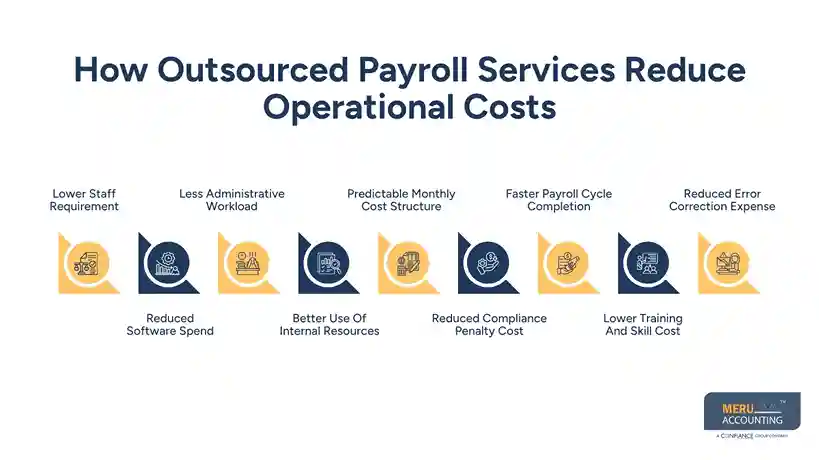
Reduced Compliance Penalty Cost
Accurate filings reduce fines, penalties, and regulatory compliance expenses overall. Experts track tax updates and ensure correct submission timelines. The risk of legal issues decreases significantly with structured handling.
Faster Payroll Cycle Completion
Automated systems complete payroll cycles faster, improving operational efficiency levels. Employees receive salaries on time without processing delays. Finance teams manage payroll tasks with better speed and accuracy.
Lower Training And Skill Cost
External providers manage updates, reducing internal training and skill costs. Companies avoid repeated workshops for tax rules and system changes. Staff development expenses related to payroll drop noticeably.
Reduced Error Correction Expense
Fewer mistakes reduce corrections, audits, and additional financial expenses significantly. Accurate calculations limit rework and prevent costly adjustments later. Businesses maintain cleaner records with less correction effort required.
Compliance and Risk Cost Reduction Through Payroll Services
Tax Accuracy Control
Outsourced payroll systems reduce tax filing errors significantly. Fewer mistakes prevent fines and penalty charges for businesses overall.
Updated Rule Handling
Service providers track rule changes regularly and carefully. Salary processing stays aligned with the latest law updates consistently.
Audit Support
Clean records from payroll systems make audits easier and faster. Audit preparation takes less time and reduces extra costs.
Data Security
External systems include strong protection layers for sensitive data. Salary processing information stays safer from misuse or breaches.
Legal Risk Reduction
Correct salary handling reduces legal issues and disputes significantly. Strong payroll services lower business exposure to compliance penalties and financial risks overall.
Choosing the Right Payroll Services Provider in 2026
Experience And Skill Level
Choose providers with strong payroll expertise and industry background. This ensures smooth salary management and reduces operational mistakes during routine work cycles.
Technology Use
Modern tools improve speed and accuracy in calculations. Good providers use updated systems that reduce manual effort and improve financial reporting quality.
Cost Structure Clarity
Clear pricing avoids hidden costs and unexpected charges. Transparent billing keeps budgeting stable and helps companies plan expenses with better control.
Compliance Knowledge
Providers must understand tax rules and legal requirements clearly. Strong knowledge improves safety and reduces the risk of penalties or filing errors.
Support Quality
Quick support reduces delays during critical salary cycles. Strong payroll services and efficient payroll processing support avoid business disruption and maintain smooth financial operations.
Expert Payroll Management Services By Meru Accounting
Meru Accounting provides structured and reliable payroll services designed for global businesses. Our team handles full payroll processing, including salary calculation, tax work, and report creation with high accuracy.
We focus on reducing internal workload so companies can manage finance with less effort. Our payroll services are built to reduce cost pressure and improve control over payroll systems. With strong experience in employee payroll handling, we help businesses avoid errors, stay compliant, and maintain clean records across monthly cycles.
Our Expert Perspective
From our experience, many businesses spend higher costs on in-house payroll teams than planned. Outsourcing payroll services helps control expenses and reduces recurring errors in daily operations. Strong payroll processing systems also improve financial clarity across departments and support better decision-making.
Key Takeaways
- Outsourced payroll services reduce staff and system costs
- Payroll processing becomes more accurate and faster
- Compliance risk and penalty cost reduce strongly
- Firms gain better control over salary spend
- External providers offer scalable cost models
- Internal workload becomes lighter and more focused
FAQs
Payroll services manage employee salary, tax, and payment tasks. They handle monthly payroll operations so businesses do not need to do it manually.
Payroll processing includes calculating wages, tax deductions, and final salary payments. It ensures employees are paid correctly and on time.
Yes, payroll services reduce staff cost, software cost, and training cost. They also reduce errors in payroll operations, which saves money.
Companies outsource payroll management to save time, reduce costs, and avoid compliance issues. It also improves accuracy in payroll management.
Yes, trusted providers use secure systems for payroll processing. This protects employee data and financial records.