Managing payroll is one of the most important tasks for any business. While paying staff on time is an important aspect of the job, employers must also handle payroll taxes along with it at the same time. Tax laws can be strict, and even a small error can lead to fines, fees, audits, and other issues.
Many business owners focus on sales, growth, and day-to-day work, but tax compliance should never be ignored. Proper payroll taxes management helps firms meet legal duties, keep clear records, and avoid costs that can hurt profits.
In today’s business world, accurate payroll processing is not just about issuing paychecks. It also includes tax calculation, tax deposits, reports, and file storage. When these tasks are done well, firms can stay compliant and lower risk.
What You Will Learn From This Blog
In this blog, you will learn:
- What payroll taxes are and why they matter
- How payroll processing affects tax compliance
- Common payroll tax errors that lead to fines
- How proper payroll taxes management helps firms avoid penalties
- Best ways to handle payroll taxes
- How skilled payroll support can improve compliance
Understanding Payroll Taxes and Their Importance
Payroll taxes are taxes that employers must take from employees’ pay and send to tax authorities. Employers are also in charge of paying some taxes on behalf of their workers.
These taxes may include:
- Federal income tax withholding
- Social Security tax
- Medicare tax
- Federal jobless tax
- State income taxes where needed
- Local payroll-related taxes in some areas
Employers must work out these taxes the right way, take the proper amounts, and send payments on time. They must also file reports that show pay given and taxes withheld.
Payroll taxes are mandatory because they fund public plans and services. Failure to meet tax rules can result in major finance-related issues. Firms that manage payroll taxes well build trust with staff and tax authorities while lowering the risk of penalties.
The Link Between Payroll Processing and Tax Compliance
There is a direct link between payroll processing and tax compliance. Each payroll run affects tax calculation, staff deductions, and reporting duties.
When payroll processing is done correctly, firms can:
- Work out employee pay correctly
- Apply proper tax withholdings
- Meet tax filing due dates
- Keep clear payroll records
- Lower compliance risks
On the other hand, weak payroll processing can create issues that quickly lead to penalties. Wrong wage math may result in taxes being paid short. Missing staff data can cause reporting errors. Late payroll runs may affect tax deposit due dates.
Since payroll data serves as the base for tax reports, firms need sound systems and steps to help ensure accuracy at each stage.
A strong payroll process helps firms stay on track and ready for audits, reviews, and rule changes.
Common Payroll Tax Mistakes That Lead to Penalties
Many payroll tax penalties come from errors that can be avoided. Knowing these common mistakes can help firms stay clear of costly issues.
Missing Tax Filing Deadlines
Tax forms must be filed by set due dates. Late filings often result in penalties and added fees. Firms that fail to track due dates may face repeat compliance issues that grow more costly over time.
Incorrect Employee Classification
Some firms wrongly label workers as contractors when they should be treated as employees. This error can affect payroll taxes, perks, and reporting duties. Tax groups may issue penalties when worker status is found to be wrong.
Errors in Tax Calculations and Withholdings
Hand-run math raises the risk of errors. Wrong tax rates, old tax tables, or data entry mistakes can lead to tax amounts being too low or too high. Even small errors can create compliance issues when they occur in many payroll cycles.
Late Payroll Tax Deposits
Employers must send payroll taxes based on due dates set by tax groups. Late deposits are among the top reasons firms get penalties. Added fees may also build on unpaid sums.
Inaccurate Reporting
Payroll reports must match real payroll records. Gaps between reported figures and payroll data can trigger audits or requests for more proof.
Clear and correct reporting is key for staying compliant and avoiding disputes.
Payroll Taxes Management Helps Businesses Avoid Costly Penalties
Strong payroll taxes management plays a major role in shielding firms from money and legal risks.
Ensures Timely Tax Payments
A well-run payroll tax system helps employers track due dates and send payments on time. On-time deposits lower the chance of penalties and help firms keep a good compliance record.
Improves Calculation Accuracy
Proper steps lower errors in wage math, tax deductions, and employer tax duties. Accurate math helps firms avoid tax shortages that could result in fines and added fees.
Supports Accurate Reporting
Payroll tax reports must be full and correct. Good payroll management helps ensure that payroll data matches tax filings. This match helps stop reporting issues and lowers audit risks.
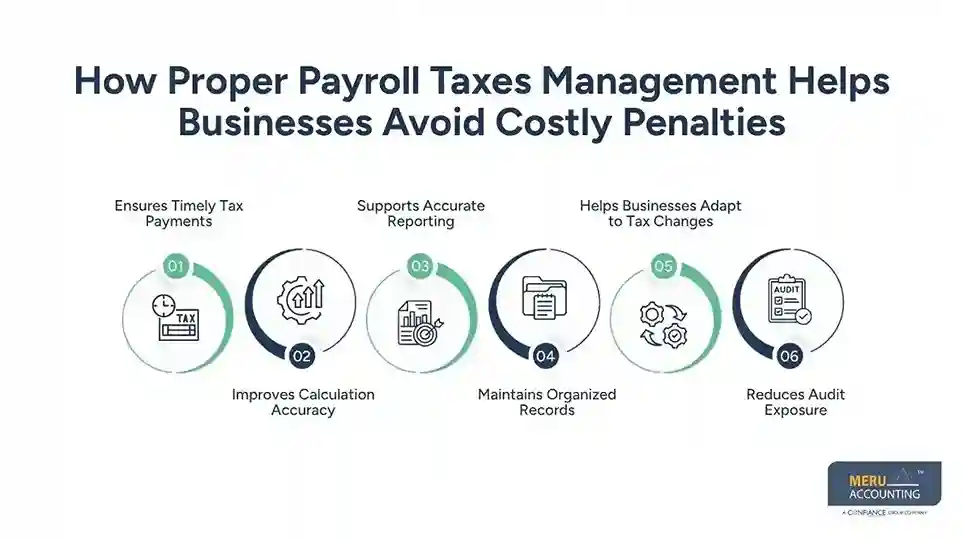
Maintains Organized Records
Tax groups often ask for payroll records during reviews or audits. Proper recordkeeping lets firms provide proof fast and in the right form. Clear records also help solve issues before they grow into larger problems.
Helps Businesses Adapt to Tax Changes
Tax laws and rates can change over time. Firms that actively manage payroll taxes are better able to adjust their steps when new rules take effect. Keeping up with tax updates helps lower compliance risks and protects firms from avoidable errors.
Reduces Audit Exposure
While audits can happen for many reasons, strong payroll tax compliance lowers the chance of issues that draw tax authorities’ attention.
Firms with clear records and steady reporting are often in a better spot during audits and reviews.
Best Practices for Managing Payroll Taxes Effectively
Firms can boost compliance and lower risk by using proven payroll tax management methods.
Establish a Consistent Payroll Schedule
A steady payroll schedule helps ensure timely pay and tax deposits. This also makes it easier to track payroll work and spot issues before they grow.
Keep Employee Information
Staff records should be updated when there are changes in tax forms, home addresses, or work status. Correct data supports proper tax withholding and reporting.
Monitor Tax Law Changes
Tax laws can change at the federal, state, and local levels. Firms should review updates on a regular basis to help ensure compliance with current rules. Staying informed helps stop errors caused by old methods.
Conduct Routine Payroll Reviews
Regular payroll reviews can spot errors before tax forms are filed. These reviews help check payroll math, deductions, and reporting accuracy.
Use Reliable Payroll Technology
Modern payroll software can automate calculations, tax updates, and reporting tasks. Automation lowers manual work and helps improve accuracy across payroll tasks.
Maintain Detailed Documentation
Firms should keep payroll records, tax forms, payment proof, and staff files well-maintained and easy to access.
Good records support compliance and provide useful proof if issues come up.
Meru Accounting's Payroll Processing Services
At Meru Accounting, we know that payroll management needs accuracy, consistency, and care. Our payroll processing services help firms manage payroll tasks with ease while supporting tax compliance.
Our services include:
- Payroll calculation and management
- Staff payment processing
- Payroll tax support
- Payroll reporting
- Record maintenance
- Compliance-focused payroll solutions
Our team works with firms in many fields to make payroll work simple and lower admin tasks. By outsourcing payroll duties, firms can focus on growth while gaining trust in their payroll systems. We help clients build clear payroll workflows that support accuracy and timely reporting. Our goal is to help firms stay compliant while boosting workflow and output.
Our Expert Insight
One of the top payroll issues firms face is the belief that payroll compliance will handle itself. In reality, payroll taxes need ongoing care, clear records, and frequent checks. Many penalties stem from simple issues such as missed due dates, wrong tax rates, or old staff data. These errors may seem small at first, but can become costly when they continue through many payroll cycles.
Firms that invest in strong payroll processing steps often face fewer compliance issues and spend less time fixing errors. A proactive plan is often far less costly than dealing with audits, penalties, and added fees later. The most successful firms treat payroll tax management as a core business process rather than an office task. This view helps create strong checks and better long-term results.
Key Takeaways
- Payroll taxes are a key compliance duty for employers.
- Accurate payroll processing supports proper tax math and reporting.
- Common mistakes include late filings, math errors, and poor records.
- Proper payroll taxes management helps lower penalties, fees, and audit risks.
- Well-kept records play a major role in compliance success.
- Regular reviews and updated payroll systems improve accuracy.
- Skilled payroll support can help firms manage payroll duties better.
FAQs
Payroll taxes are taxes that employers take from employees’ pay and send to tax authorities. Employers may also be in charge of paying some payroll-related taxes on behalf of staff.
Payroll processing helps ensure that pay, deductions, and tax withholdings are worked out correctly. Accurate payroll data supports proper tax filings and on-time tax payments.
Firms may face fines, added fees, audits, and other compliance actions if payroll taxes are not worked out, reported, or deposited correctly.
Payroll records should be reviewed on a regular basis, preferably during each payroll cycle and through routine in-house reviews to spot and fix issues quickly.
Yes. Skilled payroll service providers can help improve accuracy, manage due dates, keep records, and support compliance with payroll tax rules.