
Finance firms today operate in a strict and fast-moving environment. Every transaction must be tracked, recorded, and reported with high accuracy. Regulators expect clean records. Investors expect clear performance data. Auditors expect complete transparency. This makes financial control a daily need, not just a year-end task. In this setting, portfolio accounting services have become a core part of financial operations. These services help firms manage investment data in a structured way. They reduce manual errors, improve reporting speed, and support better financial control. They also help teams stay aligned across departments.
Most importantly, they help firms stay ready for audits at any time. Instead of rushing during audit season, firms with strong systems stay prepared all year. This creates a smoother workflow and reduces stress for finance teams.
This blog explains how these services improve compliance, support audit readiness, and strengthen finance operations. It also explains the role of a portfolio accountant and how firms can choose the right solution for long-term stability.
What You Will Learn From This Blog
By reading this blog, you will learn:
- What portfolio accounting services are in simple terms, and how they work in real finance systems.
- Why finance firms depend on them for daily reporting and long-term control.
- How a portfolio accountant supports daily operations and reduces reporting pressure.
- How these services improve compliance systems and reduce regulatory risk.
- What features make them effective in modern finance environments?
- How they improve audit readiness and reduce last-minute workload.
- How to choose the right provider based on firm needs and scale.
Each point builds a clear understanding of how accounting systems support financial accuracy. Together, they help you see the full picture of portfolio management.
What Are Portfolio Accounting Services and Why They Matter
Portfolio accounting services refer to the process of tracking and managing all financial assets in an investment portfolio. These assets can include stocks, bonds, mutual funds, and other securities. They also include cash positions and related financial instruments.
These services record every transaction that happens inside a portfolio. They also track changes in value and overall performance across time. This gives firms a full view of financial movement.
At a basic level, they help firms:
- Record buy and sell trades with proper timestamps
- Track cash movements across accounts and systems
- Update asset values based on market changes
- Calculate gains and losses for reporting needs
- Prepare structured financial reports for internal use
Without these services, firms often rely on manual spreadsheets or disconnected systems. That creates risk because manual work increases the chance of missed or wrong entries. Over time, even small errors can create larger reporting issues.
These services matter because finance firms must meet strict reporting rules. Clean and clear records reduce risk and build trust with regulators and investors. They also help teams make faster financial decisions with better data visibility.
Role of a Portfolio Accountant in Modern Finance Operations
A portfolio accountant plays a key role in managing financial data for investment portfolios. This role requires strong attention to detail and a clear understanding of financial systems. It is a core function in modern finance teams.
A portfolio accountant is responsible for:
- Recording daily portfolio activity with correct classification
- Checking trade accuracy across systems and reports
- Reconciling accounts and cash balances on a regular basis
- Reviewing asset prices to ensure correct valuation
- Preparing internal and external reports for stakeholders
They also act as a bridge between operations and compliance teams. If there is a mismatch in data, they identify and fix it early, before it affects reporting. This reduces risk and improves data trust.
In modern finance firms, this role is even more important. The volume of transactions has increased, and reporting timelines are shorter than before. At the same time, compliance rules are stricter and more detailed.
A skilled portfolio accountant helps firms stay stable under this pressure. They ensure that data is correct before it reaches reports or audits, which improves overall financial control and reduces last-minute corrections.
How Portfolio Accounting Services Improve Compliance Management
Compliance means following financial rules and reporting standards set by regulators and internal policies. It is one of the most important parts of financial operations today.
Portfolio accounting services support compliance in several ways.
Accurate Transaction Records
Every trade and adjustment is recorded in real time with clear tracking. This reduces missing data and manual errors that can affect reports. It also helps teams verify transactions quickly when needed.
Clear Data Structure
Information is stored in a clean and organized format that is easy to review. This helps compliance teams check data faster and reduces confusion during audits. It also improves team coordination.
Audit-Ready History
Each entry has a time stamp and source record that shows where the data came from. This creates a clear audit trail that regulators can follow without difficulty. It also increases transparency across systems.
Rule-Based Controls
Systems can flag unusual transactions or missing values automatically. This helps prevent compliance issues early before they grow into larger problems. It also supports better internal monitoring.
Consistent Reporting
Reports follow the same structure each time, even across different periods. This reduces confusion during audits and helps teams compare data easily. It also improves reporting speed.
With these controls, firms reduce risk and avoid last-minute compliance problems. They also gain more confidence in their financial reporting systems.
Key Features of Effective Portfolio Accounting Services
Not all systems provide the same level of support. Strong portfolio accounting services include features that improve accuracy, speed, and audit readiness across finance teams.
Automation of Data Entry
Automation reduces manual work and helps teams save time on daily tasks. It also lowers the chance of human error in financial records.
Real-Time Portfolio Updates
Firms can see updated values without waiting for end-of-day reports or manual updates. This helps teams make faster decisions based on current data.
Multi-Asset Support
Good systems handle different types of investments in one place without splitting data. This improves visibility and simplifies reporting across portfolios.
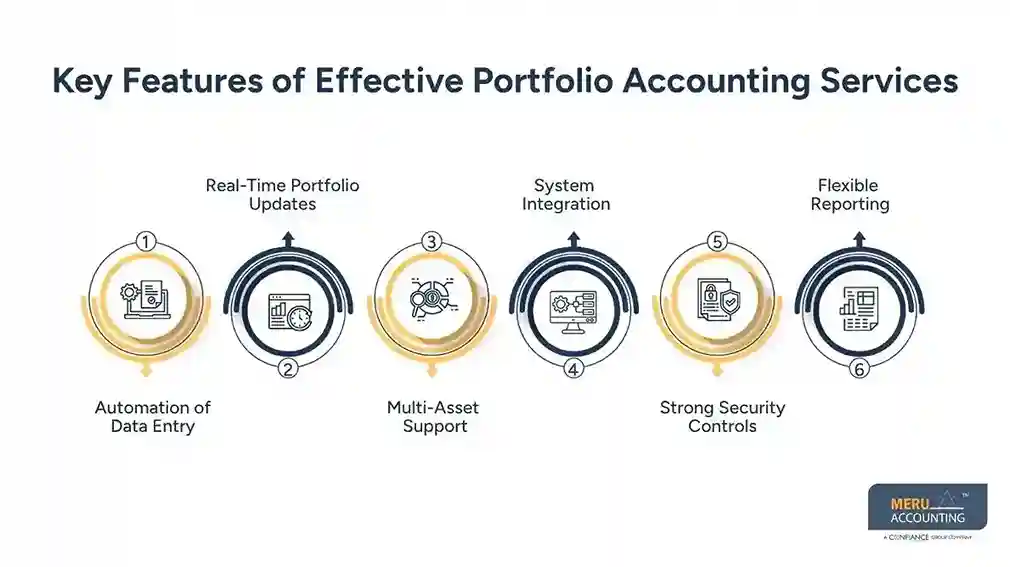
System Integration
These services connect with trading tools, banks, and ERP systems for smooth data flow. This reduces duplication and keeps information consistent across platforms.
Strong Security Controls
Financial data is protected with secure access and monitoring tools at every level. This ensures sensitive information is not exposed or misused.
Flexible Reporting
Reports can be changed based on client needs or audit requirements without system changes. This allows firms to respond faster to different reporting requests.
These features help finance teams stay organized and reduce reporting stress. They also improve overall confidence in financial data.
How Portfolio Accounting Services Improve Audit Readiness
Audit readiness means having financial records that are complete, accurate, and easy to review at any time. It is a key goal for every finance firm.
Portfolio accounting services support this in many ways.
Clean Financial Data
All transactions are recorded in a structured format that is easy to review. This ensures auditors can understand data without extra explanation.
Easy Report Access
Reports can be generated quickly when auditors request them during reviews. This saves time and reduces delays in audit processes.
Lower Error Rates
Automation reduces mistakes that can create audit issues or delays. This also improves trust in financial systems.
Standard Reports
Data is presented in the same format each time for consistency. This makes it easier for auditors to compare records across periods.
Faster Audit Response
Teams can respond quickly during audit reviews with ready data and reports. This reduces pressure on finance staff during audit cycles.
This level of readiness reduces stress during audit periods and builds trust with regulators and stakeholders.
How to Choose the Right Portfolio Accounting Services Provider
Choosing the right provider is an important decision that affects long-term financial performance. The wrong choice can create reporting delays and compliance issues.
Here are key points to consider:
Industry Knowledge
The provider should understand finance and investment systems in detail. This ensures better handling of real-world financial data.
Technology Quality
Strong tools ensure accurate, fast, and stable reporting under heavy data loads. This also supports long-term scalability.
Compliance Support
The provider must understand regulatory rules across regions and markets. This reduces risk during audits and reporting.
Scalability
Services should grow as portfolio size and complexity increase over time. This prevents system replacement in the future.
Support System
Fast support is important during audits, reporting cycles, or system issues. This ensures operations continue without disruption.
Custom Options
Every firm has different reporting needs and workflows that must be supported. Flexible systems help match those needs more closely.
A strong provider reduces workload and improves long-term control over financial systems.
Meru Accounting’s Portfolio Accounting Services
At Meru Accounting, we provide structured and reliable portfolio accounting services designed for finance firms that need clarity, speed, and control in reporting.
Our focus is simple: reduce manual work and improve audit readiness through clean systems.
We offer:
- Daily portfolio tracking with accurate updates for better control
- Clear transaction recording that supports compliance needs
- Clean and audit-ready reports for faster review cycles
- Multi-asset support across different investment types
- Compliance-focused record keeping for lower risk exposure
- Flexible reporting formats based on client requirements
Our team includes experienced professionals, including a skilled portfolio accountant, who ensures every record is checked with care and consistency. This helps reduce errors and improves trust in reporting.
We focus on accuracy, simple reporting, and fast response times so finance firms can operate without stress. This approach helps teams stay focused on growth instead of manual accounting work.
With Meru Accounting, firms gain better control over financial data and stronger confidence during audits.
Key Takeaways
- Portfolio accounting services help finance firms keep clear records, track investment activity, and build accurate reports.
- Strong accounting processes help support compliance by keeping records complete, reports clear, and data easy to check.
- A skilled portfolio accountant helps ensure trade accuracy, account checks, and timely financial reports.
- Automated portfolio accounting systems cut manual work and help reduce data entry errors.
- Audit readiness improves when firms keep organized records and can quickly share the files auditors need.
- Effective portfolio accounting services include automation, real-time reports, multi-asset tracking, and safe data storage.
- Choosing the right service provider can help finance firms improve workflow, lower compliance risk, and support growth.
FAQs
They are services that track and manage investment portfolios in a structured way. They also help firms prepare accurate financial reports for daily use.
A portfolio accountant ensures financial records are correct and well-maintained. They also help reduce errors and support audit preparation.
Yes, they make audits easier by keeping records clean, structured, and easy to access. They also reduce delays during audit reviews.
Yes, these services can be scaled based on firm size and reporting needs. They work for both small and large finance firms.
They ensure all transactions are recorded correctly and reported in line with regulations. This reduces risk and improves financial control.