
Property development projects involve far more than buying land and building properties. Every project requires close control of costs, cash flow, contracts, taxes, and reports. As projects grow in size, financial tasks become more complex and harder to manage. Even a small error in records or reports can lead to delays, cost overruns, or poor business decisions. Many developers face accounting challenges in property developments due to multiple vendors, long project timelines, changing budgets, and strict reporting needs. Managing these tasks without expert support can place a heavy burden on internal teams. Hence, developers prefer property management accountants by outsourcing.
Outsourced accountants help property developers maintain accurate records, control costs, improve cash flow, and meet reporting requirements. Their support helps developers focus on project growth while reducing financial risks.
In this blog, we will explore how property management accountants help reduce accounting challenges in property developments and improve overall financial management.
What You Will Learn From This Blog
In this blog, you will learn:
- The role of property management accountants in property development projects
- Common accounting challenges in property developments
- How accounting experts help solve financial issues
- The benefits of professional accounting support for developers
Understanding the Role of Property Management Accountants
Property management accountants handle the financial side of property operations and development projects. Their work includes recording transactions, tracking project costs, preparing reports, managing budgets, and ensuring compliance with financial rules.
In property development, accounting tasks often involve multiple projects running at the same time. Each project may have different budgets, vendors, loan terms, and revenue sources. Property management accountants organize and monitor this information to ensure financial accuracy.
They also provide insights that help developers make informed decisions. By reviewing financial data regularly, they help identify trends, control expenses, and improve project profitability. Their role goes beyond bookkeeping because they support the financial health of the entire development process.
Common Accounting Challenges in Property Developments
Property developers face many financial issues during the life cycle of a project. Understanding these challenges helps explain why professional accounting support is important.
Complex Project Cost Tracking
Property development projects involve many cost categories. These may include land acquisition, permits, labor, materials, equipment, legal fees, and marketing expenses.
Tracking these costs accurately can be difficult, especially when several projects are active at the same time. Missing or incorrect entries can lead to inaccurate project budgets and poor financial planning.
Budget Management and Cost Overruns
Construction and development projects often experience unexpected expenses. Material price changes, labor shortages, permit delays, and design modifications can increase costs.
Without proper budget monitoring, developers may exceed planned spending and reduce profit margins. Keeping budgets under control requires continuous tracking and analysis.
Cash Flow Monitoring Across Multiple Projects
Cash flow is one of the most important parts of property development. Projects require large upfront investments while revenue may not arrive until later stages.
Managing cash flow across several developments can become challenging. Developers need enough funds to cover ongoing expenses while maintaining financial stability.
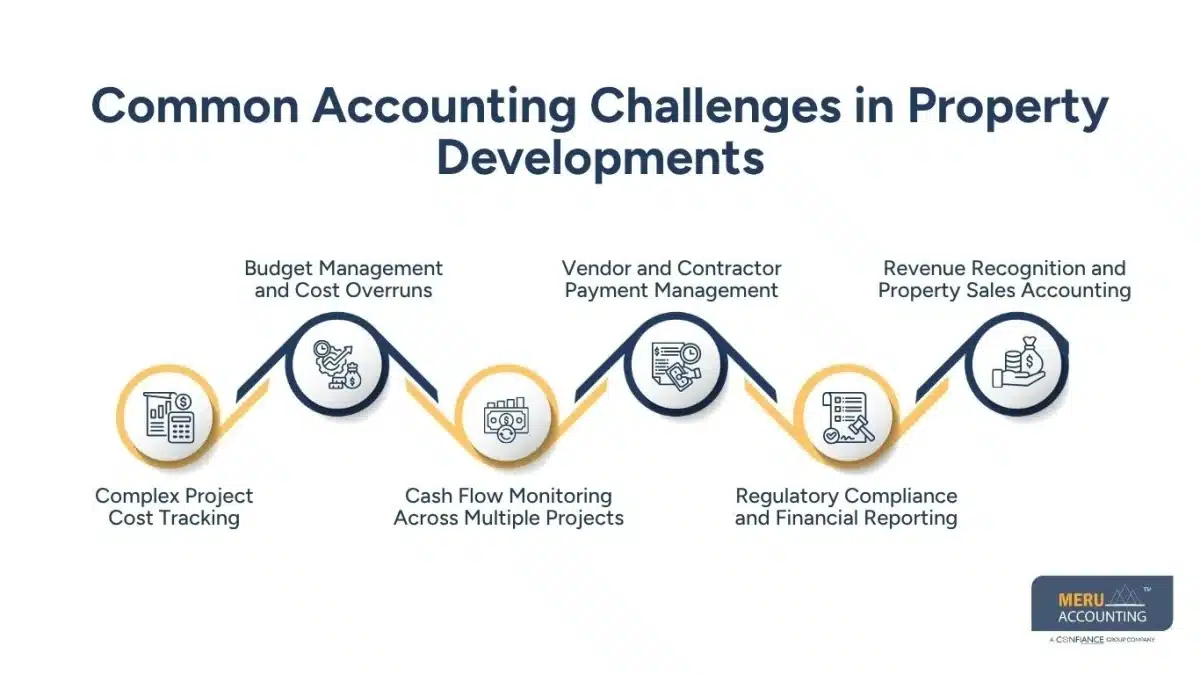
Vendor and Contractor Payment Management
Property developments involve many contractors, suppliers, and service providers. Each vendor may have different payment schedules and contract terms.
Late payments can damage business relationships and delay project progress. On the other hand, duplicate or incorrect payments can increase costs unnecessarily.
Regulatory Compliance and Financial Reporting
Property developers must comply with tax regulations, accounting standards, and reporting requirements. Rules may vary based on project type and location.
Failure to meet compliance requirements can result in penalties, audits, and legal issues. Accurate financial reporting is essential for both internal management and external stakeholders.
Revenue Recognition and Property Sales Accounting
Revenue recognition can be complex in property development. Income may be received at different project stages, and accounting rules often determine when revenue can be recorded.
Developers must ensure that revenue and expenses are reported correctly to present an accurate financial picture. Errors in revenue recognition can affect profitability reports and tax filings.
How Property Management Accountants Help Overcome Accounting Challenges in Property Developments
Professional accounting support provides practical solutions to many financial issues faced by developers.
Property management accountants establish organized accounting systems that improve record accuracy and consistency. They track project costs in real time, helping developers understand where funds are being spent and identify areas that need attention.
To address accounting challenges in property developments, accountants create detailed budget reports and compare actual expenses against planned costs. This process helps identify overspending early and allows management to take corrective action before costs become unmanageable.
They also monitor cash flow regularly and prepare forecasts that help developers plan future funding needs. These forecasts reduce the risk of cash shortages and improve financial planning.
Vendor and contractor payments become easier to manage through structured accounts payable processes. Property management accountants verify invoices, track payment due dates, and maintain accurate payment records. This helps avoid late fees and payment disputes.
Compliance is another area where accounting experts provide value. They stay informed about tax requirements and reporting standards, helping developers meet obligations on time. Accurate records also make audits and financial reviews more efficient.
For revenue recognition, accountants ensure that income is recorded according to applicable accounting standards. This creates reliable financial statements that support better decision-making and stakeholder confidence.
By addressing these issues, property management accountants help reduce accounting challenges in property developments while improving overall financial control.
Key Benefits of Hiring Property Management Accountants for Property Development Projects
Hiring accounting professionals provides several advantages for property developers.
Reduced Financial Errors
Accurate financial records are critical in property development. Errors in cost tracking, invoices, or reports can affect budgets and project profitability.
Property management accountants use structured processes to reduce mistakes and maintain reliable records. Their attention to detail improves financial accuracy across all project stages.
Accurate data also helps management make decisions with greater confidence and fewer financial surprises.
Better Cash Flow Management
Cash flow problems can delay projects and create financial stress. Professional accountants track incoming and outgoing funds carefully and provide regular cash flow reports.
They help developers forecast future cash needs and plan for upcoming expenses. This improves financial stability and supports smooth project execution.
Strong cash flow management also helps businesses respond more effectively to changing market conditions.
Increased Operational Efficiency
Managing financial tasks internally can consume significant time and resources. Property management accountants streamline accounting processes through organized systems and efficient workflows.
They handle routine financial tasks so developers and project managers can focus on project delivery and business growth.
Improved efficiency often leads to faster reporting, better communication, and stronger overall performance.
Stronger Financial Transparency
Investors, lenders, and business partners expect clear financial information. Accurate reports help stakeholders understand project performance and financial health.
Property management accountants prepare detailed reports that improve transparency and accountability. Clear financial data supports stronger business relationships and better decision-making.
Transparency also helps build trust with investors who rely on financial reports when evaluating project success.
Improved Risk Management
Every property development project carries financial risks. Cost increases, compliance issues, and reporting errors can affect profitability and project outcomes.
Property management accountants identify potential risks through regular financial reviews and reporting. Early detection allows developers to address issues before they become major problems.
Their expertise helps reduce uncertainty and supports long-term financial success.
How Meru Accounting Helps Property Developers Reduce Accounting Challenges
Property developers need clear financial data and solid accounting support to keep projects on track. Meru Accounting offers tailored accounting services that help real estate firms handle complex financial tasks with greater ease and accuracy.
Our services are built to support every stage of the development process. From project cost tracking and budget control to cash flow tracking and financial reporting, we help provide a clear view of your project’s financial status.
Key ways Meru Accounting supports property developers include:
- Accurate project cost tracking and expense allocation
- Budget tracking and variance reporting
- Cash flow planning and forecasting
- Accounts payable and vendor payment management
- Accounts receivable tracking and collection support
- Tax filing and compliance support
- Timely financial reporting and performance review
By combining skilled staff with modern accounting tools, we help cut manual work, improve report accuracy, and strengthen financial controls. Our team works closely with developers to help keep financial records organized, compliant, and ready for business decisions.
Whether you manage one property development or a large group of projects, Meru Accounting provides dependable accounting support that helps reduce accounting challenges in property developments while improving efficiency and financial visibility.
Key Takeaways
- Property development projects face many accounting challenges in property developments, including cost tracking, budget control, cash flow management, and compliance.
- Property management accountants help keep financial records accurate, organized, and up to date throughout each project.
- Strong accounting support helps reduce errors, improve cash flow, and provide clear financial reports for better decisions.
- Professional accountants help manage tax requirements, vendor payments, and project costs more effectively.
FAQs
Property management accountants manage financial records, track project costs, prepare reports, monitor budgets, oversee cash flow, and ensure compliance with accounting and tax requirements.
They improve financial accuracy, monitor budgets, manage cash flow, track costs, ensure compliance, and provide detailed reports that support better financial decisions.
Accurate cost tracking helps developers control expenses, maintain budgets, evaluate profitability, and avoid financial surprises during the project lifecycle.
Yes. They help prepare tax records, maintain accurate documentation, meet filing deadlines, and comply with applicable tax regulations.
Outsourcing provides access to experienced professionals, reduces administrative workload, improves financial accuracy, enhances reporting quality, and supports better business decisions.