Restaurant businesses need to know how tax works on the food and drinks they sell. Among all, restaurant sales tax is a key part of that work. Sales tax rules can vary by state, city, and type of sale. The rate that one food spot must charge may not be the same as the rate in the next town. The tax rule can also change based on what you sell and how the sale is made.
For that reason, food spot owners need a clear way to track tax due on each sale. Good books can help you track tax, match sales to your POS data, and file on time.
This blog explains the main rules in plain terms. It also shows how to track tax on food, drinks, takeout, and other sales.
What You Will Learn From This Blog
In this guide, you will learn:
- What does restaurant sales tax mean
- When food and drinks may be taxed
- How state and local tax rates work
- Which sales may be subject to tax
- How tax may apply to dine-in, takeout, and delivery
- How to work out the tax on a sale
- How to keep your tax records in good shape
What Is Restaurant Sales Tax?
Restaurant sales tax is the tax that a food spot may need to add to a sale and collect from the guest. The food spot then sends that tax to the right tax agency. The tax is not the same as the price of the food. It is a tax due on a sale. In most cases, the food spot holds the tax until it is time to file and pay it.
The rate can come from more than one level of tax. A state may set one rate, while a city, county, or other local area adds more tax. This means two food spots in the same state may have a very different tax rate. The tax rule may also depend on the item sold. Food, drinks, beer, wine, gift cards, and other items may not all have the same tax rule.
This is why a food spot should not use one rate for every sale without first checking the rules that apply to its site and sales.
Is Restaurant Food Taxable?
Whether food is taxed depends on the state and the type of food sold. This is one of the key points to know when you look at the tax on restaurant food. In many states, food sold by a food spot is taxed in some form. Yet the rate and rule can vary. Some states may have a full tax on ready-to-eat food, while other states may have a lower rate or a special rule for some food sales.
The way food is sold can also matter. A meal served at a table may be taxed under one rule, while food sold for home use may fall under a very different rule. Drinks can have their own rules as well. Soda, coffee, tea, juice, beer, wine, and other drinks may not all be treated in the same way.
Since tax rules vary, do not base your tax setup on what another food spot does. Check the rules for your state and local area.
How Much Is Restaurant Sales Tax?
There is no one rate for all U.S. food spots. Your restaurant sales tax rate may include state, county, city, and other local taxes.
For example, if the total tax rate at your site is 8%, a $100 taxable sale would have $8 in tax. The guest would pay $108 in total.
The 8% rate in this example is only used to show how the math works. It is not a standard U.S. rate.
To find the right rate, check the tax rules for the place where you make the sale. You should also check if the type of sale has a special rule.
A POS system can help apply the right rate, but it should still be set up and checked with care. A wrong rate can lead to too much or too little tax being charged.
What Restaurant Sales Are Subject to Sales Tax?
Not every sale made by a food spot has to follow the same tax rule. The right answer can depend on the item, sale type, and state.
Common sales that may need review include:
- Dine-in meals
- Takeout meals
- Food sold for delivery
- Soft drinks and other drinks
- Alcoholic drinks
- Catering sales
- Private event sales
- Delivery or service fees
- Gift cards
- Food sold through online orders
- Merchandise sold by the food spot
Prepared food is often an important area for tax on restaurant food. Items that are made and ready to eat may be taxed even when a state gives a tax break to some food sold for home use. Catering can also need extra care. A catering bill may include food, labor, setup, delivery, and other fees. The tax rule for each part can vary.
Gift cards can have a different tax rule from a food sale. In many cases, tax is dealt with when the card is used to buy a taxable item, not when the card is first sold.
Because each state has its own rules, it is best to review each major type of sale in your POS and books.
Restaurant Sales Tax on Dine-In, Takeout, and Delivery
The sales channel can affect how tax works.
Dine-In Sales
Dine-in meals are often treated as taxable prepared food. The POS should apply the rate that fits the site and the type of sale. Tips should also be kept apart from sales and tax records. A tip left by a guest is not the same as the price of the meal.
Takeout Sales
Takeout can be more complex than it looks. Some states treat prepared takeout food as taxable, while other food sales may have a different rule. Do not assume that takeout is tax-free just because the guest eats the food at home.
Delivery Sales
Delivery orders may add more parts to the sale. These may include the food price, delivery fee, service fee, and fees charged by an online platform. The tax rule for these charges can vary by state and local area. A food spot should know which fees are part of the taxable sale and which are not. Online orders also need to be matched to POS and bank data. This helps spot gaps in sales or tax records.
How to Calculate Restaurant Sales Tax
The basic math is simple.
Taxable sale × tax rate = sales tax
For example, say a guest has a $75 taxable meal, and the tax rate is 8%.
$75 × 0.08 = $6
The guest would pay $81 in all.
If only part of the bill is taxable, you need to apply the tax rate only to the taxable part. This is why your POS needs the right tax codes for each item.
Discounts can also affect the math. A return, void, or refund may need a related change to the tax amount. Your books should show these changes in a clear way.
The goal is not just to get the math right. You also need to make sure the tax collected in your POS matches the amount shown in your accounting records.
Restaurant Sales Tax Compliance Checklist
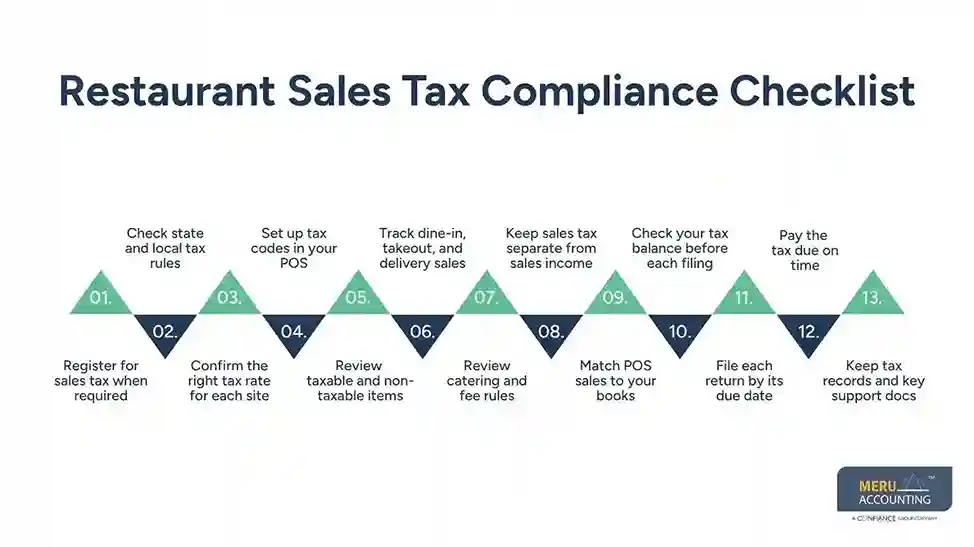
Use this list to keep your tax work on track:
- Register for sales tax when required
- Check state and local tax rules
- Confirm the right tax rate for each site
- Set up tax codes in your POS
- Review taxable and non-taxable items
- Track dine-in, takeout, and delivery sales
- Review catering and fee rules
- Keep sales tax separate from sales income
- Match POS sales to your books
- Check your tax balance before each filing
- File each return by its due date
- Pay the tax due on time
- Keep tax records and key support docs
Tax work should be part of your normal book routine. Do not wait until the filing date to find errors in your sales data.
optional anymore
on running the business
Tax Services for Restaurants From Meru Accounting
Sales tax can be hard to manage when you are also dealing with staff, vendors, food costs, sales, and daily cash flow. Meru Accounting’s tax services for restaurants can help owners keep their taxes more organized. Our services are designed to support day-to-day tax and compliance needs and include:
- Restaurant sales tax support
- Sales tax registration
- Sales tax return preparation
- Sales tax filing support
- Tax calculation and reporting
- Tax record maintenance
- Tax account reconciliation
- State and local tax support
- Tax notice and correspondence support
- Multi-location tax support
- Tax planning and compliance support
- Year-end tax support
Managing tax preparation for restaurants of all types and sizes, we can say it with confidence that we are specialized in this industry. Our team works with restaurant owners to keep tax records organized and ensure tax-related financial data is properly maintained.
Our Expert Insight
In our experience, the biggest sales tax risk is often not the tax rate itself. It is the assumption that every sale follows the same tax rule. Restaurants often add new sales channels, delivery options, catering, or menu items without reviewing how those changes affect their tax setup. That can create small errors across hundreds of daily transactions.
Our view is simple: treat every new sales channel or major menu change as a tax review point.
Before making the change live, confirm how the sale should be taxed, update the POS setup, and make sure the accounting records will capture it correctly. This small step can prevent a minor setup issue from becoming a larger tax problem later.
Key Takeaways
- Restaurant sales tax rules vary by state and local area.
- The tax rate can include state and local taxes.
- Prepared food is often subject to tax, but rules vary.
- Dine-in, takeout, and delivery sales may have different tax rules.
- Delivery and service fees need a close review.
- Your POS should use the right tax codes for each item.
- Sales tax collected should not be treated as business income.
- POS sales should be checked against your accounting books.
- Tax returns and payments should be made by the correct due date.
FAQs
Most restaurants must register for a sales tax permit when required by their state or local tax authority. Requirements and registration rules vary by location.
Sales tax return due dates depend on the state and the restaurant’s assigned filing frequency. Restaurants may need to file monthly, quarterly, or on another schedule.
Delivery and service fees may be taxable depending on the state and how the charge is applied. Restaurant owners should check the rules for each type of fee.
Restaurant purchases from food and supply vendors are generally handled under different tax rules than customer sales. The tax treatment can depend on the item, vendor, and state.
If a restaurant undercollects sales tax, it may still owe the amount due to the tax authority. Interest, penalties, or other charges may also apply depending on the state.
optional anymore
on running the business