Choosing a tax accountant for small business work is a key step for any owner. The right tax accountant for small business needs can keep tax work clear, on time, and in line with tax rules. A good tax pro can guide you on records, tax forms, tax dates, and key tax choices. Yet, each firm has its own needs, so the best fit is not always the one with the lowest fee. The right fit is the one with the skill, scope, care, and support your firm needs.
What You Will Learn From This Blog
- How a tax accountant for small businesses can support your firm’s tax needs.
- Why tax expertise, industry knowledge, and firm fit matter when choosing an accountant.
- What to look for when comparing small business tax services.
- Which fees, technology, communication, and support factors deserve close attention.
- What questions to ask before signing a tax service agreement.
- How to identify warning signs, unclear terms, and weak tax support.
What Does a Tax Accountant for Small Business Do?
A tax accountant for small business may do more than fill in tax forms. The work can cover tax prep, tax planning, record checks, and advice on tax rules. For US firms, the IRS says paid tax return preparers need a valid PTIN. A PTIN alone does not show the full skill of a tax pro. The IRS also notes that CPAs, enrolled agents, and attorneys have broad rights to act for a client before the IRS.
Tax Return Preparation
A tax accountant for small business can gather tax data, check key records, and prepare the right tax forms. The scope may vary by firm type, state, and tax status. Ask which forms are in the fee and who will review the final return.
Tax Planning
Tax work should not start only at year-end. A tax pro can review income, costs, assets, payroll, and key plans during the year. Early tax planning gives an owner more time to make sound choices.
Record Review
Good tax work rests on sound records. The IRS says firms need records that show income, costs, and items listed on the tax return. A tax pro may check books and flag gaps before the return is filed.
Tax Advice
A tax accountant for small business may answer questions on pay, sales, staff, assets, and firm form. Advice should fit the facts of the firm. Ask for clear notes when a tax choice may have a major cost.
Tax Notice Help
Some small business tax services also include help with tax notices. Ask whether the firm will review IRS letters, explain the issue, and guide you on the next step. Notice work may be billed apart from return prep.
Why Choosing the Right Tax Accountant Matters
The right tax accountant for small business can do more than file a return. The person or firm you pick may see key data on sales, costs, pay, bank data, and tax files. A poor fit may lead to missed data, weak tax advice, late work, or hard talks when an issue comes up. The IRS notes that the owner remains responsible for the data on the return, even when a tax pro prepares it.
Accuracy And Risk
Tax forms need care. A small error in sales, costs, tax basis, or pay data can cause more work later. Ask how the firm checks data, who reviews the return, and what steps are used when facts are not clear.
Year-Round Help
Tax needs can arise well past tax due dates. A firm may need help with a new hire, a new state, a new asset, or a change in firm form. IRS guidance says owners should look for a tax pro who is there after filing season.
Data Safety
Tax work uses data that needs care. Ask where files are kept, who can see them, how files are sent, and how long they are kept. A clear data rule is a good sign of sound tax work.
Better Tax Planning
A good tax accountant for small business can review tax needs before the year ends. Such reviews may cover income, costs, assets, staff pay, and changes in the firm. The goal is to make tax choices based on facts and tax rules.
Clear Owner Duties
A strong tax firm should tell you what records it needs and when they are due. The owner should also know which tasks remain their duty. Clear roles
Key Factors to Consider When Choosing a Tax Accountant for Small Business
Experience With Small Businesses
Look for a tax accountant for small business work with firms close to your size and type. A tax pro who works with large firms may not know the needs of a small shop, solo firm, or new firm. Ask how many small firms the team serves and what work it does for them.
Tax Knowledge And Qualifications
Check the tax pro’s skills, education, and active tax IDs. For US tax work, paid tax return preparers must have a PTIN, and the IRS has a public directory for some tax pros with set credentials. Ask if the lead tax pro is a CPA, EA, or tax lawyer when that level of skill fits your needs.
Range Of Small Business Tax Services
Review the full list of small business tax services before you hire. Ask if the fee covers tax prep, tax plans, payroll tax work, sales tax, tax notices, and audit aid. A broad range can be useful as your firm grows, but only pay for work you need.
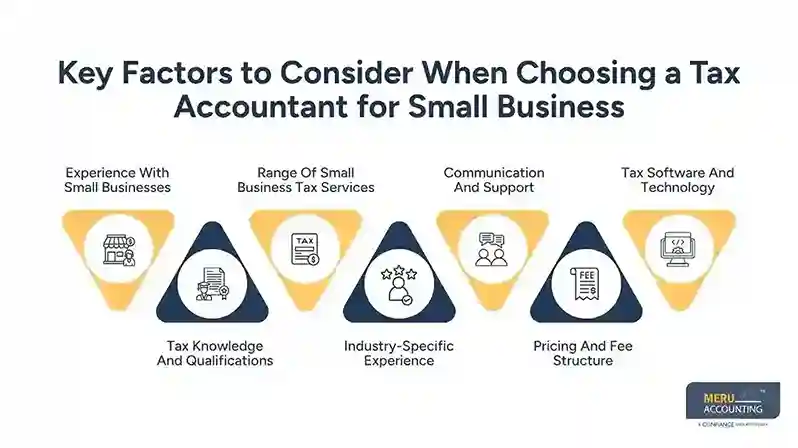
Industry-Specific Experience
Tax rules and record needs can vary by trade. A shop may face stock and sales tax work, while a builder may deal with job costs and asset use. Ask for examples of past work in your field, while making sure no client data is shared.
Communication And Support
Good small business tax services also require clear communication throughout the year. Ask who will be your main contact, how fast calls and mail get a reply, and who steps in when that person is out. Set a clear path for urgent tax needs and IRS mail.
Pricing And Fee Structure
When comparing a tax accountant for small business, ask for a clear fee plan in plain terms. Some firms bill by task, some use set fees, and some use a mix. Get the fee, scope, extra work rates, and due dates in writing. The IRS says taxpayers should ask about fees and avoid preparers who base fees on a refund.
Tax Software And Technology
Ask what tax and book tools the firm uses. A good tax system should let the team track files, check data, keep a clear record, and send forms with care. For US tax returns, IRS e-file is also worth checking.
optional anymore
on running the business
Questions To Ask Before Hiring A Tax Accountant
Before hiring a tax accountant for small businesses, ask clear questions about the work and fee. Good answers can show how the firm works and what you can expect.
- What tax work is included in your fee?
- Who will prepare and review my return?
- Do you work with firms like mine?
- What tax forms do you file for my firm?
- Can you aid with tax plans during the year?
- Who will reply if I get an IRS notice?
- How do you keep tax and bank data safe?
- What extra fees may I face?
- Do you use e-file for forms that need it?
- Can I see the full fee and work terms in writing?
A good tax accountant for small business should state what is in scope, what is not, and what may cost more. Avoid any firm that gives vague answers on fees, review steps, or tax notice work.
Common Mistakes To Avoid When Choosing A Tax Accountant
Choosing Only By Price
The lowest fee may not give your firm the small business tax services it actually needs. A tax accountant for small business work should be judged by skill, scope, care, and access, not fee alone.
Ignoring Qualifications
Do not assume each tax pro has the same rights or skill. Check the person’s tax ID, study, work record, and key tax credentials. For US work, the IRS says the owner remains responsible for the data on the return.
Failing To Ask About Extra Fees
A low base fee can rise when notice work, tax plans, or new forms are added. Ask for a list of extra fees before you sign.
Waiting Until Tax Time
Late contact can leave less time to fix weak records or tax gaps. Year-round talks give your tax pro time to flag key tax steps.
Not Reviewing The Return
Never sign a blank or half-done return. The IRS says the owner should review the return and ask about any item that looks wrong or is not clear.
Why Choose Meru Accounting for Small Business Tax Support?
Choosing a tax accountant for small business needs is easier when the service scope, work process, and support are clear. Meru Accounting provides tax and accounting support designed around the needs of small and growing firms.
Tax Support Based on Business Needs
Meru Accounting can support different tax requirements based on the firm’s structure, records, and filing needs. The focus is on understanding the work required before defining the service scope.
Clear Tax Work Process
A defined process can help keep tax data, records, forms, and filing tasks organized. Meru Accounting follows structured work steps to help reduce missed information and keep tax work on track.
Ongoing Communication
Tax questions can arise throughout the year, not only during filing periods. Meru Accounting provides ongoing communication so clients can raise questions, share relevant updates, and address tax-related needs as they arise.
Technology-Based Accounting
Cloud-based accounting tools can make financial information easier to access, review, and manage. Meru Accounting uses accounting technology to support organized records and efficient work processes.
Our Expert Perspective
Our view is simple: choose a tax accountant for small business based on fit, clear scope, and reliable review steps, not a sales pitch. Meru Accounting supports firms with small business tax services, tax records, bookkeeping, and related finance tasks based on their needs, with clear work steps and open communication. Before hiring, ask about fees, data checks, review processes, and post-filing support, as these points often matter more than a low price or long list of tax tools.
Key Takeaways
- Pick a tax pro with small-firm tax skill.
- Check tax IDs, study, and key credentials.
- Review the full scope of tax work.
- Ask how tax data and files are kept safe.
- Compare fees only after scope is clear.
- Ask who handles IRS mail and tax notices.
- Review each return before you sign.
- Choose small business tax services that fit your real needs.
FAQs
A tax accountant for small business can prepare tax returns, check records, plan tax work, and answer tax questions. The exact work depends on the firm and tax plan.
Check tax skill, small firm work, key credentials, fees, support, data rules, and service scope. Ask clear questions before you sign a tax service deal.
The cost of small business tax services varies by firm size, tax forms, state needs, record quality, and extra work. Ask for a written fee and scope before you agree.
Ask who will file and review the return, what forms are in the fee, what extra fees may apply, and who will handle tax notices.
Yes. Some tax pros can aid with notices, tax questions, and later tax needs. Ask if post-file support is part of the fee or billed as extra work.
optional anymore
on running the business