A tax service for small business can cover much more than filing a yearly return. Small firms may need tax planning, income tax filing, payroll tax work, sales tax review, estimated tax checks, and record review. The right mix depends on the business type, income, staff, location, and the kind of work it does.
For example, a sole owner may need help with self-employment tax and estimated payments, while a firm with staff may also need payroll tax filing. The IRS notes that the business structure affects the taxes a business must pay and the way those taxes are paid.
Choosing the right tax service for small business gives owners a clear way to manage tax work during the year. A good small business tax accountant can review records, check tax duties, and flag issues before they grow. An effective small business tax solution should also fit the firm’s size, work type, and tax needs.
What You Will Learn From This Blog
- Why small firms may need tax help during the year.
- The main tax services a small firm may need.
- How tax filing, planning, and payroll tax work differ.
- How to choose the right tax service for small business.
- Common tax errors that can lead to cost or delay.
- What can affect the cost of tax services.
- When hiring a tax expert may make sense.
- How Meru Accounting can assist with small business tax work.
Why Do Small Businesses Need Professional Tax Services?
Tax Rules Can Vary
Tax rules can change based on the firm’s legal form, income, staff, and location. A sole proprietor, partnership, S corporation, and C corporation may have different filing duties.
A small business tax accountant can review the firm’s setup and tax duties before filing begins. That review can point out forms, payments, and records that may be needed.
Filing Needs More Than One Form
A firm may have to file more than its main income tax return. It may also need payroll forms, information returns, or other tax forms.
The IRS states that firms with staff can have federal income tax, Social Security, Medicare, and FUTA duties.
Tax Payments Can Be Due Early
Tax is often paid during the year rather than only when the return is filed. Self-employed owners may need estimated tax payments based on expected income.
The IRS says many self-employed people must make estimated payments, and underpayment may lead to a penalty. A tax service for small business can track these payment needs.
Records Need To Be Clear
Good tax work starts with good records. Sales, costs, payroll, invoices, receipts, and bank activity should be kept in an orderly way.
The IRS says records should support income, expenses, deductions, and items reported on a return. A small business tax solution should include a clear record-keeping process.
Planning Can Reduce Surprises
Tax planning looks at expected income, costs, deductions, payments, and major business changes before the return is due. Planning does not mean finding a way around tax law.
A small business tax accountant can review likely tax results and point out areas that need action before year-end.
What Types Of Tax Services Do Small Businesses Need?
Income Tax Filing
Income tax filing is one of the core needs for most firms. The return and related forms depend on the legal structure and tax status.
A tax service for small businesses can gather records, review figures, prepare the needed forms, and check the return before filing. IRS rules confirm that business structure affects tax filing duties.
Estimated Tax Planning
Estimated tax work is useful for owners who do not have enough tax withheld from other income. The aim is to pay the right amount during the year.
A small business tax accountant can use prior returns and current income data to estimate future tax. The IRS advises taxpayers to adjust estimates when income or tax facts change.
Payroll Tax Filing
Businesses with staff can have several payroll tax duties. These can include withholding federal income tax and handling Social Security, Medicare, and unemployment tax.
A tax service for small business can keep payroll tax dates and forms on track. The IRS requires employers to deposit and report federal employment taxes.
Sales And Use Tax
Some firms must collect and pay sales tax on taxable sales. The exact rules depend on the state, local area, products, and services involved.
A small business tax solution can review sales tax duties and filing dates. Firms that sell across state lines may need a more detailed tax review.
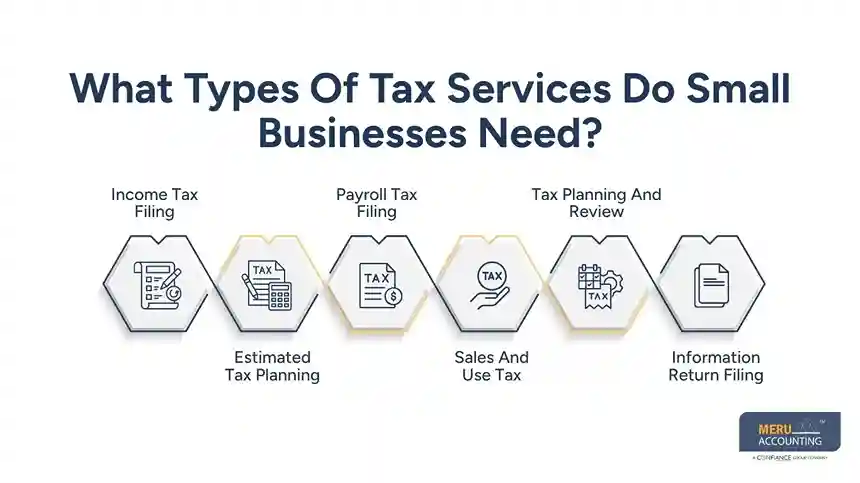
Tax Planning And Review
Tax planning can cover deductions, asset purchases, owner pay, estimated payments, and changes in business structure. The work should be based on current tax rules and the firm’s actual records.
A small business tax accountant can review the tax position before year-end and note areas that may need action.
Information Return Filing
Businesses may need to report certain payments made to contractors or others. For example, the IRS notes that businesses may need Form 1099-NEC for payments to independent contractors.
A tax service for small business can review contractor records and reporting needs before filing dates arrive.
How To Choose The Right Tax Service For Small Business
Check Business Experience
Look for a provider that knows the tax needs of small firms and the business structures it serves. Experience with firms of a similar size can make the review more useful.
Ask which tax forms, payment duties, and planning work are included in the service.
Review The Service Scope
A low fee may cover only return filing. Another provider may include tax planning, estimated tax review, payroll tax work, and year-round support.
A small business tax solution should match the actual needs of the firm rather than offer tasks the owner does not need.
Ask About Record Review
A reliable tax service for small business also depends on accurate books and supporting records. Ask whether the provider reviews income, costs, bank records, payroll data, and supporting documents.
The IRS says business records should support the income and deductions reported on tax returns.
Compare Total Value
Compare the full service rather than only the quoted fee. Check what filing, planning, review, notice work, and tax advice are included.
A tax service for small business has more value when the service scope is clear from the start.
optional anymore
on running the business
Common Small Business Tax Mistakes To Avoid
Mixing Personal And Business Costs
Using one account for both personal and business spending can make records hard to review. Separate accounts and clear notes can make tax records easier to check.
A small business tax accountant can review account activity and flag entries that need more detail.
Missing Estimated Payments
Owners may wait until filing time to think about tax. That can create a large bill and may lead to an underpayment penalty.
A tax service for small businesses can track expected tax payments during the year. The IRS confirms that late or low estimated payments can result in penalties.
Poor Receipt Records
A deduction should have support. Missing receipts, bills, invoices, or other proof can make a tax review harder.
A small business tax solution should include a simple way to store and sort tax records.
Missing Contractor Forms
Businesses that pay contractors may have information reporting duties. Missing these forms can create filing issues.
A small business tax accountant can review contractor payments and identify forms that may apply.
Ignoring Tax Notices
A tax notice should not sit unopened. The notice may have a due date, balance, request, or correction that needs a response.
A tax service for small business can review the notice and explain the next step.
How Much Do Small Business Tax Services Cost?
Business Size Matters
A one-owner firm with few transactions may need less tax work than a firm with staff, inventory, several locations, or many contractors.
A small business tax solution should be priced around the amount and type of work required.
Tax Return Scope Matters
A simple return may cost less than a return with several schedules, entities, states, or complex tax matters. More forms and review time can raise the fee.
Ask for a clear list of included filings before agreeing to a price.
Extra Tax Work Can Add Cost
When using a tax service for small business, tax planning, amended returns, tax notices, payroll filings, and special research may be billed apart from the main return.
A small business tax accountant should explain extra fees before the work begins where possible.
Monthly Plans May Fit Some Firms
Some firms prefer a monthly plan for year-round tax work. Such a plan may include regular record review, tax planning, and filing support.
A tax service for small business with a fixed scope can make monthly costs easier to plan.
When Should A Small Business Hire A Tax Professional?
Before Starting The Business
Tax planning can begin before the first sale. Owners may need to review entity choice, tax registration, record needs, and payment duties.
A small business tax accountant can review these matters before the first tax year begins.
When Income Starts To Rise
Higher income can change estimated payments and the need for tax planning. Owners should not wait for the tax return to learn that a large payment is due.
A tax service for small business can review income during the year and update estimates when needed.
When Hiring Staff
Hiring employees brings new tax duties. Employers may need withholding, payroll tax deposits, and periodic returns.
A small business tax solution can bring payroll tax work into the wider tax plan.
When Adding A New State
Selling, hiring, or operating in another state can create new filing questions. State tax rules can differ, so the facts should be reviewed before expansion.
A small business tax accountant can assess the tax duties tied to the new activity.
When Tax Notices Arrive
An IRS or state tax notice can require prompt action. The owner should check the notice date, tax period, amount, and response rules.
A tax service for small businesses can review the notice and guide the next step.
How Meru Accounting Provides Small Business Tax Support
Tax Filing Support
Meru Accounting offers a tax service for small businesses that supports tax preparation and filing based on applicable requirements. Our team reviews financial records and required forms before filing.
Tax Record Management
Our team works with income, expenses, invoices, receipts, and other financial records needed for tax reporting. Organized records help identify missing information and make tax preparation more efficient.
Estimated Tax Review
Meru Accounting reviews current income and prior tax information to help identify potential estimated tax payment needs. Regular reviews can help business owners prepare for tax payments during the year.
Payroll Tax Assistance
Our tax service for small businesses can also support businesses with payroll tax records, calculations, filings, and payment requirements. Our team can assist with payroll records, tax calculations, and related filing requirements.
Year-Round Tax Guidance
Tax questions can arise when income, employees, contractors, or business activities change. Our team provides ongoing tax support so businesses can review tax matters throughout the year.
Our Expert Perspective
Our experience shows that a tax service for small businesses should start with clear records, timely filing, and a sound view of tax duties. Each business has different needs based on its income, structure, staff, and work.
A small business tax accountant can review these needs and guide owners on key tax dates, records, and payments. A practical small business tax solution should focus on the actual needs of the business, not on adding services that may not be required.
Key Takeaways
- Tax needs vary by business type, income, staff, and location.
- Income tax filing is only one part of small business tax work.
- Estimated tax payments may be needed during the year.
- Businesses with staff can have payroll tax duties.
- Contractor payments may create information reporting needs.
- Tax planning should start before filing season.
- A small business tax accountant can review tax duties and payment needs.
- A tax service for small business should match the firm’s size and tax needs.
- A small business tax solution should have clear scope, costs, and support.
FAQs
Most small firms may need income tax filing, tax planning, estimated tax review, and record checks. Firms with staff or contractors may need payroll and information return services.
A small business may benefit from a small business tax accountant when tax rules, income, staff, or filing duties become harder to manage. The need depends on the firm’s facts and tax workload.
A tax service for small business is professional help with tax filing, planning, payments, records, and other tax duties. The exact service depends on the firm’s structure and tax needs.
Keep clear records, report all income, track valid business costs, make required payments on time, and review tax duties during the year. A small business tax solution can provide a regular process for these tasks.
A business should consider tax help before starting, when income rises, when staff is hired, when it enters a new state, or when it receives a tax notice. A tax service for small businesses can provide timely review before problems grow.
optional anymore
on running the business