As firms grow, many expand into new states, start new brands, form new legal units, or buy other firms. While growth brings new chances, it also brings tax rules that can be hard to track. Each state may have its own tax laws, due dates, rates, and rules. When a firm runs more than one legal unit, tax work can become even more complex. This is where taxation accountants become important. They help firms stay in line with tax laws, avoid costly mistakes, and build tax plans that fit long-term goals. From state tax filings to intercompany records, they help keep all tax work on track.
Many firms also rely on a trusted accounting and taxation service to handle both tax and finance work in one place. This helps save time, cut risk, and keep better control across all business units.
In this blog, we will look at how taxation accountants support multi-state and multi-entity firms and why their work is essential for growth and tax compliance.
What You Will Learn From This Blog
In this blog, you will learn:
- What taxation accountants do for modern firms
- Main tax issues faced by multi-state and multi-entity firms
- How tax experts help firms stay in line with tax laws
- Ways taxation accountants support complex business setups
- Common tax mistakes firms should avoid
- Expert tips for better tax planning and tax control
Understanding the Role of Taxation Accountants in Modern Businesses
Tax rules change often. Firms that work in more than one state or own more than one entity need strong tax support to keep up with these changes. Taxation accountants do much more than prepare tax returns. They review tax data, track law changes, plan tax moves, and help firms lower risk. Their goal is to make sure tax work is done right and on time.
Some of their main duties include:
- Tax planning and forecasting
- State and federal tax filings
- Sales tax tracking
- Tax risk review
- Audit support
- Entity tax setup review
- Tax rule tracking
They also work with firm leaders to make sure tax plans match business goals. This helps firms make smart choices while staying in line with tax laws.
A reliable accounting and taxation service often combines tax support with bookkeeping, reports, and financial management, giving firms a full business solution.
Challenges Faced by Multi-State and Multi-Entity Businesses
As firms grow, tax work becomes more difficult. Each state may have different rules, forms, and due dates. Some of the most common challenges include:
Different State Tax Rules
States can apply different income tax rates, sales tax laws, and filing rules. A firm must meet the rules of every state where it has tax duties.
Nexus Reviews
A firm may owe tax in a state even without a physical office there. Sales volume, staff, or business activity may create a tax nexus. Knowing where the nexus exists is often a major challenge.
Multiple Tax Filings
A firm with several entities may need separate tax returns for each entity. Filing mistakes can lead to fines and audits.
Intercompany Transactions
When one entity sells goods or services to another entity in the same group, those transactions must be tracked the right way.
Tax Risk
Missing due dates or filing the wrong forms can lead to fines, extra tax, and state review. Without skilled taxation accountants, these issues can quickly become hard to manage.
How Taxation Accountants Help Multi-State Businesses Stay Compliant
Tax compliance is one of the biggest concerns for firms that work in several states.
Managing State Income Tax Rules
Taxation accountants review where a firm works and find tax duties in each state. They prepare and file returns based on state tax rules. This helps firms avoid late filings and tax fines.
Tracking Nexus Rules
Nexus laws can change over time. Tax experts track business activity and decide when tax sign-up is needed. They help firms sign up in the right states before tax issues arise.
Handling Sales and Use Tax
Sales tax rules vary across the country. Tax experts work out tax duties, prepare reports, and file returns the right way. This lowers the risk of paying too much or too little tax.
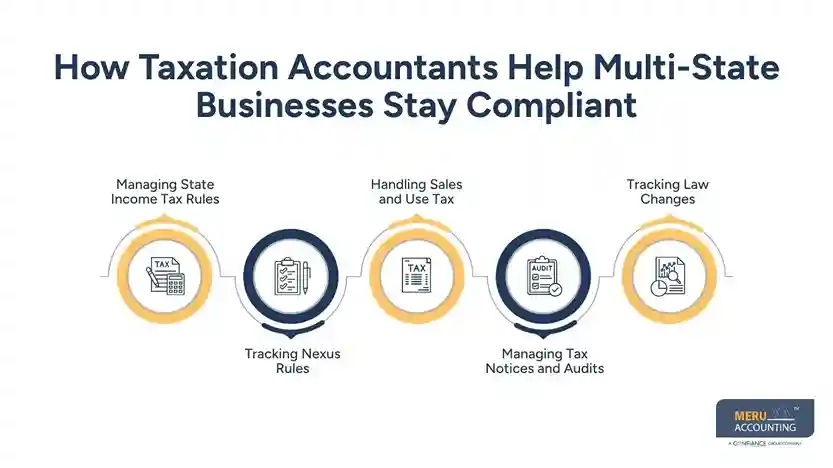
Managing Tax Notices and Audits
State tax authorities may send notices or ask for more records. Taxation accountants reply to these requests and help firms gather the needed records.
Tracking Law Changes
Tax laws change often. Tax experts track these changes and help firms adjust fast. A strong accounting and taxation service helps firms stay in line with tax rules without adding more work for in-house teams.
How Taxation Accountants Support Multi-Entity Business Structures
Many growing firms work through multiple entities. These may include LLCs, corporations, partnerships, or child firms. Managing tax duties across these entities takes careful planning.
Entity-Level Tax Support
Each entity may have its own tax rules. Taxation accountants make sure each entity files the right forms and meets all due dates.
Intercompany Accounting Support
Transactions between entities must be tracked the right way. Tax experts help keep records that support tax reports and clear records.
Tax Structure Planning
Business setups affect tax duties. Tax experts review current setups and suggest ways to improve them while keeping firms in line with tax laws.
Combined Reporting Support
Some firms prepare combined reports that bring together data from many entities. Tax experts help make sure tax records match these reports and follow report rules.
Support During Growth
When firms start new entities or buy other firms, taxation accountants help set up tax systems from the start. This lowers future tax risks and supports smooth growth.
A professional accounting and taxation service can make it easier to manage many entities by placing tax and accounting work under one team.
Common Mistakes Multi-State and Multi-Entity Businesses Should Avoid
Many firms face tax issues because of mistakes that could have been avoided.
Ignoring Nexus Rules
Some firms think they only owe tax where they have an office. In many cases, sales activity alone may create tax duties.
Missing State Filing Due Dates
Different states have different filing dates. Missing these dates can lead to fines and extra charges.
Poor Intercompany Records
Weak records can create reporting issues and raise audit risk.
Using Old Tax Plans
Tax laws change often. Firms that fail to update their tax plans may miss chances to save money.
Lack of Coordination Between Entities
Without proper oversight, entities may use different accounting methods, leading to reporting errors.
Waiting Until Tax Season
Tax planning should take place all year. Waiting until tax season often limits planning choices.
Experienced taxation accountants help firms avoid these mistakes through ongoing support and tax rule tracking.
Meru Accounting's Accounting and Taxation Services
At Meru Accounting, we understand the tax issues faced by multi-state and multi-entity firms.
Our team provides a full range of accounting and taxation service solutions built to support tax laws, growth, and smooth cash flow.
Our services include:
- State and federal tax preparation
- Tax planning and advice
- Multi-state tax support
- Sales and use tax management
- Entity structure review
- Financial reporting support
- Bookkeeping and accounting support
- Audit support and record assistance
We work closely with firms in many fields to build tax plans that fit their goals. Our team tracks tax law updates, filing rules, and tax risks so clients can focus on growing their firms with peace of mind.
Whether your firm works in two states or twenty, our skilled taxation accountants can help simplify tax work and reduce office workload.
Our Expert Insight
Many firms view tax compliance as a task done once a year. In reality, tax management should be an ongoing process. Firms that work across many states and entities face ongoing tax risk. New sales areas, new staff sites, business purchases, and law changes can all affect tax duties.
The most successful firms make tax planning part of day-to-day business work. They review tax positions during the year, keep strong records, and seek expert help before major business moves. Working with skilled taxation accountants allows firms to spot risks early, stay in line with tax rules, and find tax savings that might otherwise be missed.
A proactive accounting and taxation service often brings far more value than simply preparing yearly tax returns.
Key Takeaways
- Multi-state and multi-entity firms face complex tax rules.
- Taxation accountants help firms follow state and federal tax laws.
- Tax experts assist with nexus reviews, tax filings, audits, and tax planning.
- Proper tracking of intercompany transactions is vital.
- Ongoing tax planning helps lower risk and improve business results.
- Firms should avoid common mistakes such as missed filings and weak records.
- A trusted accounting and taxation service can simplify tax work and support long-term growth.
FAQs
Taxation accountants help firms manage state tax filings, sales tax compliance, nexus reviews, audit support, and tax planning across many states.
They help manage tax duties for each entity, maintain tax compliance, support intercompany accounting, and improve tax results across the business structure.
Nexus is a business link that creates tax duties in a state. It may result from sales activity, staff, offices, or other business operations in that state.
An accounting and taxation service provides one-source support for accounting, reporting, tax compliance, tax planning, and money management, helping firms work more smoothly.
Businesses should review their tax strategy during the year, especially when entering new states, starting new entities, hiring staff, or making major business changes.