
The 70-Cent rule may guide small financial decisions for businesses and individuals. Many people may find the rule confusing, but it is useful for accuracy. It may help prevent minor calculation errors in tax or accounting work. Professionals often use the 70-Cent rule to simplify bookkeeping and maintain clear records. Businesses may plan expenses or assets according to this simple rule.
Understanding how the 70-Cent rule works now may improve financial planning. Awareness of its application may reduce mistakes in daily operations. Accountants may find it helpful to explain the rule to clients. Small businesses may benefit from following it consistently. This article may clarify how the 70-Cent rule can function today.
What the 70-Cent Rule Is
The 70-Cent rule may refer to rounding small amounts in finance. It can apply to minor expenses or asset valuations for simplicity.
It may reduce calculation errors and maintain clear financial statements. Businesses may rely on it to prevent small accounting mistakes.
Professionals may apply the rule during audits or tax calculations. It can help track amounts that may otherwise be overlooked.
How the 70-Cent Rule Works Today
Updated Usage
The 70-Cent rule may now follow changes in tax regulations. Businesses may need to adjust methods to match current laws.
Calculation Steps
Accountants may round minor amounts using the 70-Cent rule. This may simplify reporting and reduce small errors in totals.
Documentation
Records may need to show rounded amounts clearly. Clear documentation may help during audits or financial reviews.
Practical Steps to Apply the 70-Cent Rule
Find Eligible Amounts
Look for small costs or minor purchases that may use the rule.
These can include office supplies or low-value assets.
Round Correctly
Round each amount as the rule allows.
Check that rounding is correct to avoid mistakes.
Record Clearly
Write all rounded numbers in your accounts.
Keep notes clear so audits and reviews are fast.
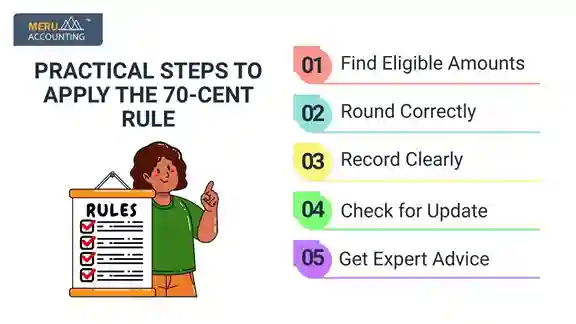
Check for Update
Review the rule often because it can change.
Update records if the rule is revised.
Get Expert Advice
Talk to an accountant when unsure.
Professionals help prevent errors and keep your books correct.
Examples of Using the 70-Cent Rule
Small Expenses
Minor purchases may be rounded using the 70-Cent rule. This may help track recurring small costs accurately.
Asset Purchases
Equipment costs may be simplified using rounding rules. The rule may prevent minor miscalculations in financial records.
Daily Accounting
Regular accounting entries may apply the 70-Cent rule. Consistent use may improve clarity and reduce errors.
Audits
Auditors may check compliance with rounding rules. Proper application may make audits smoother and faster.
Benefits of the 70-Cent Rule
Error Reduction
Applying the rule may reduce small calculation mistakes. Accuracy may save businesses time and effort.
Simplified Processes
The rule may make accounting procedures simpler. Staff may spend less time on minor rounding issues.
Clear Reporting
Financial statements may become clearer with proper rounding. Auditors may find easier verification of amounts.
Compliance
Using the rule may help maintain regulatory compliance. Proper use may prevent penalties or disputes.
Planning Aid
Businesses may plan minor purchases using this rule. It may also help estimate deductions accurately.
Challenges When Using the 70-Cent Rule
Understanding
Not everyone may know how to apply the rule. Training may be required for staff or small business owners.
Errors in Rounding
Mistakes may occur if amounts are rounded incorrectly. Professionals may need to double-check all calculations.
Regulation Changes
Tax updates may alter how the rule applies. Businesses may need to stay informed to remain compliant.
Time for Verification
Checking numbers carefully may take extra time. Professionals may balance accuracy with efficiency in reporting.
Misinterpretation
The rule may be misunderstood by inexperienced staff. Guidance may prevent small errors from adding up.
Tips for Correct Use of the 70-Cent Rule
Cross-Check Amounts
Check all numbers before rounding to avoid small mistakes. This keeps reports correct and consistent each and every time.
Maintain Clear Records
Keep logs that show both the original and rounded sums. Good records help audits and checks run fast and smoothly.
Stay Updated
The 70-Cent rule may change with new laws often. Experts can track rules to avoid issues with compliance.
Use Software Tools
Software can round numbers fast according to the rule. This saves time and stops errors from manual work.
Staff Training
Train staff to apply the rule the same way. Staff can spot small mistakes before they affect books.
Common Misunderstandings About the 70-Cent Rule
Scope Confusion
Some think the rule applies to all sums always. It is for small amounts only, not all.
Ignoring Updates
Firms may ignore law changes that affect small sums. Experts can help use new rules the right way.
Rounding Mistakes
Wrong rounding can create small errors in totals fast. Check each line carefully to avoid wrong amounts.
Tracking Oversights
Not noting eligible items reduces the rule’s benefit. Good logs make all reports correct and clear.
Reporting Errors
Wrong use may cause errors in all accounts. Experts help keep reports right and reconcile sums.
Who Benefits Most from the 70-Cent Rule
Small Businesses
Firms with many small buys may see things clearly. Small costs may be tracked with ease.
Accountants
Pros may use the rule on many entries. It may save time on small sums.
Asset Tracking
Firms that track tools or gear may gain. Rounding can make books simpler.
Individuals
People can use the rule for personal cash. Small costs may be logged correctly.
Decision Making
The rule may help avoid small mistakes. Clear records can aid plans and checks.
Software Integration for the 70-Cent Rule
Automation
Software can round small numbers using the 70-Cent rule. This cuts down errors made by staff.
Alerts
Programs can warn users when amounts go past limits. These warnings stop mistakes before reports are sent.
Reports
Software can show both rounded and real numbers. This helps with checks and audits.
Time-Saving
Auto rounding saves staff time on small tasks. They can focus on bigger or harder work.
Rule Compliance
Software helps firms follow the rule. It can update itself to match new laws.
Future Outlook of the 70-Cent Rule
Law Changes
The rule may change with new laws. Businesses need to stay informed to follow it correctly.
Professional Guidance
Accountants can advise on using the rule. Experts help prevent errors and keep reports clear.
Business Planning
Firms can plan small purchases around this rule. This helps manage minor expenses well.
Efficiency Gains
Using the rule properly can save time. Staff may rely on it to reduce extra work.
Ongoing Awareness
Check updates often to avoid mistakes. Professionals can guide the correct and timely use.
The 70-Cent rule may remain a useful tool for businesses and individuals. Following it carefully may reduce minor errors in accounting and reporting. Firms may find simpler bookkeeping and clearer statements when the rule is applied correctly. Staff training and software use may further improve accuracy and efficiency.
Meru Accounting offers services for businesses to use the 70-Cent rule correctly. Our team gives advice on updates, reports, and keeping records clear. We have certified experts who check calculations and cut errors. Firms can get professional support and simple solutions for their accounts. Partner with us for smooth and accurate financial management.
FAQs
- What is the 70-Cent rule in accounting?
It may guide rounding small amounts in financial records. - How does the 70-Cent rule affect tax reporting?
It may simplify minor deductions and reporting calculations. - Who should apply the 70-Cent rule?
Small businesses and accountants may benefit most from it. - Can the 70-Cent rule reduce calculation errors?
Yes, it may prevent minor mistakes in totals. - How is the 70-Cent rule applied to expenses?
Small expenses may be rounded using this specific rule. - Does the 70-Cent rule apply to assets too?
Yes, minor assets may also be recorded using it. - Can software help apply the 70-Cent rule?
Many accounting tools may automate rounding for eligible items. - Does following the 70-Cent rule save time?
Yes, it may simplify bookkeeping and reduce manual checks. - How often should businesses check the 70-Cent rule?
Regular updates may be needed to match current regulations. - Can misuse of the 70-Cent rule cause errors?
Yes, incorrect rounding may create discrepancies in reports. - What is the main benefit of the 70-Cent rule?
It may improve accuracy and clarity in financial statements. - How may accountants use the 70-Cent rule professionally?
They may round small amounts to ease client reporting. - Is training necessary to use the 70-Cent rule?
Yes, staff may need guidance for proper application. - Can the 70-Cent rule simplify audits?
Yes, clear rounded figures may ease verification processes. - Does the 70-Cent rule apply globally?
It may depend on local accounting regulations and standards. - How can small businesses apply the 70-Cent rule?
Track eligible items and round them according to guidance. - Can Meru Accounting help with the 70-Cent rule?
Yes, they may provide expert advice and application support. - Are there limits to using the 70-Cent rule?
Yes, only minor amounts may qualify for rounding adjustments. - How does the 70-Cent rule impact financial clarity?
It may create cleaner, simpler, and easier-to-read records. - Should businesses consult professionals about the 70-Cent rule?
Yes, accountants may ensure accurate and compliant application.