
Payroll for law firms is more than a monthly task of paying salaries. A missed bonus, a wrong wage entry, or a late tax filing can affect staff trust and the firm’s financial records. Partners must decide whether to manage payroll in-house or hire an outside provider, based on cost, control, and staff needs.
Effective legal practice payroll management also requires clear pay rules for partners, associates, paralegals, and office staff. The right choice can reduce admin work, keep costs clear, and make financial planning easier. This blog compares both options and explains how law firms can choose a payroll model that fits their needs.
What You Will Learn From This Blog
- How payroll for law firms affects cash flow, staff costs, and financial reports.
- The main cost and control differences between in-house and outsourced payroll.
- Why legal practice payroll management needs clear pay rules and accurate records.
- Common payroll risks and ways to reduce errors.
- How to choose a payroll model based on firm size, staff skills, and cost.
- How Meru Accounting provides payroll and accounting services for law firms.
Understanding Payroll for Law Firms and Its Financial Impact
Tracking Staff Pay
Payroll for law firms must cover the different pay terms of partners, associates, paralegals, and office staff. Some receive fixed salaries, while others earn hourly wages or bonuses. Accurate records make legal practice payroll management easier to review and reduce disputes over pay.
Managing Employment Costs
Wages are only one part of staff costs. Benefits, payroll taxes, paid leave, and bonuses may add to the total. Reviewing these costs each month lets partners assess payroll for law firms against fee income and set a budget that reflects actual spending.
Planning Cash Flow
A firm may expect a client payment before payday, only for the client to pay late. Wages are still due on time. A payroll forecast lets partners plan for this gap and align staff payments with the firm’s available cash and expected income.
Maintaining Financial Records
Payroll entries must match bank payments, tax records, and the general ledger. If a bonus is posted to the wrong account, reports may show the wrong staff cost. Regular checks keep payroll for law firms accurate and give partners a clearer view of spending.
Preparing for Growth
Hiring more lawyers can increase payroll work, from new pay rates to added benefit records. A process that suits a small team may fail as headcount grows. Firms should review legal practice payroll management as staff numbers, pay plans, and reporting needs change.
optional anymore
on running the business
In-House vs. Outsourced Payroll for Law Firms: Key Differences
Comparison Factor | In-House Payroll | Outsourced Payroll |
Control Over Payroll | Direct control over staff data, approvals, and payment dates. | Providers handle agreed tasks, while partners retain control over pay decisions. |
Total Operating Costs | Includes staff wages, software, training, and review time. | Includes service fees but may reduce internal workload and costs. |
Access to Expertise | Internal staff may need training on payroll rules and updates. | Providers may offer specialist payroll knowledge and review procedures. |
Time and Workload | Staff manage calculations, reports, payments, and corrections. | Reduces routine work but still requires timely data and approvals. |
Data Security | The firm manages access and storage of payroll records. | Firms must check the provider’s security controls and data-handling practices. |
Compliance Management | Internal staff track payroll rules and tax requirements. | Providers may assist with payroll compliance and required filings. |
Scalability | Hiring more employees may increase staff workload and software costs. | Services can often be adjusted as the firm grows. |
Error Handling | Internal staff identify and correct payroll errors. | Providers may use review processes to reduce errors and correct discrepancies. |
Legal Practice Payroll Management: Industry-Specific Requirements
Different Pay Structures
Legal practice payroll management must reflect each worker’s pay terms. Associates may earn fixed salaries, paralegals may receive hourly wages, and partners may take draws or profit shares. Payroll for law firms should record each payment under the right category to avoid errors.
Work Hours and Overtime
Trials and urgent cases may lead to long workdays. Firms should keep accurate time records and check overtime rules based on worker status and location. Clear time tracking helps firms calculate wages correctly and meet applicable employment rules.
Bonuses and Incentives
Some firms award bonuses based on performance, billable work, or yearly results. The terms should state how a bonus is earned and when it is paid. Clear rules make payroll for law firms easier to review and reduce disputes over the amount due.
Partner Payments
Partner draws and profit shares may follow different rules from employee wages. Treating all payments as salaries can lead to poor records or tax errors. Legal practice payroll management should record partner payments correctly, with qualified tax advice where needed.
Tax and Wage Rules
Payroll for law firms must follow the tax, wage, leave, and reporting rules that apply to each worker. Firms with staff in several locations may face different duties. Regular reviews of official guidance help firms meet legal requirements and keep payroll records accurate.
Common Payroll Challenges Law Firms Should Consider
Incorrect Pay Calculations
A missed time entry, old pay rate, or wrong bonus can leave a staff member underpaid. A review before each pay run should compare approved hours and pay changes with the final report. These checks reduce errors in payroll for law firms.
Missed Deadlines
Late timesheets or missing approvals can delay payroll. Firms should set clear cut-off dates and name a trained backup. This simple process keeps legal practice payroll management on schedule, even during busy case periods or staff leave.
Changing Tax Rules
Tax and wage rules may change by year and location. Old payroll settings can lead to wrong deductions or late filings. Firms should review official guidance and payroll settings regularly to keep payroll for law firms in line with current requirements.
Errors in Financial Reports
When payroll data does not match the general ledger, staff costs may appear in the wrong account or period. Monthly checks should compare payroll totals with bank payments, tax liabilities, and wage expense accounts. These checks keep financial reports accurate and make staff costs easier to track.
Limited Staff Cover
If one employee handles every payroll task, an absence can put the next pay run at risk. Written procedures and backup training reduce this dependence. Outsourcing may add capacity, but firms must still review the work and keep clear records.
How to Choose Between In-House and Outsourced Payroll
Assessing Firm Size, Headcount, and Payroll Complexity
A small firm with few staff and simple pay terms may manage payroll in-house. A firm with several offices, varied bonuses, and frequent staff changes may need outside expertise. Review headcount and reporting needs before choosing a model for payroll for law firms.
Evaluating Internal Expertise and Available Resources
Check whether current staff has the skills and time to manage wage calculations, tax records, and account checks. If payroll takes time away from billing or financial review, outsourcing may be worth the cost. Strong legal practice payroll management depends on having enough time and expertise.
Reviewing Provider Experience, Technology, and Security Controls
Ask providers about legal sector experience, payroll software, data security, and error correction. Check their reports, response times, and service fees. A clear agreement should set out who handles each task and how payroll for law firms will be reviewed.
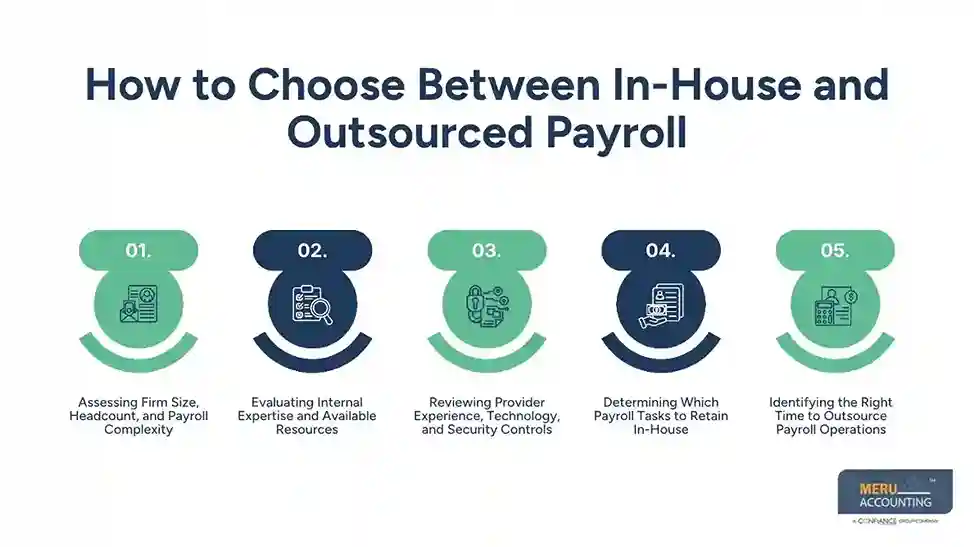
Determining Which Payroll Tasks to Retain In-House
A firm can outsource wage calculations while keeping salary changes, bonus approval, and final checks in-house. This split gives staff more time without losing control. Clear task ownership ensures that every payroll duty has an assigned person and a defined review process.
Identifying the Right Time to Outsource Payroll Operations
Repeated errors, staff growth, or a lack of trained cover may show that the current process no longer works. Compare staff costs, software, training, and correction time with the provider’s fee. A cost review can show whether outsourcing payroll for law firms makes sense.
Why Choose Meru Accounting for Law Firm Payroll and Accounting?
Payroll Processing and Records
Meru Accounting provides payroll services to record wage data, track staff costs, and manage agreed payroll tasks. A clear review process gives firms a sound basis for checking payments and keeping legal practice payroll management records organized.
Bookkeeping and General Ledger Entries
Meru Accounting provides bookkeeping services to record income, expenses, and payroll entries. Accurate entries let partners review payroll for law firms alongside other operating costs and prepare clear financial reports.
Accounts Payable and Receivable
Meru Accounting provides accounts payable and receivable services to track supplier bills and unpaid client balances. These records give firms a clearer view of cash due in and payments due out around each payroll date.
Financial Reporting
Meru Accounting provides financial reporting services that show income, expenses, and staff costs. Partners can compare actual figures with budgets, review payroll for law firms, and make informed choices about hiring and spending.
Service Scope and Review
Every firm has its own pay cycle, staff mix, and reporting needs. Meru Accounting can discuss the required tasks and define the service scope before work begins. Firms should confirm fees, deadlines, data access, and responsibilities in advance.
Our Expert Perspective
The lowest monthly fee does not always mean the lowest total cost. Firms should count staff time, software, training, error correction, and review work before comparing in-house and outsourced payroll. This gives partners a sound basis for choosing the right model.
Good legal practice payroll management also needs clear approvals and regular checks. Even when an outside provider runs payroll, firm leaders should review reports, verify staff data, and seek qualified advice on tax and employment duties. Clear oversight keeps payroll for law firms
Key Takeaways
- Payroll for law firms affects staff costs, cash flow, and financial records.
- In-house payroll offers direct control but needs time, skills, and backup cover.
- Outsourcing may reduce routine work, but firms must review fees and security.
- Legal practice payroll management must reflect pay terms, worker status, and local rules.
- Monthly checks can catch payment errors and gaps in financial reports.
- Meru Accounting provides payroll, bookkeeping, accounts payable and receivable, and financial reporting services.
FAQs
In-house payroll offers direct control, while outsourced payroll can reduce staff workload and provide specialist skills. The best choice depends on the firm’s size, budget, payroll needs, and available staff.
Outsourced payroll costs depend on staff numbers, pay frequency, service scope, and reporting needs. Law firms should compare provider fees with internal staff costs, software, training, and error correction.
Payroll for law firms includes salary payments, hourly wages, bonuses, tax records, and payroll expense reports. It also covers staff data, pay approvals, and records needed for accurate financial reporting.
Common challenges include incorrect pay calculations, late payments, changing tax rules, and errors in financial records. Clear approval steps, regular checks, and sound legal practice payroll management can reduce these risks.
Law firms should assess a provider’s legal sector experience, service fees, data security, reporting tools, and error correction process. They should also confirm the provider’s duties and the firm’s responsibilities before signing an agreement.
optional anymore
on running the business