An online store can have thousands of orders, a busy sales calendar, and a steady stream of payments, yet its owner may still struggle to answer one simple question: Is the business making money? This is where an ecommerce accounting firm can make a difference. But hiring one too early can add costs you don’t need, while waiting too long can leave you with messy books, missed tax deadlines, and poor financial decisions.
The right time to bring in an accounting firm isn’t based on a fixed sales figure. It’s about knowing when your current accounting setup can no longer keep up with your business. Whether you’re selling through Amazon, Shopify, Walmart, or your own website, let’s look at the signs that tell you it’s time to get professional accounting help.
What You Will Learn From This Blog
- What an ecommerce accounting firm does and how it supports online stores.
- Nine signs that show your business may need expert accounting help.
- The right stage to hire an outside accounting team.
- Which accounting services for ecommerce businesses matter most.
- The risks of waiting too long to get expert help.
- How to choose an accounting team that fits your store.
What Does an Ecommerce Accounting Firm Do?
An ecommerce accounting firm helps online sellers track sales, costs, stock, and cash flow. It knows how online sales work and how to match data from sales sites, payment tools, banks, and stock systems.
Unlike basic bookkeeping, ecommerce accounting must account for the full sales cycle. For example, a $100 order does not mean your store earned $100. You may need to deduct sales tax, platform fees, payment fees, refunds, shipping, and product costs before you know your true profit.
A skilled accounting team can help with tasks such as:
- Bookkeeping: Record sales, costs, fees, refunds, and other business activity.
- Sales reconciliation: Match sales data from Amazon, Shopify, and other channels with payment deposits.
- Inventory accounting: Track stock value, purchase costs, and cost of goods sold (COGS).
- Accounts payable: Record supplier bills and track due dates.
- Accounts receivable: Track money owed to your business, where relevant.
- Tax support: Keep tax records in order and help with sales tax tracking and tax prep.
- Financial reports: Prepare profit and loss reports, balance sheets, and cash flow reports.
- Cash flow planning: Help you plan stock buys, bill payments, and other cash needs.
The goal is not just to keep your books up to date. It is to give you a clear view of what your store earns, what it spends, and where money goes.
optional anymore
on running the business
9 Signs Your Ecommerce Business Needs an Accounting Firm
Not every online store needs an outside team from day one. But some signs show that your current way of handling the books may no longer work.
1. Your Sales Are Growing, but You Cannot See Your True Profit
More sales do not always mean more profit. Your store may have high order volume but also face rising ad spend, shipping costs, returns, and platform fees.
If you only look at gross sales, you may think your store is doing well when your net profit is low.
An ecommerce accounting firm can sort these costs and help you see the profit left after key expenses. This makes it easier to set prices, cut waste, and plan growth.
2. You Sell on More Than One Platform
Selling on Amazon, Shopify, Walmart, and your own site can help you reach more buyers. But each channel has its own reports, fees, and payout dates.
Matching all this data by hand takes time and can lead to errors. You may also count the same sale twice if reports are not handled with care.
A skilled team can bring data from each channel into one clear set of books. This helps you track sales and costs across your full store.
3. Marketplace Fees and Refunds Are Hard to Track
Online sales often come with fees for ads, storage, order handling, and payment processing. You may also have refunds, chargebacks, and return costs.
These items can affect your profit even when they do not show up as a clear expense in your bank feed.
If you cannot explain the gap between sales and payouts, it may be time to hire an ecommerce accounting firm. The team can check each payout and record fees, refunds, and other costs in the right place.
4. Inventory Costs Are Becoming Hard to Manage
Stock is one of the highest costs for many online stores. You need to know how much stock you own, what it cost, and how much has been sold.
This gets harder when you have many products, suppliers, or storage sites. Poor stock records can lead to wrong COGS and profit figures.
An accounting team can help track stock costs and set up a sound process for inventory records. This gives you a better view of the money tied up in stock.
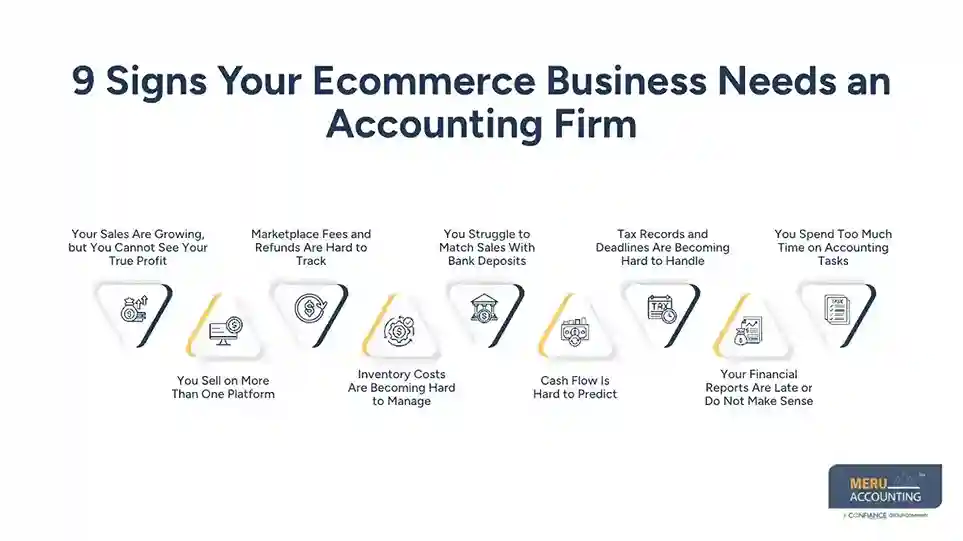
5. You Struggle to Match Sales With Bank Deposits
The sales shown on your store may not match the cash that lands in your bank. This is normal because platforms may take fees, hold funds, or pay out on set dates.
For example, a store may show $20,000 in sales for a month but receive less in bank deposits due to fees, refunds, and tax held at checkout.
If you cannot explain these gaps, your books may not show the full picture. A proper sales and payout check can help find missing entries and errors.
6. Cash Flow Is Hard to Predict
A store can show a profit on paper and still run short of cash. This often happens when you need to pay suppliers before a sales platform sends your money.
Large stock buys, ad costs, and slow payouts can add to the strain.
If you often ask whether you have enough cash for the next stock order or bill, expert help may be useful. An accountant can review cash flow and help you plan future needs.
7. Tax Records and Deadlines Are Becoming Hard to Handle
As your store grows, tax work can become more complex. You may sell to buyers in many states or countries, hire staff, or work with more than one sales channel.
For US sellers, sales tax rules can vary by state and depend on factors such as economic nexus, physical presence, and marketplace rules. Income tax records also need care.
An ecommerce accounting firm can help keep sales and expense records in order and work with tax experts on the right filings. It is still your job to confirm where your business must register and file.
8. Your Financial Reports Are Late or Do Not Make Sense
Reports are useful only when they are correct and ready on time. If you get your profit and loss report weeks late, it may be too old to guide a key choice.
You may also see costs placed in the wrong accounts or stock values that do not match your records.
A good accounting team can set a monthly close process and review key figures. This helps you act on current data rather than guesswork.
9. You Spend Too Much Time on Accounting Tasks
As the owner, your time is best spent on sales, product plans, buyers, and growth. If you spend hours matching payouts, fixing books, and sorting bills, you may have less time for these tasks.
This is a clear sign that you should review your options.
Hiring an ecommerce accounting firm can free up your time while giving you access to trained staff and a review process. You can stay in control of your business without doing every finance task yourself.
At What Stage Should You Hire an Ecommerce Accounting Firm?
There is no fixed sales level at which every online store must hire an accountant. The right time depends on how hard your books are to manage and how much risk you face if they are wrong.
Here are some common stages when outside help can make sense.
When you launch your online store
You may not need a full accounting team at this stage. But you should set up your chart of accounts, bank feeds, sales records, and stock tracking from the start. Early help can prevent poor habits that are hard to fix later.
When monthly sales become steady
Once sales are regular, you need to track fees, refunds, stock costs, and net profit each month. This is a good time to hire help if your books are taking too long or your reports are not clear.
When you add more sales channels
A second or third sales channel adds more data and payout rules. An ecommerce accounting firm can help keep all sales records in one system and reduce the risk of missed or double-counted entries.
When you hire staff or hold more stock
Payroll, supplier bills, and stock costs add to your finance workload. You may need more than basic bookkeeping to keep your records right.
When you plan to grow or seek funds
If you want to launch new products, enter new markets, or seek a loan, you need sound financial reports. A clean set of books can help you assess your plans and answer questions from lenders or other parties.
What Happens If You Delay Hiring an Ecommerce Accounting Firm?
Waiting too long can lead to more than late books. Small errors can build up over time and become harder to fix.
For example, if marketplace fees are not recorded each month, your profit reports may show too much income. If stock records are wrong, your COGS and closing stock value may also be off.
Other risks include:
- Poor pricing choices: You may set prices without knowing the full cost of each sale.
- Cash flow gaps: You may buy too much stock or miss key bill dates.
- Tax issues: Missing records can make tax prep harder and may lead to wrong filings.
- Slow business choices: Old reports can make it hard to judge which products or channels earn the most.
- Costly cleanup work: Fixing months of poor records can take more time than keeping them right from the start.
An ecommerce accounting firm can help prevent these issues through regular checks and clear reports. The sooner you fix gaps in your books, the easier it is to keep them under control.
How Meru Accounting Supports Ecommerce Businesses
A growing online store can have hundreds of transactions across sales channels, supplier bills waiting for payment, and thousands of dollars tied up in inventory. Keeping all these records accurate takes more than routine bookkeeping. At Meru Accounting, we help ecommerce businesses bring these financial activities together so owners can see what they earn, what they owe, and where their money is going.
Our accounting services for ecommerce businesses cover the day-to-day work as well as the financial tasks that become harder to manage as a store expands.
Our ecommerce accounting services include:
- Sales and payout reconciliation: Match Amazon, Shopify, and other platform sales with payment deposits, fees, refunds, and chargebacks.
- Ecommerce bookkeeping: Record sales, operating costs, supplier payments, platform charges, and other transactions.
- Inventory and COGS accounting: Track stock costs, purchases, and cost of goods sold to support accurate profit reports.
- Accounts payable and receivable: Manage supplier bills, payment schedules, invoices, and outstanding balances.
- Payroll and tax preparation: Maintain payroll records and organize financial data for tax preparation.
- Financial reporting: Prepare profit and loss statements, balance sheets, and cash flow reports to help owners assess business performance.
- Cleanup and catch-up bookkeeping: Review past records, correct accounting gaps, and bring overdue books up to date.
- CFO and financial planning support: Help with budgets, cash flow forecasts, product costs, and financial plans for future growth.
We also follow a review process to check account records and financial reports before they are shared. This helps catch issues such as unmatched payouts, incorrect expense entries, and stock costs that do not flow into the right reports.
Whether you need help with marketplace reconciliation, monthly bookkeeping, or a complete outsourced accounting team, Meru Accounting can provide support based on your store’s operations and workload. Our goal is to give you reliable financial records so you can make business decisions with confidence, rather than spend your time chasing numbers across different platforms.
Our Expert Insight
One thing we advise ecommerce owners to watch is the timing of expenses and revenue when planning a major expansion. For example, placing a large inventory order before a seasonal sales rush may seem like a smart move. However, the cash paid to suppliers may be tied up for weeks or months before those products generate sales.
This is why a profitable month does not always mean a business is ready to expand. Before committing to a large purchase, review upcoming supplier payments, expected sales, operating expenses, and available cash. We recommend building a cash flow forecast before making major spending decisions.
Key Takeaways
- Hire an ecommerce accounting firm when your books become too complex to manage well on your own.
- Rising sales do not always mean rising profit. Track fees, refunds, shipping, and stock costs.
- Multiple sales channels make payout checks and sales records more complex.
- Good inventory and COGS records help you price products and judge profit.
- Look for accounting services that fit your sales model, tools, and growth plans.
- Do not wait for tax issues or cash flow gaps to expose poor records.
FAQs
When sales increase, bookkeeping takes too much time, or managing multiple sales channels becomes difficult. Hiring early can also help prevent costly accounting errors.
Not always. But professional help can be useful when sales, expenses, inventory, or tax records become difficult to manage.
Costs depend on transaction volume, sales channels, inventory, and the services required. Basic bookkeeping usually costs less than full-service accounting.
Yes. An experienced firm can handle sales records, fees, refunds, payout reconciliation, and financial reporting for both platforms.
Outsourcing is often more cost-effective for businesses that need regular accounting support without a full-time employee. In-house hiring may suit larger stores with daily accounting needs.
optional anymore
on running the business