
Many law firm owners believe handling their own books saves money. At first, it feels practical and controlled. But over time, the real cost of doing it alone starts to show. This is why accountants for lawyers are no longer a luxury but a need. From missed billings to compliance risks, DIY accounting quietly drains profit and peace of mind.
What often goes unnoticed is how these hidden issues affect long-term growth, financial clarity, and even professional standing. Without the proper systems and guidance, small accounting errors can turn into serious problems.
In this blog, we explain why law firms struggle with self-managed accounting and how accountants for lawyers and outsourced accounting for lawyers can prevent costly mistakes while supporting a healthier firm operation.
What You Will Learn From This Blog
- Managing accounting on your own slowly costs time, leads to errors, and causes missed financial opportunities.
- Why law firm accounting is different from other businesses, and why accountants for lawyers are better suited than general bookkeepers.
- The compliance risks many lawyers overlook, especially related to trust accounting, where even small mistakes can cause serious issues.
- How weak accounting systems affect daily operations such as billing, payroll, and cash flow management.
- When it makes sense to move to outsourced accounting for lawyers, and how it helps law firms stay organized and financially stable.
Why Many Lawyers Handle Their Own Accounting
Desire To Save Money
Many lawyers feel hiring accountants for lawyers is an extra cost. They underestimate long-term losses caused by errors and wasted billable hours.
Control Over Financial Data
Handling books personally feels safer and gives lawyers a sense of control. This belief often ignores reporting gaps and delayed financial visibility.
Early-Stage Firm Mindset
Small firms often believe accounting can wait until later. Early workload pressures push financial tasks aside in favor of client work.
Limited Awareness Of Legal Accounting Rules
Some lawyers don’t realize how different law firm accounting is. They miss strict trust rules and compliance duties tied to client funds.
Past Experience With Basic Bookkeeping
Prior exposure creates false confidence in managing law firm finances. Basic bookkeeping experience rarely prepares lawyers for complex legal accounting.
The Hidden Financial Risks of DIY Accounting for Law Firms
Billable Time Gets Lost
Every hour spent on books is time not billed to clients. This reduces revenue while increasing the unpaid administrative workload for lawyers.
Small Errors Grow Over Time
Minor mistakes often turn into major financial issues. Unnoticed errors compound monthly and become harder to correct later.
Missed Tax Deductions
Without accountants for lawyers, many deductions go unnoticed. This results in higher tax payments and reduced overall firm profitability.
Cash Flow Becomes Unstable
Poor tracking delays collections and payments. Late invoices and follow-ups disrupt predictable monthly cash flow.
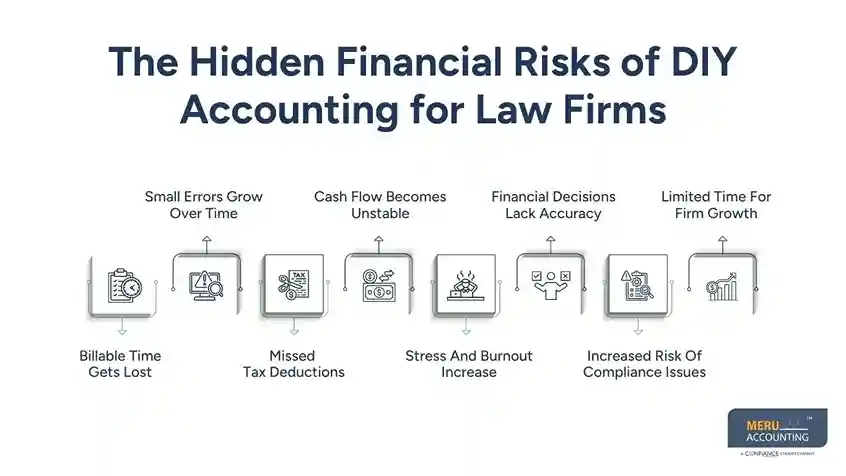
Stress And Burnout Increase
Accounting tasks add pressure to an already demanding job. Ongoing financial worries affect focus, productivity, and overall job satisfaction.
Financial Decisions Lack Accuracy
DIY records often fail to provide clear and reliable financial insights that accountants for lawyers can provide. Lawyers may base decisions on incomplete or outdated financial information.
Increased Risk Of Compliance Issues
DIY accounting raises the chance of missing key regulatory requirements. Non-compliance can lead to penalties, audits, or professional consequences.
Limited Time For Firm Growth
Administrative tasks reduce time available for planning and business development. Growth opportunities are missed when accounting demands constant attention.
The True Financial Risks Of DIY Law Firm Accounting
Trust Account Violations
Errors here can lead to penalties, audits, or serious professional consequences. Experienced accountants for lawyers help prevent mismanagement of client funds that could put your law license at risk.
Inaccurate Financial Reports
Decisions made using incorrect data often lead to costly mistakes. Financial insights are unreliable without proper accounting systems in place.
Late Or Incorrect Tax Filings
DIY accounting increases the chance of missed deadlines or fines. Incorrect filings can result in interest, penalties, and unnecessary expenses.
Poor Expense Tracking
Unclear expense records reduce overall visibility and firm profitability. Without proper tracking, overspending becomes difficult to detect or correct.
No Long-Term Planning
Without accountants for lawyers, strategic planning remains delayed and reactive. Law firms struggle to forecast revenue and manage future financial goals.
How DIY Accounting Limits Law Firm Efficiency
Delayed Invoicing
Manual billing slows down payments and delays firm’s cash flow significantly. Clients may pay late when invoices are not generated quickly enough.
Payroll Errors
Staff morale suffers when payroll mistakes occur repeatedly in the firm. Incorrect salaries can reduce trust and increase administrative complaints over time.
Disorganized Records
Finding important documents becomes time-consuming and reduces overall productivity. Misfiled records can delay billing, reporting, and compliance tasks substantially.
Lack Of Financial Insight
DIY systems don’t provide clear reports for accurate business decisions. Without accountants for lawyers, firms miss insights that improve profitability.
Growth Becomes Harder
Scaling a law firm without outsourced accounting for lawyers is risky. Inefficient accounting systems can prevent expansion and operational improvements.
Trust Accounting Mistakes That Can Put Your License At Risk
Commingling Funds
Mixing client and firm funds is a serious professional violation. Such mistakes can result in disciplinary actions or license suspension.
Incorrect Reconciliations
Monthly errors go unnoticed without expert accountants reviewing the accounts. Even small reconciliation mistakes can lead to serious compliance problems.
Poor Record Maintenance
Incomplete records raise red flags during routine audits and reviews. Lack of documentation can result in fines or professional scrutiny.
Delayed Trust Reporting
Late trust account filings can lead to formal disciplinary action. Regulators may penalize firms that consistently fail to submit reports.
Misunderstanding State Rules
Each jurisdiction has unique trust accounting requirements that lawyers must follow. Failing to comply with local rules risks both penalties and reputation.
Why General Accountants Aren’t Enough For Law Firms
Lack Of Legal Industry Knowledge
General accountants don’t specialize in legal industry rules and regulations, unlike dedicated accountants for lawyers. They often miss law firm-specific accounting and trust compliance requirements.
Limited Trust Accounting Experience
Trust accounts require experienced accountants trained specifically for law firms. Untrained accountants may make errors that compromise the safety of client funds.
Billing Structure Confusion
Law firm billing differs significantly from other types of businesses. Incorrect billing setup can result in lost revenue or client disputes.
Compliance Gaps
Legal regulations require focused expertise that general accountants often lack. Non-compliance risks include penalties, audits, and reputational damage for firms.
Reporting That Doesn’t Match Legal Needs
Generic financial reports don’t provide the insights needed for law firms. Critical decisions require tailored reports from accountants for lawyers.
How Expert Accountants for Lawyers Solve These Accounting Problems
Dedicated Legal Accounting Experts
Outsourced accountants for lawyers provide industry-focused financial support and guidance. These experts ensure accurate bookkeeping, trust compliance, and timely financial insights.
Accurate Trust Accounting
Compliance becomes easier and safer with trained professionals handling accounts. Client funds are protected, reducing the risk of disciplinary or legal issues.
Clear Financial Reports
Lawyers receive accurate, actionable reports from accountants for lawyers to guide business decisions. Reports highlight cash flow, expenses, and profitability clearly and reliably.
Reduced Administrative Load
Firms can focus more on legal work rather than bookkeeping tasks. Outsourced accounting for lawyers decreases daily administrative stress and errors.
Scalable Support
Outsourced accounting services grow alongside your law firm’s changing needs. Flexible solutions ensure accounting remains effective as the firm expands.
DIY Accounting Vs. Outsourced Accounting For Lawyers
Comparison Area | DIY Accounting | Outsourced Accounting For Lawyers |
Time Investment | DIY requires constant attention and drains valuable lawyer billable hours. | Outsourced accounting frees time, letting lawyers focus on client work. |
Accuracy Levels | Mistakes are common without specialized knowledge, causing costly financial errors. | Professionals reduce errors and ensure precise law firm accounting consistently. |
Compliance Support | Lawyers may miss updates on trust accounting and legal requirements. | Experts remain updated on regulations, ensuring full compliance every month. |
Cost Predictability | Unexpected mistakes and fines increase financial uncertainty for the firm. | Monthly fees provide predictable accounting costs without surprise expenses. |
Peace Of Mind | Managing accounting alone creates stress and worry over possible errors, whereas accountants for lawyers handle finances confidently and accurately. | Knowing experts handle finances professionally gives lawyers confidence and relief. |
Why Law Firms Choose Meru Accounting
Specialized Accountants For Lawyers
Meru Accounting provides experienced accountants trained specifically for law firms. Our experts understand legal rules, trust accounting, and complex billing structures.
Strong Trust Accounting Systems
We maintain robust systems that protect your license and reputation. Client funds are always handled accurately, securely, and according to regulations.
Clear And Simple Reports
Our reports give lawyers actionable insights for better financial decisions. We present data clearly to help manage cash flow and profitability.
Flexible Service Plans
Meru Accounting adapts services to match your firm’s size and needs. Firms of all sizes can access accounting support that scales easily.
Reliable Outsourced Accounting For Lawyers
We offer consistent, dependable, and professional outsourced accounting for lawyers. Lawyers can focus on clients while we manage all financial processes.
Key Takeaways
- DIY accounting has hidden costs, as time, errors, and stress reduce profits.
- Legal accounting requires specialists because accountants for lawyers understand unique challenges.
- Trust accounting errors are serious, and mistakes can threaten your professional license.
- Outsourcing improves efficiency since outsourced accounting for lawyers supports smooth operations.
- Expert support brings peace of mind, allowing lawyers to focus on clients.
FAQs
Handling accounting yourself can lead to errors, missed deductions, trust account mistakes, and compliance issues that cost money and time.
Accountants for lawyers understand legal trust rules, billing structures, and law firm compliance that general accountants often miss.
It reduces errors, ensures timely filings, protects your license, and frees up billable hours that would otherwise be spent on accounting.
Yes, even small firms face trust account rules and compliance requirements, making outsourced accounting for lawyers a smart investment.
Signs include delayed invoices, cash flow problems, mistakes in trust accounts, stress from bookkeeping, and frequent accounting errors.