
Real estate can be a great way to build wealth, but it also comes with many financial tasks. Property owners, real estate firms, and investors must track rent, manage costs, and keep clear records to stay in control of their finances. Even a property that earns good income can run into cash flow issues, tax errors, or poor business choices. Hence, accounting for real estate must be done carefully. A well-run accounting process helps property owners track income, control costs, and create reports that show the true health of their investments. Whether you own one rental home or a large group of properties, accurate records support growth and help lower risk.
In this blog, we will explain how rental income should be tracked, how costs can be managed, the reports every real estate business should use, and how expert accounting support can improve results.
What You Will Learn From This Blog
- The basics of accounting for real estate
- How to track rental income the right way
- Best ways to manage property costs
- Key reports used in real estate accounting
- Common accounting challenges for the real estate industry
- The benefits of outsourced accounting services
What Is Accounting for Real Estate?
Accounting for real estate is the process of recording, sorting, tracking, and reporting all money activity tied to property ownership and management. It covers rental income, upkeep costs, taxes, insurance, loan payments, and other property-related transactions.
Unlike many other fields, real estate accounting often involves handling many properties, tenants, vendors, and income sources. Each property may have its own money activity that must be tracked on its own while also being part of the full business view.
The main goals of real estate accounting include:
- Tracking rental income accurately
- Monitoring operating costs
- Managing property budgets
- Supporting tax compliance
- Creating clear financial reports
- Improving business and investment decisions
A strong accounting system gives property owners a clear view of profit and helps them plan for future growth.
Understanding Rental Income Tracking in Real Estate
Rental income is the main source of revenue for most real estate businesses. Proper tracking is important because even small mistakes can affect financial reports, tax filings, and cash flow plans.
Record Rental Payments on Time
Every rent payment should be recorded as soon as it is received. This includes payments made through bank transfers, online payment tools, checks, or other methods.
Keeping records up to date helps:
- Prevent missed transactions
- Improve cash flow tracking
- Make account checks easier
- Reduce reporting mistakes
Property management and accounting software can automate much of this work.
Separate Different Income Sources
Many property owners receive income beyond monthly rent. These extra income sources should be tracked in separate accounts for better reporting.
Examples include:
- Parking fees
- Storage unit fees
- Pet fees
- Laundry room income
- Application fees
- Late payment charges
Using separate groups makes reports more useful and easier to review.
Handle Security Deposits Correctly
Security deposits are usually not treated as rental income when collected. Instead, they are recorded as liabilities until they are returned or used based on lease terms.
Proper handling of security deposits helps maintain compliance and lowers the risk of reporting errors.
Track Unpaid Rent
Late rent payments can create cash flow problems. Real estate businesses should keep tenant records that show:
- Amount due
- Payment dates
- Unpaid balances
- Late fees
Regular reviews help property managers deal with collection issues before they become larger problems.
Reconcile Accounts Each Month
Monthly account checks help ensure accounting records match bank statements and payment records. This process helps find missing transactions, repeat entries, and posting errors before they affect financial reports.
Essential Financial Reports in Accounting for Real Estate
Financial reports provide useful facts about property performance and overall business health. Accurate reporting is one of the most important parts of accounting for real estate.
Profit and Loss Statement
A profit and loss statement shows income earned and costs paid during a set period.
This report helps property owners:
- Measure profit
- Review operating results
- Compare results over time
- Find areas where costs can be cut
A well-prepared profit and loss statement is a key management tool.
Balance Sheet
A balance sheet provides a snapshot of a company’s financial position on a given date.
It normally includes:
- Assets
- Liabilities
- Owner equity
This report helps investors understand what the business owns and what it owes.
Cash Flow Report
A cash flow report tracks money coming into and going out of the business.
Even profitable properties can face money strain if cash flow is not managed well. A cash flow report helps owners:
- Monitor available cash
- Plan future spending
- Schedule property upgrades
- Meet loan payments
Rent Roll Report
A rent roll report lists tenants, lease terms, rental amounts, and occupancy details.
This report helps management monitor:
- Property occupancy
- Rental income trends
- Lease end dates
- Vacancy risk
Investors often review rent roll reports when checking property performance.
Cost Reports
Cost reports provide detailed information about operating costs.
These reports help identify:
- Cost increases
- Budget gaps
- Spending patterns
- Areas where savings may be found
Regular cost reviews support stronger cost control.
Common Accounting Challenges for the Real Estate Industry
Many businesses face unique money issues that make real estate accounting more complex than basic bookkeeping.
Understanding these accounting challenges for the real estate industry helps businesses build stronger accounting systems.
Managing Multiple Properties
As property groups grow, accounting becomes more complex. Each property may have separate:
- Income sources
- Vendor payments
- Repair costs
- Tax obligations
Tracking all activity accurately requires clear accounting processes.
Allocating Costs
Some costs benefit more than one property and must be split correctly.
Examples include:
- Office costs
- Shared utility costs
- Management fees
- General business overhead
Wrong cost splits can make property results appear better or worse than they really are.
Maintaining Accurate Records
Large numbers of transactions create more chances for mistakes.
Common issues include:
- Repeat entries
- Missing bills
- Wrong account groups
- Unrecorded costs
Consistent recordkeeping helps reduce these problems.
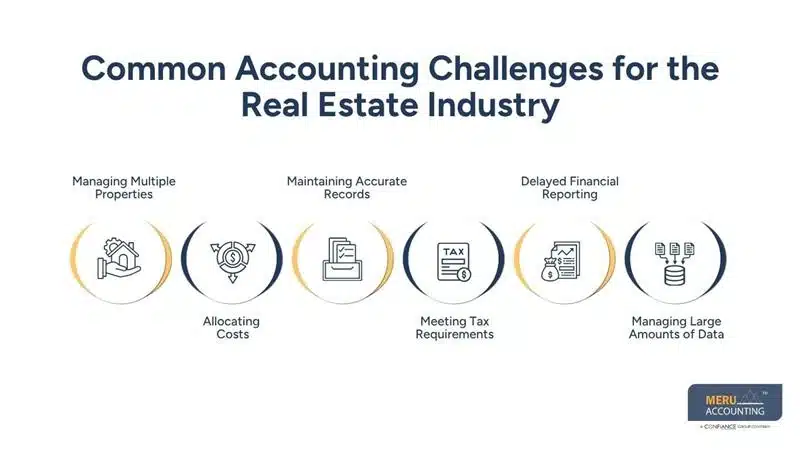
Meeting Tax Requirements
Real estate businesses must comply with many tax rules. Requirements may include:
- Property tax reporting
- Depreciation tracking
- Rental income reporting
- Capital gain reporting
Accurate records support proper tax compliance and reduce risk.
Delayed Financial Reporting
Many property owners struggle with slow financial reporting.
Late reports can lead to:
- Poor business decisions
- Budget issues
- Cash flow surprises
- Compliance concerns
Timely reporting gives owners better financial visibility and planning support.
Managing Large Amounts of Data
The growing amount of financial data creates another major accounting challenge for the real estate sector.
Without organized systems, businesses may struggle to find the right information when needed. Cloud-based accounting tools can help improve record management and reporting speed.
How Outsourced Accounting Services Help Real Estate Businesses
Many property owners find it hard to manage accounting in-house while also focusing on tenants, leasing, and business growth.
Outsourced accounting services provide access to skilled professionals who understand real estate accounting and reporting needs.
Key benefits include:
Better Accuracy
Professional accountants help reduce mistakes in transaction recording, account checks, and financial reporting.
Stronger Financial Reporting
Timely reports provide useful insights into business performance and support better decision-making.
More Time for Core Work
Property managers and owners can focus on tenant service, leasing tasks, and property upgrades instead of bookkeeping work.
Improved Compliance
Accounting professionals stay current with tax rules and reporting requirements, helping businesses stay compliant.
Lower Costs
Building a full in-house accounting team can be costly. Outsourcing often provides expert support at a lower total cost.
Access to Modern Accounting Tools
Many outsourced accounting firms use cloud-based systems that improve teamwork, reporting speed, and data security.
Why Choose Meru Accounting for Real Estate Accounting Services?
Managing real estate finances requires more than basic bookkeeping. Property owners need accurate records, timely reports, and sound financial guidance to increase returns and support long-term growth.
Meru Accounting provides specialized accounting solutions built for real estate businesses, property managers, and investors.
Our services include:
- Rental income tracking
- Cost management
- Bank reconciliation
- Financial statement preparation
- Cash flow tracking
- Tax-ready financial records
- Cloud accounting support
- Custom reporting solutions
Our skilled team understands the unique needs of accounting for real estate and works closely with clients to improve financial visibility and day-to-day efficiency.
By partnering with Meru Accounting, real estate businesses gain access to skilled accounting professionals without the cost of maintaining a large internal accounting team.
Whether you manage one property or a growing portfolio, our services help keep your financial records organized, accurate, and ready for informed business decisions.
Key Takeaways
- Accounting for real estate helps property owners track income, manage costs, and maintain accurate financial records.
- Proper rental income tracking supports stronger cash flow management and more accurate reporting.
- Financial reports such as profit and loss statements, balance sheets, cash flow reports, and rent roll reports provide useful business insights.
- Several accounting challenges for the real estate industry include multi-property management, cost allocation, tax compliance, and reporting delays.
- Outsourced accounting services improve efficiency, accuracy, and financial visibility.
FAQs
Accounting for real estate is the process of recording, tracking, managing, and reporting financial transactions related to property ownership, rental operations, and real estate investments.
Accurate rental income tracking helps maintain reliable financial records, improve cash flow management, support tax compliance, and reduce reporting mistakes.
Common challenges include managing multiple properties, allocating costs correctly, maintaining accurate records, meeting tax requirements, and producing timely financial reports.
Important reports include profit and loss statements, balance sheets, cash flow reports, rent roll reports, and cost reports.
Outsourced accounting services improve accuracy, reduce admin work, strengthen compliance, provide better reporting, and support informed business decisions.