
Growth is the ultimate goal for most Real Estate firms. More deals, more clients, and more listings can lead to more income and a stronger place in the market. As a firm grows, the work tied to accounting for Real Estate transactions grows as well. Teams must track sales, rent income, fees, costs, vendor bills, and many other items. A task that once took a few hours each week can soon take up much of the workday. Many firms find that their in-house team can no longer keep up with the rise in work. Reports may take more time to finish. Records may be harder to track. Small errors may start to show up more often. To deal with these issues, many firms are now outsourcing Real Estate accounting tasks and support functions.
With help from skilled external teams, agencies can make day-to-day finance work much easier. They can gain better control of records and free up time for growth. This helps firms stay on track while keeping costs in line.
In this blog, we will look at how outsourced real estate teams can make finance work easier and help growing firms run more efficiently.
What You Will Learn From This Blog
In this blog, you will learn:
- What accounting for Real Estate transactions covers
- Why more firms are outsourcing Real Estate solutions
- Common issues tied to in-house finance work
- Main benefits of using outsourced Real Estate teams
- How to pick the right outsourcing partner
Understanding Accounting for Real Estate Transactions
Accounting for Real Estate transactions covers the work of tracking, recording, sorting, and reporting money tied to a Real Estate firm.
This work may include:
- Property sales
- Property purchases
- Rent and lease income
- Agent pay tracking
- Vendor payments
- Property costs
- Trust and escrow funds
- Tax records
- Finance reports
Real Estate finance can be hard to manage. Each deal may involve many people, large sums of money, and a wide set of records. All data must be tracked with care. As firms grow, they often deal with more sales, more leases, and more clients. This means more records and more reports. As a result, accounting for Real Estate transactions can take much more time and effort.
Without strong systems and enough support, finance teams may fall behind. Reports can be later than usual. Records can be hard to find. Leaders may not have the facts they need when the important decisions are to be made. That is why many firms look for better ways to handle finance work as they grow.
Why Growing Agencies Are Turning to Outsourcing Real Estate Solutions
Growth is good for business, but it also brings more tasks along. As firms start getting more clients and deals, the amount of finance work grows fast. Teams have to track more income, costs, bills, and records. Many firms find that adding staff is not always the best solution. Hiring takes time and can raise costs. New team members also need training and support.
This is why more firms are turning to outsourcing Real Estate services. By working with an outside team, agencies can get skilled help without the cost and effort tied to hiring full-time staff. There are many reasons why firms choose this path.
More Deals to Track
As deal counts rise, so does the need for clear and correct records. Outsourced teams help firms keep pace with this rise in work while making sure records stay up to date.
Need for Fast Reports
Firm owners and team leads need reports to guide plans and track growth. Outsourced staff can help make sure reports are ready on time and support accounting for Real Estate transactions with accurate and timely financial data.
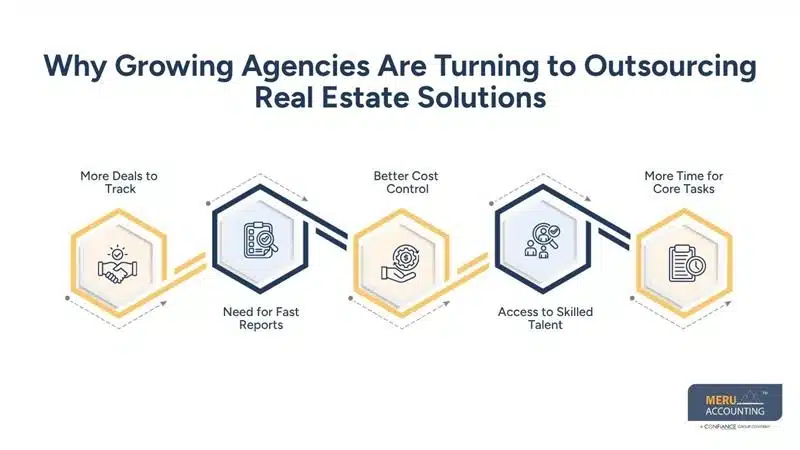
Better Cost Control
Hiring more staff can raise payroll costs. Outsourcing Real Estate work can give firms the help they need while keeping costs under better control.
Access to Skilled Talent
Real estate finance has its own set of rules and tasks. Many outsourced teams have years of hands-on work in this field and know how to deal with common issues.
More Time for Core Tasks
When leaders spend less time on finance work, they can spend more time on sales, client care, team growth, and new business plans.
Major Challenges in Managing Accounting for Real Estate Transactions In-House
Many firms start with an in-house accounting team. This may work well at first. Yet growth can bring new issues in the business.
Heavy Workloads
Accounting teams handle many tasks each day. They must track deals, pay bills, match bank data, build reports, and keep records. As work grows, staff may struggle to keep up.
More Errors
Manual work can lead to mistakes. A missed entry or wrong amount can affect reports and create more work later. Since accounting for Real Estate transactions often deals with large sums, even a small error can have a big effect.
Rule and Tax Issues
Real Estate firms must follow tax laws and record rules. Keeping up with these rules can take a great deal of time. Small teams may find it hard to stay on top of all changes.
Hard to Scale
Growth often means more finance work. Hiring and training new staff can take months. Many firms need help much sooner than that.
Software Challenges
Most firms use software to track data and build reports. These tools need setup, care, and updates. Many teams do not have the time to handle all of these tasks on their own.
Benefits of Outsourcing Real Estate Accounting for Growing Agencies
Outsourcing can help growing firms in many ways. Here are some of the key benefits of outsourcing Real Estate accounting:
Better Accuracy
Skilled teams use clear processes and review checks. This helps lower the risk of errors and keeps records in good shape. Strong accuracy is essential for accounting for Real Estate transactions, where even small mistakes can affect reports and cash flow. More accurate records help firms make better choices.
Faster Turnaround Times
Outsourced teams focus on finance work each day. This often helps them finish tasks faster and keep work on track.
Lower Costs
A large in-house team can be costly. Firms must pay wages, taxes, staff perks, software fees, and training costs. Outsourcing Real Estate accounting and support can help cut many of these costs.
Access to Real Estate Know-How
Real Estate finance is not the same as finance in other fields. Teams with Real Estate knowledge can help firms deal with tasks in a more direct and smooth way.
Stronger Reports
Good reports help leaders see where the firm stands. They help track income, costs, cash flow, and growth. With clear reports, firms can make smart choices based on facts.
Easy Growth Support
One of the best parts of outsourcing is the ease of growth. As work rises, firms can often add more support with little delay. This helps them keep up with new demand.
Less Staff Management
Running an in-house team takes time. Leaders must hire staff, train them, review work, and solve day-to-day issues. Outsourcing cuts much of this workload.
How to Choose the Right Outsourcing Real Estate Partner
The right partner can make a big difference. Before you choose a provider, look at a few key points as follows:
Real Estate Experience
Choose a team that has worked with Real Estate firms. A provider with experience in accounting for Real Estate transactions will better understand your needs.
Strong Software Skills
Good software helps keep records clear and easy to track. Look for a team that works with modern finance tools.
Room to Grow
Your needs may change as your firm grows. Pick a provider that can grow with you.
Data Safety
Finance data must stay safe. Make sure your partner has strong data safety steps in place.
Clear Communication
Good service depends on good communication. Choose a team that gives updates, answers questions, and shares reports on time.
Flexible Support
Each firm has its own needs. The best providers offer support that fits your goals and work style.
How Meru Accounting Supports Real Estate Agencies
At Meru Accounting, we help Real Estate firms handle finance work with ease and confidence. Our team knows the challenges that come with growth. We help firms simplify accounting for Real Estate transactions while keeping records clear, up to date, and easy to review.
Our Real Estate accounting services include:
- Bookkeeping support
- Bank and account reconciliations
- Accounts payable support
- Accounts receivable support
- Finance reports
- Budget support
- Cash flow tracking
- Real Estate finance support
We use proven methods and modern tools to help clients keep clear records and gain a better view of business results. Our team can support firms at many stages of growth. Whether you handle a small number of properties or a large set of deals, we can provide support that fits your needs.
With Meru Accounting as your partner, you gain skilled help, strong finance support, and more time to focus on growth.
Key Takeaways
- Accounting for Real Estate transactions grows more complex as firms expand.
- More deals often mean more finance work and more records to track.
- Outsourcing Real Estate services can help improve speed and accuracy.
- Skilled outside teams help firms manage workloads more effectively.
- Outsourcing can lower costs tied to hiring and training staff.
- Better reports help leaders make informed business choices.
- The right partner can help firms scale with less stress.
FAQs
Accounting for Real Estate transactions covers the work of recording, tracking, matching, and reporting all financial activity tied to property sales, purchases, leases, fees, costs, and other Real Estate work.
Growing agencies are outsourcing Real Estate services to gain skilled help, manage more work, lower costs, and keep finance tasks running smoothly.
Outsourced teams use clear work steps, review checks, and real estate know-how to help reduce mistakes and keep records correct.
Yes. Many outsourced teams create finance reports, income reports, account reviews, and other reports that help leaders track business results.
Agencies should review Real Estate experience, software skills, growth support, data safety, communication quality, and service options before making a choice.