Running a multi-store retail setup brings many daily financial tasks that must stay accurate and well-tracked. Many owners now depend on accounting software for retail stores to handle sales, stock flow, and store-level reports in one place. In growing chains, manual records often slow down decisions and create errors that affect profit tracking.
Modern retail groups also rely on retail accounting services to support structured record keeping, tax work, and store-wise financial checks. When both systems work together, business owners get clearer numbers and better control over each outlet. This blog explains how systems can be used in a simple and effective way.
What You Will Learn From This Blog
- How multi-outlet retail firms can manage data with better control
- Ways accounting software for retail stores reduces errors across locations
- Common issues faced in retail chains with financial tracking
- How to select the right system for store-based needs
- Methods to improve daily reporting and cash flow tracking
- Role of retail accounting services in supporting growth and compliance
Understanding the Role of Accounting Software for Retail Stores in Modern Retail Chains
Centralized Financial Control
Accounting software for retail stores allows all outlets to connect their sales and expense data in one system. This avoids scattered records and helps owners see total performance at once. It also reduces confusion during monthly closing.
Real-Time Data Access
Managers can view live data from each store in a single dashboard. This helps in a quick review of sales trends and expense control. Decisions can be made without waiting for the end-of-month reports.
Better Record Accuracy
Manual entry often leads to mismatched numbers. Professional retail accounting services help maintain clean records, accurate reporting, and better financial control. This improves trust in reports and reduces correction work later.
Multi-Store Reporting
One of the strongest uses of modern systems is combined reporting across outlets. Owners can compare store performance and find gaps in sales or cost control easily.
Compliance And Tax Readiness
When financial data is stored in a clean format, businesses can prepare tax reports faster and maintain accurate records. This reduces last-minute pressure during filing periods.
Key Challenges Faced By Multi-Outlet Retail Businesses in Financial Management
Different Store Data Formats
Many retail chains use different methods in each store. This creates inconsistency in records and makes it hard to maintain a single financial view. Over time, it leads to confusion during reporting and analysis.
Delay In Report Collection
Without a proper system, collecting data from all outlets takes time. Even with retail accounting services, delays still occur if stores do not update records on time or follow a uniform process.
Cash Flow Tracking Issues
Tracking cash movement across stores is often weak. Accounting software for retail stores helps make cash flow visible at each level, so owners can clearly see inflow and outflow patterns without waiting for manual updates.
Human Entry Errors
Manual work increases the chances of wrong entries. Using retail accounting services along with software reduces repeated correction work.
Lack Of Store Comparison
Without structured systems, comparing outlets is hard. This makes it difficult to identify which stores are performing well and which need attention, affecting overall planning and control.
How Accounting Software For Retail Stores Improves Operational Efficiency Across Locations
Unified Sales Tracking
All store sales can be tracked in one dashboard using modern systems. This removes the need to review each branch separately and gives owners a clearer view of overall sales performance.
Inventory Control Improvement
Stock movement becomes easier to monitor when inventory and financial data are connected. With support from retail accounting services, businesses can maintain better stock records, reduce mismatches, and improve inventory planning.
Faster Monthly Closing
Month-end closing becomes quicker when automated systems handle data updates. This reduces delays in financial reporting and improves overall closing accuracy.
Reduced Manual Workload
Store teams spend less time on paperwork. Accounting software for retail stores allows automation of repetitive entries, so staff can focus more on customer service instead of data entry.
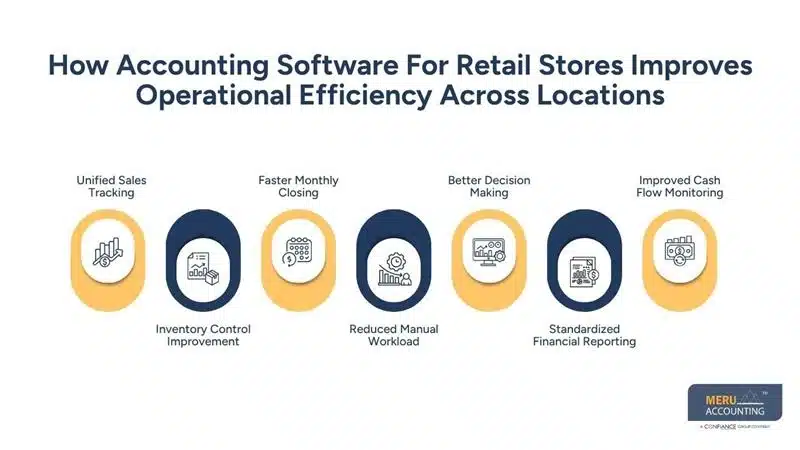
Better Decision Making
Owners get clearer insights from financial and operational data, helping them make informed decisions about pricing, inventory, expenses, and store performance. It also supports faster responses to changing market conditions.
Standardized Financial Reporting
Uniform reporting structures across outlets reduce confusion during consolidation. Comparing performance across locations becomes easier with consistent financial formats and aligned reporting methods.
Improved Cash Flow Monitoring
Businesses can track cash movement across outlets more effectively. Better visibility into income and expenses helps identify financial gaps and supports stronger planning.
How To Choose the Right Accounting Software for Multi-Outlet Retail Operations
Ease Of Use
Simple system design helps store staff adapt quickly without long training sessions. Short learning time reduces operational delays and keeps daily store work smooth and consistent across locations.
Integration With Other Tools
Strong connectivity with billing, inventory, and payment systems allows smooth data flow across platforms. Better system integration reduces manual syncing and lowers the chance of mismatched records.
Multi-Location Support
Support for multiple outlets remains essential for growing retail chains. Accounting software for retail stores enables centralized control of all stores while maintaining consistent financial records across every location.
Reporting Features
Clear reporting tools provide accurate profit and loss insights for each store. Easy-to-export reports with retail accounting services support better financial review and faster analysis of business performance.
Cost And Value Balance
Business owners should compare pricing and features carefully. A good system provides long-term value by reducing errors and saving time across daily operations.
Best Practices To Maximize Efficiency Using Accounting Systems
Standard Data Entry Rules
Uniform entry methods across all stores reduce reporting mismatches. Consistent use of accounting software for retail stores helps maintain accurate financial records across every outlet.
Regular Data Review
Weekly checks help maintain clean records. This also improves the quality of retail accounting services output.
Staff Training
Proper training ensures correct system usage across all employees. Well-trained teams make fewer errors and maintain better data consistency across locations.
Automation of Reports
Automated reporting reduces manual effort and saves time during financial review. Faster reporting supports better planning and quicker response across all retail locations.
Strong Data Backup
Regular backups protect financial data from loss or system failure. Secure record storage ensures easy access to important information during audits or financial reviews.
Use of Real-Time Dashboards
Live dashboards provide instant visibility of store performance. Faster access to updates helps owners take quick actions on sales and expense changes across multiple outlets.
Common Mistakes To Avoid When Implementing Retail Accounting Software
- Many businesses skip staff training, which reduces system use quality. Accounting software for retail stores works best when staff understand proper usage.
- Wrong system setup leads to long-term errors in records and reporting, often requiring later corrections and rework.
- Some owners ignore system-generated reports, which reduces financial clarity and limits useful insights for decision-making.
- Using both manual records and system entries creates confusion in financial tracking across store operations.
- Not updating daily data weakens accuracy and affects overall reporting quality in financial records.
Best Practices to Maximize ROI From Accounting Software in Retail
Track Store-Wise Profit
Each outlet should be reviewed separately using accounting software for retail stores to understand profitability and identify improvement areas. Regular performance analysis helps businesses optimize operations across locations.
Reduce Unnecessary Costs
Expense monitoring helps retailers identify avoidable spending and improve budget control. Professional retail accounting services can support better financial planning.
Improve Stock Planning
Accurate data helps businesses maintain the right inventory levels by reducing overstocking and shortages. Better stock planning improves efficiency and customer availability.
Monitor Sales Trends
Sales insights help retailers understand customer demand, plan promotions, and improve pricing strategies. Accounting systems make trend analysis easier with organized financial data.
Use Professional Support
Expert guidance helps businesses get the most out of accounting software for retail stores, ensuring accurate records and improved financial processes as they grow. It also ensures better system utilization and reduces implementation errors over time.
How Meru Accounting Supports Retail Chains With Better Financial Management
Expert Retail Financial Support
Meru Accounting provides professional accounting solutions for growing retail businesses managing multiple outlets. Our team understands the challenges of handling high transaction volumes, store records, and financial reports.
Accurate Bookkeeping Management
Maintaining clear records is important for retail chains. Meru Accounting combines expert bookkeeping practices with accounting software for retail stores to maintain organized and reliable financial data.
Better Reporting And Analysis
Retail owners need clear reports to understand store performance. Meru Accounting enables businesses to review sales, expenses, and profit details through structured reporting methods.
Software Setup And Support
Selecting and setting up the right system can be challenging. Meru Accounting assists businesses in implementing accounting software for retail stores based on their store size and operational requirements.
Improved Financial Planning
With proper records and expert guidance, retailers can plan budgets, manage cash flow, and control costs. Our retail accounting services provide better visibility into daily financial activities.
Our Expert Perspective
From our experience working with retail businesses, we have seen that financial issues often increase when companies expand without updating their accounting process. A structured system with proper reporting and store-wise tracking creates better control over daily operations and long-term planning.
At Meru Accounting, we believe that the right combination of technology and expert financial support allows retail chains to maintain accurate records, reduce manual work, and make informed business decisions.
Key Takeaways
- Multi-outlet retail businesses need structured financial systems
- Accounting software for retail stores helps centralize data and reduce errors
- Retail accounting services improve compliance and reporting support
- Proper setup and training are important for long-term success
- Real-time data improves decision-making across stores
- Avoid mixing manual and system-based records
FAQs
It helps manage sales, expenses, and stock from all stores in one place. Accounting software for retail stores also reduces manual errors and improves tracking.
Retail accounting services help organize records, prepare reports, and ensure data accuracy across all outlets.
Yes, even small chains benefit from accounting software for retail stores because it improves control and reduces workload.
It allows owners to see store performance instantly. This helps in faster decisions and better planning.
Yes, accounting software for retail stores is useful for growing retail businesses because it allows easy management of multiple outlets, faster reporting, and better visibility into business performance.