
Bookkeeping For Retail Stores plays a major role when retail businesses grow from one outlet into multiple locations. A small store may manage sales, expenses, inventory, and cash flow through basic records, but this approach becomes difficult to handle as the chain expands.
Multiple stores create more transactions, supplier bills, employee payments, and stock updates that require proper financial control. Many growing retail chains still rely on manual tracking through spreadsheets, paper records, or separate files for each location. These methods can create missing data, delayed reports, and higher chances of errors.
A centralized system combines all store records in one place, while Retail accounting services provide organized financial data, accurate reports, and better visibility to help retailers manage growth effectively.
What You Will Learn From This Blog
- Why manual tracking becomes difficult for growing retail chains
- How centralized bookkeeping creates better control across stores
- Why accurate sales and inventory records matter for retail growth
- How professional financial services bring clarity to retail operations
- How organized records prepare businesses for future expansion
What Challenges Do Retail Chains Face Without a Centralized Accounting System
Scattered Financial Information
When every store maintains separate records, financial data remains divided across different files and systems, making Bookkeeping For Retail Stores more complex to manage.
Effective centralized systems help organize this information and make it easier for managers to review accurate reports and plan business activities on time.
Higher Risk of Recording Errors
Manual tracking depends on repeated data entry, which increases the chance of mistakes in sales, expenses, and purchase records. Small errors across multiple stores can affect reports and create financial problems for growing retail chains.
Difficult Inventory Management
Without proper stock tracking, retailers may face product shortages, excess inventory, and incorrect purchase decisions. A centralized system connects inventory details with sales records for better stock control.
Limited Business Visibility
Separate store records make it difficult for owners to understand the complete financial performance of the business. Retail Accounting Services provides organized reports that give a clearer view of revenue, costs, and store results.
Time-Consuming Financial Reviews
Checking multiple spreadsheets and manual records in Bookkeeping for Retail Stores takes extra time and delays financial reviews. A centralized process keeps information arranged and makes regular reporting easier for finance teams.
How Centralized Bookkeeping Helps Multi-Location Retail Stores Manage Finances
Better Control Over Store Records
Bookkeeping for Retail Stores becomes more complex as businesses manage multiple outlets with daily sales, purchases, returns, and expenses. A centralized Retail Accounting Services system collects all records in one place, allowing owners to review store activities without waiting for separate updates.
Faster Financial Reporting
Manual records from different locations take more time to combine and review, which can delay important reports. Centralized bookkeeping brings financial data together and allows managers to track revenue, expenses, and profit details on time.
Consistent Accounting Practices
Different stores may follow different methods for recording transactions, creating differences in financial reports. A centralized Bookkeeping For Retail Stores process maintains one standard approach for sales, expenses, and payments across all outlets.
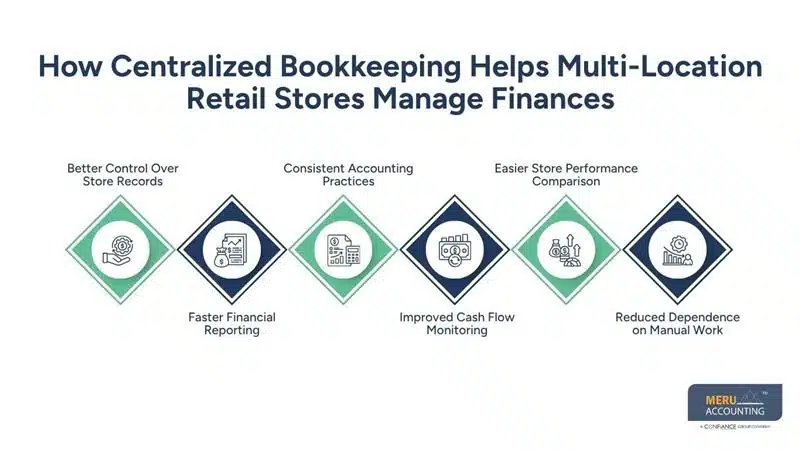
Improved Cash Flow Monitoring
Retail chains manage cash through customer sales, supplier payments, salaries, and daily operating costs. Centralized Bookkeeping For Retail Stores records provide a clear view of money movement and help owners plan regular business activities.
Easier Store Performance Comparison
Comparing store results becomes difficult when every outlet maintains separate records and files. A centralized system allows managers to review sales trends, costs, and profit performance across multiple locations.
Reduced Dependence on Manual Work
Large retail chains handle thousands of transactions, making manual entry more time-consuming and error-prone. A structured bookkeeping system reduces repeated tasks and creates a smoother process for managing financial records.
Why Retail Businesses Need Accurate Inventory and Sales Tracking
Maintaining Correct Stock Records
Inventory plays an important role in retail operations because every purchase, sale, return, and adjustment affects business finances. Bookkeeping For Retail Stores needs accurate stock records to maintain correct profit reports and avoid poor buying decisions.
Tracking Sales Across Locations
Growing retail chains need clear sales data to understand the performance of each store and product category. Centralized records allow owners to review sales across outlets and identify areas that need more attention.
Reducing Stock Related Losses
Poor inventory tracking in Bookkeeping For Retail Stores can lead to excess stock, missing items, or expired products that affect overall earnings. A proper financial system connects stock movement with sales records to identify unusual changes quickly.
Managing Supplier Payments
Retail businesses handle payments with multiple suppliers, making invoice tracking important for smooth operations. Organized retail accounting services records help teams monitor pending payments, purchase costs, and supplier transactions accurately.
Understanding Product Profitability
Different products generate different profit levels, so retailers need clear information about product performance. Detailed financial records generated through bookkeeping for Retail Stores show sales value, product costs, and profit margins for better planning.
How Retail Accounting Services Improve Financial Visibility Across Multiple Stores
Creating Unified Financial Reports
Retail chains need combined financial reports that include details from every store location. Professional Retail Accounting Services organize income, expenses, and financial data into clear reports for better business understanding.
Monitoring Store-Wise Performance
Each store may have different sales results, operating costs, and customer demand patterns. Centralized reports created through bookkeeping for Retail Stores allow owners to compare outlets and identify areas that require improvement.
Keeping Expense Records Organized
Retail businesses manage various expenses, including rent, salaries, utilities, and supplier payments. A proper accounting process records every expense category clearly and keeps financial statements accurate.
Preparing Accurate Financial Statements
Financial statements provide important details for reviews, planning, and tax requirements. Bookkeeping for Retail Stores maintains proper records so businesses can prepare reliable financial reports.
Supporting Tax Preparation
Retail companies need organized records to complete tax filing and compliance activities correctly. Professional accounting support keeps documents arranged and reduces the risk of missing important details.
How Bookkeeping for Retail Stores Reduces Errors and Improves Efficiency
Reducing Duplicate Entries
When stores manage financial data without Bookkeeping For Retail Stores, the same information is often recorded in multiple places, increasing errors. Duplicate entries can affect reports and create confusion. A centralized system keeps data in one place and reduces repeated work.
Improving Data Accuracy
Accurate financial records are important for every retail chain. Incorrect sales or expense entries can change profit calculations. Bookkeeping for Retail Stores creates a structured method for recording transactions correctly.
Saving Employee Time
Manual tracking in retail operations requires employees to spend hours updating files and checking records without proper Retail Accounting Services support. This reduces the time available for other important tasks. Organized accounting processes make routine financial work easier to manage.
Making Audits Easier
Retail chains may need financial reviews to check records and confirm accuracy. Poor documentation can make these reviews difficult. Centralized bookkeeping keeps records arranged and easier to verify when required.
Reducing Communication Gaps
When each store maintains separate records without Retail accounting services, communication between locations becomes inconsistent and inefficient. A shared financial system keeps teams aligned with updated information.
How Centralized Bookkeeping Supports Retail Expansion And Scalability
Managing More Store Locations
Growth brings more outlets, employees, transactions, and responsibilities. A manual approach becomes difficult to maintain as operations increase. A centralized system allows retail chains to manage additional locations without losing control of financial records.
Creating Standard Processes
Every store should follow the same method for recording financial activities. Different approaches create reporting differences. Centralized bookkeeping creates common practices across all locations.
Supporting Future Planning
Expansion requires careful planning of budgets, investments, and operating costs. Reliable financial information is needed before making decisions. Bookkeeping for Retail Stores gives owners the data required for growth planning.
Improving Management Control
As businesses grow, owners cannot check every transaction personally. They need accurate reports to monitor performance. Centralized financial records give managers better oversight across all stores.
Handling Higher Transaction Volumes
Large retail chains may process thousands of sales entries every day. Manual methods may struggle with this volume. A proper system keeps transaction records organized and easier to manage.
Why Retail Chains Should Replace Manual Tracking With Professional Accounting Solutions
Moving Away From Paper-Based Records
Paper records can be difficult to store, review, and update. Important information may become difficult to find over time. Professional accounting solutions keep financial information organized and accessible.
Avoiding Spreadsheet Limitations
Spreadsheets may work for small businesses, but become challenging for large retail chains. Multiple files in manual bookkeeping for Retail Stores can create confusion, duplication, and errors when scaling retail operations. A better accounting approach provides stronger control over financial data.
Getting Expert Financial Support
Managing several stores requires knowledge of sales records, expenses, inventory, and reporting. Experienced professionals can guide retail businesses with proper financial practices.
Making Better Business Choices
Business decisions in retail depend heavily on accurate data from Bookkeeping For Retail Stores and reliable financial reporting. Wrong data may lead to poor purchasing or investment choices. Reliable reports allow owners to make decisions based on actual business performance.
Maintaining Compliance
Retail companies must maintain proper financial records for legal and tax requirements. Professional support keeps records complete and reduces compliance concerns.
Why Choose Meru Accounting For Retail Bookkeeping Support
Meru Accounting provides specialized bookkeeping and accounting solutions for retail businesses that need better control over financial records. Our team understands the challenges faced by growing chains using Bookkeeping For Retail Stores, including multiple locations, inventory tracking, sales records, and expense management.
Through Retail Accounting Services, we help businesses organize financial information, maintain accurate records, and create reports that support better planning and decision-making.
With experience in accounting software, bookkeeping systems, and business processes, Meru Accounting assists retailers in moving from manual tracking methods to structured financial management.
Our approach focuses on accuracy, clear reporting, and practical solutions that match each business requirement. Retail owners can focus on daily operations while their financial records remain properly managed.
Our Expert Perspective
From our experience supporting growing businesses, we have seen that financial challenges often occur when companies expand without upgrading their record-keeping processes. While simple tracking methods may work for small retailers, increasing transactions can lead to reporting delays and financial confusion.
A structured Bookkeeping For Retail Stores system goes beyond recording numbers by creating accurate financial insights that support better decision-making. Retail chains with organized records from the beginning are better positioned for sustainable growth and operational changes.
Key Takeaways
- Centralized bookkeeping creates better control over multiple retail locations.
- Manual tracking becomes difficult when sales, inventory, and expenses increase.
- Accurate records help retailers understand store performance and costs.
- Organized financial data supports better planning and business growth.
- Professional accounting support reduces errors and saves valuable time.
FAQs
Centralized bookkeeping keeps financial records from all stores in one organized place.
Manual tracking becomes difficult when stores, transactions, and inventory levels increase.
Centralized bookkeeping keeps all store data in one system, which reduces duplicate entries and manual mistakes.
Bookkeeping for Retail Stores keeps sales, expenses, and inventory records accurate.
A retail chain should switch when managing multiple stores becomes difficult with current methods.