
Attorney accounting plays a key role in helping law firms manage client money, maintain accurate records, and avoid costly compliance issues. In many legal practices, small bookkeeping mistakes in trust accounts can lead to serious regulatory penalties. This is where legal accounting becomes essential for control and accuracy.
Modern attorney accounting helps legal teams maintain clear financial records and reduce risk in daily operations. It also supports better monitoring of client funds and improves internal checks. When law firms follow structured financial systems, they reduce errors and improve trust account safety.
What You Will Learn From This Blog
- How attorney accounting supports trust account accuracy in law firms
- Common mistakes that lead to compliance issues in legal finance
- Ways legal accounting reduces financial errors in client fund handling
- How structured systems improve reporting and monitoring
- Benefits of outsourcing and using professional accounting support
- Practical steps to improve compliance and transparency in law practices
What Is Attorney Accounting and Why Does It Matter for Law Firms
Understanding Financial Control in Legal Work
Attorney accounting refers to the system used to manage client funds, billing records, and trust accounts within law firms. It ensures that money belonging to clients is never mixed with business operating funds.
Role In Daily Law Firm Operations
In many firms, legal accounting is used to track retainers, payments, and case-related expenses. It creates a clear separation between firm income and client deposits.
Importance Of Accuracy And Trust
Proper legal accounting builds trust between lawyers and clients. When records are clear, disputes over funds are reduced, and transparency improves.
Connection To Compliance Rules
Regulatory bodies require strict handling of client money. Accounting for attorneys ensures law firms follow trust accounting rules set by legal authorities such as state bar associations.
Integration With Financial Systems
Many firms now combine attorney accounting with digital systems for better tracking. This reduces manual errors and improves reporting speed.
Link With Law Firm And Legal Accounting
A strong system of law firm and legal accounting supports attorney accounting by maintaining consistent records and structured financial reporting.
Together, they create a unified financial framework that improves control over both client funds and firm-level finances.
Common Trust Accounting Errors in Legal Practices
Mixing Client And Firm Funds
One of the most common issues is mixing client funds with operational money. This creates confusion and can lead to serious compliance violations. It also makes tracking accurate client balances difficult during audits.
Poor Record Keeping
Incomplete or delayed records often result in mismatched balances within accounts. Attorney accounting helps reduce this risk by enforcing proper documentation practices. It may also delay reporting and create avoidable discrepancies in trust accounts.
Incorrect Reconciliation
Failing to reconcile trust accounts regularly leads to errors going unnoticed. Law firm and legal accounting systems reduce this issue with scheduled checks. This can result in larger corrections later, increasing time and effort.
Manual Entry Mistakes
Human error during data entry is a frequent cause of discrepancies. Automation within accounting for attorneys reduces such mistakes in daily financial tasks. Even small errors can impact overall financial accuracy if not corrected early.
Missing Transaction Details
When transactions are not properly recorded, audit trails become unclear. This weakens financial transparency and affects trust in accounting records. It also makes verifying past transactions harder during audits or reviews.
Lack Of Oversight
Without structured review systems, small errors grow into larger compliance problems. Over time, this increases financial risks and weakens internal control systems. Regular monitoring helps detect issues early and maintain better financial control.
How Attorney Accounting Reduces Trust Accounting Mistakes
Structured Financial Tracking
Attorney accounting ensures every transaction is tracked from deposit to withdrawal. Tracking reduces chance of missing or duplicate entries in records.
Real-Time Monitoring Systems
Modern tools allow law firms to monitor trust accounts in real time. Accuracy improves while delays in identifying financial issues are reduced.
Automated Reconciliation
Automation helps match bank statements with internal records accurately. Manual effort decreases while consistency in accounting processes improves.
Clear Audit Trails
Every transaction is recorded with proper details for easy review. Audit processes become smoother with improved compliance readiness overall.
Error Detection Mechanisms
Systems used in legal accounting highlight inconsistencies at early stages. Small issues get identified before turning into larger financial problems.
Improved Financial Discipline
Structured accounting methods help firms maintain better financial control. Consistent handling of client funds improves across all departments.
Strengthening Compliance Through Law Firm and Legal Accounting Systems
Alignment With Legal Standards
Law firm and legal accounting systems are designed to align with regulatory requirements such as bar association trust rules.
Alignment ensures financial practices stay consistent with required legal frameworks at all times.
Regular Internal Reviews
Frequent financial reviews help identify and fix issues before audits occur. This improves compliance strength. Review cycles also reduce the chances of repeated errors in trust accounting records.
Documented Financial Processes
Clear documentation ensures every financial step is traceable and verifiable during inspections. Proper records also help support accurate reporting during regulatory audits.
Risk Reduction Mechanisms
Attorney accounting reduces risk by enforcing strict handling of client funds and transaction approvals. Risk control systems also prevent unauthorized or incorrect financial movements.
Secure Data Management
Proper systems ensure financial data is stored securely, reducing risk of loss or manipulation.
Secure storage also protects sensitive client information from unauthorized access.
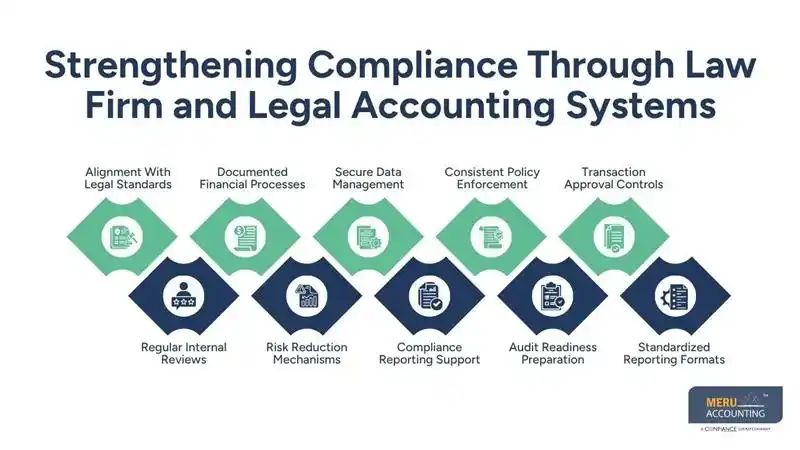
Compliance Reporting Support
Structured reporting makes it easier to submit accurate financial records to regulatory bodies. Reports generated also help maintain consistency across different compliance requirements.
Consistent Policy Enforcement
Strong accounting systems ensure firm-wide financial policies are applied without deviation. Consistency reduces confusion and improves overall compliance adherence.
Audit Readiness Preparation
Well-structured records ensure law firms remain ready for audits at any time. Preparation also reduces stress and delays during formal inspections.
Transaction Approval Controls
Approval workflows ensure every financial transaction follows proper authorization steps. This reduces errors and improves accountability in fund management.
Standardized Reporting Formats
Uniform reporting formats help maintain clarity in financial submissions and records. Standardization also simplifies review by external auditors and regulatory bodies.
Best Practices for Maintaining Trust Accounting Compliance
Consistent Reconciliation Schedule
Regular reconciliation helps detect errors early and maintain financial balance accuracy. Scheduled reviews also prevent discrepancies from building up over time.
Separation Of Accounts
Client funds must always remain separate from operational accounts to avoid violations. Proper separation also improves clarity in financial reporting and tracking.
Use Of Professional Systems
Using structured attorney accounting systems improves accuracy and reduces manual workload. These systems also support better control over trust account activities.
Staff Training Programs
Training ensures staff understand compliance rules and financial handling procedures. Well-trained staff reduce chances of errors in daily accounting tasks.
Internal Audit Checks
Regular internal audits help maintain transparency and strengthen financial control. Audits also help identify gaps before external reviews take place.
Clear Documentation Standards
Maintaining detailed records improves accountability in law firm and legal accounting systems. Strong documentation also supports accurate reporting during compliance checks.
Challenges Law Firms Face Without Proper Legal Accounting
Increased Risk Of Penalties
Without proper attorney accounting, firms may face regulatory fines and legal action. Penalties often increase when compliance issues remain undetected for long periods.
Financial Confusion
Poor systems lead to unclear records and difficulty tracking client funds. Confusion also slows down decision-making in daily financial operations.
Loss Of Client Trust
Errors in financial handling can damage client relationships and firm reputation. Even small mistakes may reduce long-term confidence in the legal practice.
Inefficient Operations
Manual processes slow down financial reporting and reduce productivity. Teams also spend extra time correcting avoidable accounting errors.
Difficulty In Audits
Lack of proper records makes audits stressful and time-consuming. Missing documentation can also lead to repeated audit queries and delays.
Weak Financial Control
Without structured law firm and legal accounting, firms lose control over financial processes. Weak control increases the chances of unnoticed errors in trust accounts.
Benefits of Outsourcing Attorney Accounting Services
- Access to skilled professionals helps law firms manage attorney accounting with greater accuracy and confidence in financial processes.
- Improved accuracy reduces errors in trust accounting, reporting, and client fund tracking within daily operations.
- Cost efficiency allows firms to reduce spending on in-house teams, tools, and accounting infrastructure.
- Better compliance support ensures law firm and legal accounting practices follow regulatory rules and trust requirements correctly.
- Time savings allow lawyers to focus more on legal cases instead of handling financial management tasks.
- Scalable services allow outsourced teams to adjust quickly based on firm size and workload changes.
How Law Firm and Legal Accounting Improves Financial Transparency
Clear Financial Reporting
Structured systems provide accurate and easy-to-understand financial reports. Reports also help law firms monitor cash flow and trust balances clearly.
Better Client Communication
Transparent records help explain financial transactions clearly to clients. Clear communication also builds stronger confidence in financial handling processes.
Reduced Disputes
Accurate records reduce misunderstandings regarding client funds. Dispute risks decrease when every transaction is properly documented.
Improved Decision Making
Reliable financial data supports better planning and business decisions. Accurate insights also help firms manage budgets and future investments effectively.
Strong Audit Preparation
Well-maintained records simplify audit processes and reduce stress. Audit readiness improves when financial data stays organized throughout the year.
Enhanced Accountability
Law firm and legal accounting systems ensure every transaction is traceable. Traceability also ensures responsibility is clearly assigned for each financial action.
How Meru Accounting Supports Legal Practices
Meru Accounting provides specialized support in attorney accounting for law firms that want better control over trust accounts and financial compliance. Our team focuses on reducing errors, improving reporting accuracy, and supporting long-term financial stability.
We also help firms implement structured law firm and legal accounting systems that align with regulatory standards. With experience in managing global clients, Meru Accounting ensures that legal practices maintain clean records, avoid compliance risks, and improve financial transparency.
By combining technology with expert review, we help law firms build stronger financial systems that reduce stress and improve daily operations. Our approach ensures that attorney accounting is handled with care, accuracy, and full attention to compliance needs.
Our Expert Perspective
In our experience working closely with legal professionals, most trust accounting issues are not the result of intent but rather weak systems and inconsistent financial processes.
When attorney accounting is properly structured and consistently maintained, even small law firms can achieve strong financial discipline and stay compliant with ease.
The real difference comes from maintaining consistency, conducting regular reviews, and relying on dependable accounting support.
Over time, this structured approach reduces operational pressure on legal teams and brings greater clarity, accuracy, and confidence to financial management.
Key Takeaways
- Attorney accounting helps reduce trust accounting errors in law firms
- Strong systems improve compliance and financial accuracy
- Manual processes increase risk of mistakes and penalties
- Outsourcing improves efficiency and reporting quality
- Law firm and legal accounting supports transparency and control
- Regular audits and reconciliation are essential for compliance
- Proper systems protect both clients and legal practices
FAQs
Attorney accounting is the process of managing client funds and financial records in a law firm. It ensures money is handled correctly and kept separate from business funds.
It helps prevent financial errors, improves compliance, and ensures client money is managed safely and transparently.
Common mistakes include mixing funds, poor record keeping, and delayed reconciliation of accounts.
It creates structured financial systems that follow legal rules and reduce the risk of violations during audits.
Yes, outsourcing brings expert handling, better systems, and improved accuracy in financial reporting and compliance management.