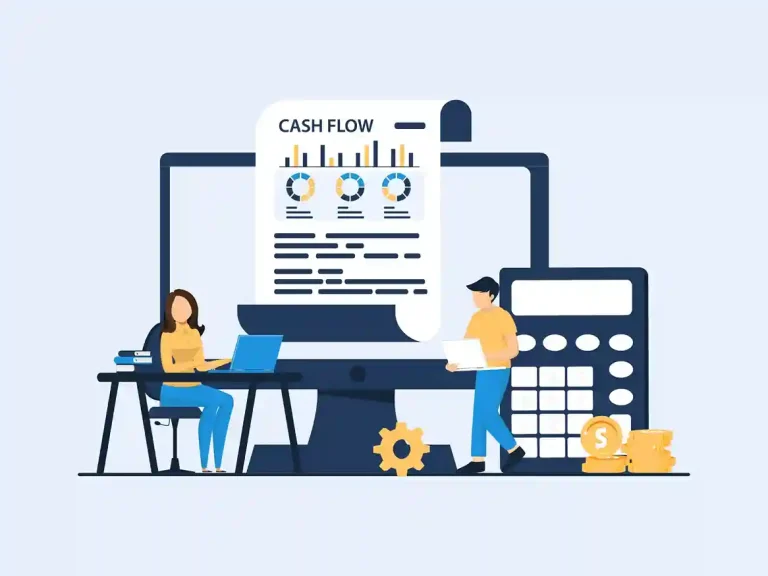
Cash flow analysis and the statement of cash flows are essential tools for understanding business liquidity and preventing financial gaps in small businesses. Cash flow analysis is one of the most important parts of managing money in any small business. It gives a clear view of how money enters and leaves the business over time.
When owners regularly study it, they can understand gaps, control spending, and plan better for future needs. In simple terms, it shows whether a business has enough cash to run each day smoothly.
Many small businesses face sudden money shortages even when sales look good. This happens because businesses do not track the timing of payments and expenses properly. Cash Flow Analysis reduces this risk by showing real cash movement. It also connects closely with financial records like the statement of cashflow, which gives a structured view of business cash movement.
What You Will Learn From This Blog
- How Cash Flow Analysis works in small businesses
- Why is cash timing more important than profit numbers
- How the Statement of Cashflow connects with daily business decisions
- Common cash problems small businesses face
- Practical ways to avoid cash shortages early
- Role of expert accounting support in better financial control
What Is Cash Flow Analysis, and Why It Matters
Cash flow analysis is the study of cash moving in and out of a business. It tracks real money flow instead of only profit on paper. With this understanding, owners can see whether enough cash is available to pay bills, staff, and suppliers on time, which reduces the risk of sudden financial stress.
Small businesses often operate with limited cash reserves, so this view of daily liquidity becomes very important. It shows when money will come in and when it will go out, and without it, even profitable businesses can face cash shortages.
The statement of cashflow also plays an important role here, as it is a formal report that shows cash movement in operations, investing, and financing, and together, both give a clearer picture of financial health.
Cash data is collected from invoices, bank records, expense reports, and sales records, which are then organized to reflect the real movement of money.
When updated regularly, it becomes more accurate and useful for planning. This information also supports better decisions such as payment scheduling, inventory control, and future cost planning, while also reducing the need for last-minute borrowing.
Without this review, many businesses focus only on profit and ignore cash timing, which can lead to poor payment decisions, cash gaps, and operational pressure.
Understanding the Statement of Cashflow in Business Operations
The statement of cashflow is divided into operating, investing, and financing activities, and each section explains how cash is generated and used in operating, investing, and financing activities. This structure gives clear visibility of where money comes from and where it goes, which is important for understanding financial health.
Operating activities cover daily business transactions such as sales and expenses and show how much cash is generated from core operations, helping owners assess real business strength. Investing activities include the purchase or sale of assets like equipment or property and reflect long-term decisions related to growth.
Financing activities cover loans, repayments, and owner funding, showing how the business is supported and how debt is managed. Many small business owners make the mistake of looking only at total cash in the statement of cashflow and ignoring the details of each section. This can lead to an incomplete understanding of financial position and poor decision-making.
When each section is read properly, it becomes easier to track business performance, manage funds, and reduce confusion in financial planning.
Key Components of Cash Flow Analysis
Cash Inflows
Cash inflows include money received from sales, services, and other income sources. Cash Flow Analysis tracks all inflows to understand the business’s earning strength. Regular tracking ensures no income is missed.
Cash Outflows
Cash outflows include rent, salaries, supplier payments, and other expenses. Monitoring where money is being spent gives better control over spending and reduces overspending risks. This control is important for maintaining financial stability.
Timing Gaps In Cash Flow
Timing gaps occur when payments are delayed or expenses come early. These gaps become visible when cash movement is reviewed clearly. This helps in planning cash reserves in advance and avoiding short-term shortages.
Working Capital Management
Working capital is the money used for daily operations. Maintaining enough working capital reduces disruptions in routine activities and keeps operations stable. This helps maintain consistent day-to-day operations without liquidity pressure
Forecasting Future Cash Needs
Future cash needs are predicted based on past financial data. This helps in preparing for slow sales periods or high expense months. Better forecasting reduces financial surprises and improves planning.
Reporting Tools For Cash Flow Analysis
Modern tools like accounting software support tracking cash movement in real time. These tools update financial data instantly and improve accuracy in records. This makes tracking faster and more reliable.
How Cash Flow Analysis Helps Small Businesses Prevent Cash Flow Problems Early
Early Warning Signs
Cash flow review shows early signs of cash shortage before it becomes serious. Owners can see upcoming gaps and take action in time. This prevents business disruption.
Payment Planning
With regular review, businesses can plan when to pay suppliers and staff. This avoids late payments and penalties. It also improves trust with partners.
Expense Control
Financial review highlights unnecessary spending. Owners can reduce or delay non essential costs. This keeps cash available for urgent needs.
Credit Control
Many small businesses sell on credit. Regular tracking helps monitor pending payments from customers. This reduces the risk of unpaid bills.
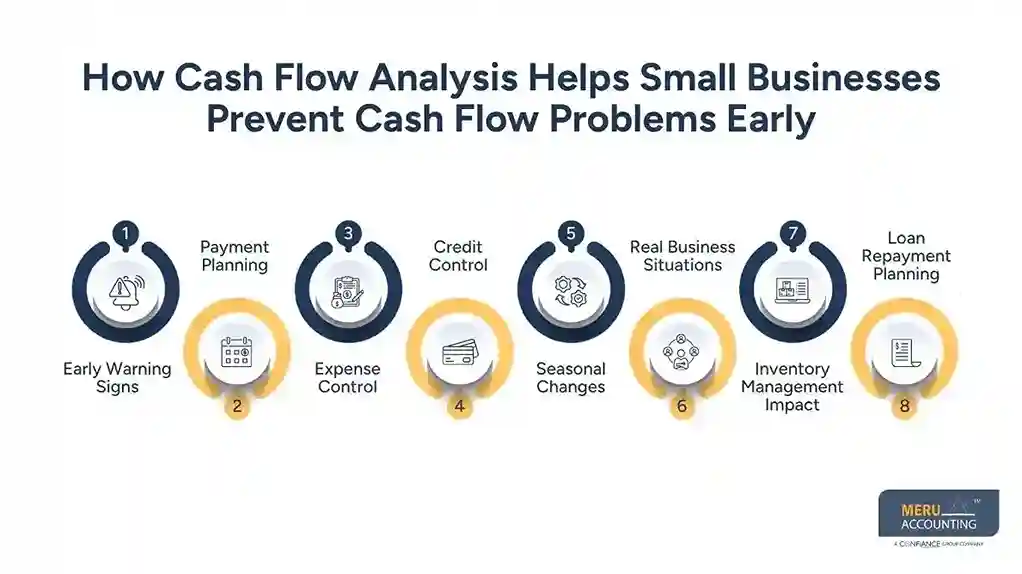
Seasonal Changes
Some businesses have seasonal sales changes. Proper review prepares owners for slow months in advance. This ensures stability throughout the year.
Real Business Situations
In many cases, businesses fail not due to low sales but due to poor cash timing. Cash flow analysis helps avoid such situations by keeping cash flow clear and planned.
Inventory Management Impact
Inventory levels directly affect cash availability in a business. When too much money is tied up in stock, it reduces cash in hand for daily needs. Regular monitoring helps maintain balanced stock levels so that cash is not blocked unnecessarily.
Loan Repayment Planning
Loan repayments can create pressure if not planned properly. Cash tracking helps businesses set aside funds for EMI payments on time. This avoids penalties and keeps financial obligations under control.
Common Cash Flow Issues Faced By Small Businesses
Late Customer Payments
Late payments from customers create strong cash pressure issues. Businesses struggle to pay their own bills on time.
High Operating Costs
High rent, wages, and supplier costs reduce available cash quickly. Without proper control, this situation leads to shortages.
Poor Expense Tracking
If expenses are not tracked properly, cash leaks go unnoticed easily. This creates long-term financial problems for businesses.
Over Expansion
Expanding too fast without proper cash planning leads to shortages. Many small businesses face this serious financial issue.
Irregular Sales
Unstable sales affect cash inflow in unpredictable business cycles. Businesses may struggle during low-demand periods frequently.
Lack Of Financial Planning
Without planning, cash management becomes weak and inconsistent over time. This increases financial stress for business owners significantly.
Role of Statement of Cashflow in Financial Decision-Making
Budget Decisions
The statement of cashflow helps in creating realistic budgets. Actual cash availability becomes clear for better planning and control.
Investment Decisions
Business owners use financial reports to decide on new investments. The availability of cash determines whether investment decisions are safe.
Risk Control
Cash data helps identify financial risks early in financial reports. Early detection reduces the chances of cash shortage issues.
Growth Planning
Financial reports support safe business growth decisions. Growth planning stays grounded in real cash strength and stability.
Loan Decisions
Banks often check financial reports before approving loans. Repayment ability becomes clear through cash movement records.
Performance Tracking
Business performance can be tracked over time using financial reports. Comparison of monthly cash movement shows financial progress clearly.
Why Choose Meru Accounting?
Meru Accounting provides structured support in cash flow analysis for small and growing businesses. Our team helps in preparing accurate reports, tracking daily cash movement, and reading the Statement of cashflow in a simple way. We also assist in setting up clear systems for cash tracking using tools like QuickBooks, Xero, and Odoo.
With proper cash flow analysis, businesses can reduce cash pressure and improve planning. Meru Accounting focuses on clear reporting so owners can make informed decisions without confusion. Our goal is to help businesses maintain stable cash flow and avoid sudden financial gaps through regular monitoring and accurate data handling.
Key Takeaways
- Cash flow analysis shows real cash movement in a business
- The Statement of cashflow gives structured financial data
- Early tracking helps avoid cash shortages
- Payment timing is more important than just profit
- Proper planning reduces financial stress
- Expert accounting support improves cash control
FAQs
Cash Flow Analysis is the process of tracking money in and out of a small business to understand the real cash position.
Early gaps between income and expenses get identified through Cash Flow Analysis, allowing action before cash shortages occur.
The Statement of cashflow provides a structured record of cash movement that supports a better understanding of financial stability and cash usage.
Cash shortages often happen when income arrives late, while expenses must be paid immediately, even when profit appears strong on paper.
Yes, but it becomes harder as the business grows. Manual tracking may miss small errors or delays, while basic accounting tools make monitoring faster and more accurate.
optional anymore
on running the business