Catch up accounting has become an important part of many mid-sized businesses that have seen strong growth in recent years. As sales rise and day-to-day operations grow, keeping records up to date can become more difficult. When records are not fully current, it can affect reports, planning, and other key business tasks.
For growing firms, tax filing is not just about meeting a due date. It also depends on having clear numbers that show the true state of the business. Tax data must be reported the right way, and it is not possible without accurate records. Without up-to-date accounts, the tax filing process can take more time and become harder to manage.
The value of catch up accounting goes beyond just updating old records. It helps build a stronger base for accurate tax reporting and better control of business finances. In this blog, we will discuss how this process helps tax filing accuracy, the signs that show a need for catchup bookkeeping, and the benefits it can bring to mid-sized businesses.
What You Will Learn From This Blog
- What catch up accounting means and why businesses need it
- Common record-keeping issues faced by mid-sized businesses
- How catch up accounting helps tax filing accuracy
- Signs that show a need for catchup bookkeeping
- Benefits of outsourcing accounting cleanup work
What Is Catch Up Accounting?
Catch up accounting is the process of updating overdue finance records and fixing missing accounting entries from past months or years. It includes checking finance data, recording unentered sales and payments, matching accounts, and making sure all records are complete.
Businesses may need catch up accounting when bookkeeping tasks have been delayed due to growth, staff changes, software changes, or a lack of in-house help.
The process often includes:
- Recording missed sales and payments
- Updating income and cost records
- Matching bank and credit card accounts
- Checking vendor and client balances
- Fixing bookkeeping mistakes
- Preparing clear finance reports
The goal is to bring accounting records to a current and correct state so tax filing and financial reporting can be done the right way.
Common Financial Record Challenges Faced by Mid-sized Businesses
Mid-sized businesses often face accounting issues because they handle a larger number of sales and payments than small firms, but may not have a full accounting team.
Missing Transactions
When sales and payments are not entered on time, finance reports become incomplete. Missing records can lead to wrong tax numbers and filing issues.
Unreconciled Bank Accounts
Bank accounts that have not been matched for months can contain errors, repeat entries, or missing deposits. These issues can affect tax filings and financial reports.
Poor Expense Tracking
Businesses sometimes lose track of costs when receipts are not kept in order. This can result in missed tax write-offs and higher tax bills.
Delayed Financial Reporting
Old records make it hard to create reliable finance reports. Business owners may make choices based on wrong data.
Growth-Related Accounting Gaps
As businesses grow, the number of sales and payments rises. Existing accounting steps may no longer be enough to keep records current and correct.
These issues can create major tax risks if they are not fixed before filing dates.
Top Ways Catch Up Accounting Improves Tax Filing Accuracy
Ensures Complete Income Reporting
One of the biggest benefits of catch up accounting is correct income reporting.
When all sales, payments, and deposits are recorded the right way, businesses can report total income correctly. This lowers the risk of underreporting income, which can lead to tax fines and audits.
Complete income records also help businesses meet tax rules with confidence.
Identifies and Corrects Accounting Errors
Accounting mistakes can happen for many reasons, including data entry errors, repeat transactions, or wrong account categories.
During the catch-up process, these mistakes are reviewed and fixed. This helps improve the accuracy of tax returns and finance reports.
Correct records help prevent tax filing issues that may come from poor bookkeeping.
Improves Expense Classification
Tax filings depend heavily on proper cost reporting.
If costs are placed in the wrong groups, businesses may miss valid tax write-offs or claim costs the wrong way. Catch-up reviews help make sure that costs are assigned to the right accounts.
Proper grouping helps increase valid tax write-offs while supporting tax rule compliance.
Supports Accurate Tax Deductions
Many businesses miss tax write-offs because records are incomplete.
Through catch up accounting, accountants review finance records to find eligible business costs that may have been missed. These costs can include office supplies, software fees, travel costs, and outside service fees.
Correct deduction reporting can lower tax bills while supporting tax rules.
Reconciles Bank and Credit Card Accounts
Bank and credit card matching is key for tax accuracy.
Matching helps confirm that accounting records match actual money activity. Any missing sales, repeat entries, or posting errors can be found and fixed.
Accurate matching helps build trust in tax filings and finance reports.
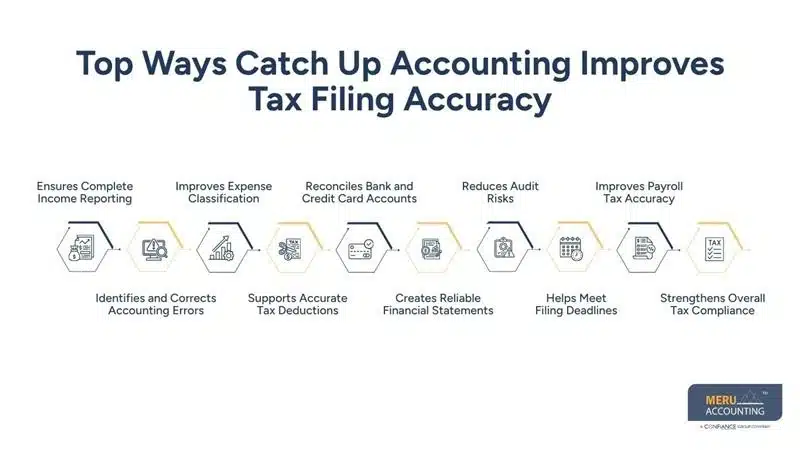
Creates Reliable Financial Statements
Tax returns depend on correct finance reports.
When accounting records are current and complete, businesses can create reliable profit and loss reports, balance sheets, and cash flow reports.
These reports provide the base for accurate tax prep and filing.
Reduces Audit Risks
Poor bookkeeping often raises audit risk.
Accurate records created through catch up accounting help businesses keep supporting records and well-organized finance data.
If questions come from tax agencies, businesses can provide records more quickly and with greater confidence.
Helps Meet Filing Deadlines
Old books often delay tax prep.
By updating records before tax season, businesses can provide complete data to their tax advisors on time. This cuts last-minute stress and helps avoid filing delays.
Timely tax filing also lowers the risk of fines and added charges.
Improves Payroll Tax Accuracy
Payroll taxes depend on correct worker pay records.
Catch-up accounting reviews payroll entries and helps make sure that wages, tax withholdings, and payroll tax amounts are recorded correctly.
Correct payroll records support proper tax reporting and tax rule compliance.
Strengthens Overall Tax Compliance
The main goal of catch up accounting is to improve record accuracy.
When books are updated and matched, businesses gain a stronger base for tax compliance. This lowers uncertainty and helps build confidence during the tax filing process.
Warning Signs Your Business Needs Catchup Bookkeeping
Many businesses do not realize how far behind their records have become until tax season arrives.
The following signs often show a need for catchup bookkeeping.
Several Months of Missing Records: If sales and payments have not been recorded for many months, finance reports may no longer be reliable.
Bank Accounts Have Not Been Reconciled: Accounts that have not been matched often contain hidden errors that can affect tax filings.
Financial Reports Do Not Match Reality: When reports show numbers that seem incorrect, old records may be the cause.
Tax Preparation Takes Too Long: If gathering tax data becomes difficult every year, bookkeeping gaps may exist.
Missing Receipts and Records: Poor record storage can lead to missed tax write-offs and tax rule concerns.
Rapid Business Growth: Growing businesses often outgrow their first bookkeeping systems and need cleanup work.
Frequent Accounting Corrections: Repeated fixes and changes can point to larger bookkeeping issues that need attention.
Addressing these warning signs early can help businesses avoid larger tax and reporting problems later.
Why Outsourcing Catch Up Accounting Can Be a Smart Choice
Many mid-sized businesses choose to outsource accounting cleanup work because it takes special skills and a large amount of time.
Access to Skilled Experts: Outsourced accounting teams know how to find mistakes, match accounts, and update records in an efficient way.
Faster Project Finish: Skilled accountants can often finish catch-up work faster than in-house teams that are handling many other tasks.
Less Work for Staff: Business owners and team members can focus on daily work while accounting experts handle record cleanup.
Better Accuracy: Skilled teams follow clear review steps that help accuracy and consistency.
Better Tax Readiness: Updated finance records help businesses get ready for tax filing with fewer surprises and less stress.
Cost Savings: Hiring a full-time accounting worker may not always be needed. Outsourcing gives access to skilled help without long-term payroll costs.
For many businesses, outsourcing is a good way to restore record accuracy and support tax rules.
Meru Accounting's Catch Up Accounting Services
At Meru Accounting, we help businesses regain control of their finance records through reliable catch up accounting services.
Our team works closely with clients to review past sales and payments, update books, match accounts, and prepare accurate finance reports.
Our services include:
- Recording overdue transactions
- Bank and credit card reconciliations
- Income and cost reviews
- Finance report preparation
- General ledger cleanup
- Payroll record reviews
- Tax-ready bookkeeping support
- Ongoing accounting help
We understand the issues faced by growing businesses and provide practical solutions that help improve accuracy and support tax compliance.
Our goal is to help businesses keep clean books, support tax filing needs, and make informed business choices with confidence.
Key Takeaways
- Catch up accounting helps businesses update overdue finance records and fix bookkeeping issues.
- Accurate books support reliable tax filings and stronger tax rule compliance.
- Updated records help income reporting and cost tracking.
- Account matching helps find missing or wrong entries.
- Businesses can lower audit risk through clear finance records.
- Catchup bookkeeping helps build a strong base for tax prep.
- Outsourcing accounting cleanup can help speed and accuracy.
FAQs
Catch up accounting is the process of updating overdue accounting records, recording missing sales and payments, and fixing bookkeeping mistakes to support accurate finance reporting.
It helps make sure that income, costs, tax write-offs, and account balances are recorded correctly, leading to more accurate tax returns.
A business should consider catchup bookkeeping when records are several months behind, accounts remain unmatched, or tax prep becomes difficult.
Yes. Updated and organized finance records make it easier to support reported numbers and respond to audit requests.
Outsourcing gives access to skilled experts who can update records efficiently, improve accuracy, and help businesses prepare for tax season.