
Freight and delivery firms work in a cost-heavy sector where small changes in fuel use, repair bills, route planning, or labor expenses can directly affect profit. Transport accounting helps businesses track these costs with greater accuracy and provides a clear view of spending patterns.
Beyond basic records and tax tasks, it helps freight companies reduce waste, improve decisions, and gain better control over daily operations and long-term financial planning.
Many logistics firms face cost problems not because of low sales, but because of weak expense tracking and poor financial reporting. Fuel costs, trip expenses, and vehicle maintenance can slowly increase without proper monitoring.
Transport accounting gives business owners a complete view of fleet costs and spending trends, while strong accounting systems for transportation businesses help identify cost gaps and improve financial control.
What You Will Learn From This Blog
- Understand the role of transport accounting in freight and delivery work
- Learn about common financial issues in logistics operations
- Know why cost tracking matters for fleet-based firms
- See how fuel and repair costs affect business profit
- Learn how accounting reports support route and trip decisions
- Understand how better cost control can improve business growth
Understanding Transport Accounting In Modern Logistics Operations
Cost Recording Across Fleet Activity
Transport firms handle fuel, tolls, labor, and repair bills every day. Transport accounting records these costs in one place and helps create clear reports.
Trip-Based Expense Tracking
Each delivery route carries a different cost level. Good systems help firms track trip spending and review profit from each route in accounting for the transportation business, ensuring better cost visibility at the trip level.
Data For Better Financial Reviews
Business owners need facts before making cost decisions. Reports from transport accounting help leaders review spending trends.
Support For Business Planning
Transport firms need future plans for growth and fleet use. Better cost reports support safer planning and better use of funds.
Better Cost Grouping Methods
Costs can be grouped by route, vehicle, or client. This process gives firms better control over financial data.
Key Financial Challenges Faced By Freight And Delivery Businesses
Rising Fuel Costs
Fuel is one of the largest expenses in freight work. Sudden price changes can affect profit in a short time. Frequent fuel price increases can create pressure on budgets and reduce overall operating margins.
High Vehicle Repair Bills
Freight vehicles face wear from long travel and heavy use. Small repair issues can become higher costs if ignored. Delayed maintenance can also increase breakdown risks and lead to costly repairs later.
Fleet Downtime Losses
When trucks stop for repairs, firms may lose delivery time and income, which is why accounting for the transportation business helps measure true downtime impact. Missed schedules and delayed shipments can also affect customer trust and service quality.
Weak Cost Tracking Systems
Some firms still use manual records. Poor systems often miss cost details and lead to wrong reports. Missing expense data can make it difficult for business owners to identify areas of overspending.
Route Planning Issues
Poor route choices can increase fuel use and labor costs. Longer travel time and traffic delays may also reduce delivery efficiency and increase operating expenses.
Why Cost Visibility Matters In Freight And Delivery Operations
Better Control Of Daily Spending
Business owners need a clear view of daily expenses. In accounting for the transportation business, cost reports help stop hidden spending across operations effectively. Regular tracking reduces repeated small cost leaks significantly over time.
Stronger Budget Planning
Clear reports help freight firms create better operational budgets. This supports planning fleet work and labor costs properly. Managers can avoid last-minute financial pressure in operations.
Early Detection Of Cost Problems
A sudden rise in fuel or repair costs needs attention. Transport accounting helps firms detect changes quickly and accurately. Early alerts prevent small issues from becoming major cost burdens.
Better Cash Flow Reviews
Cash flow affects payroll, fuel buying, and fleet growth. Regular reviews ensure funds are always available for operations. This supports smooth daily financial functioning in transport firms.
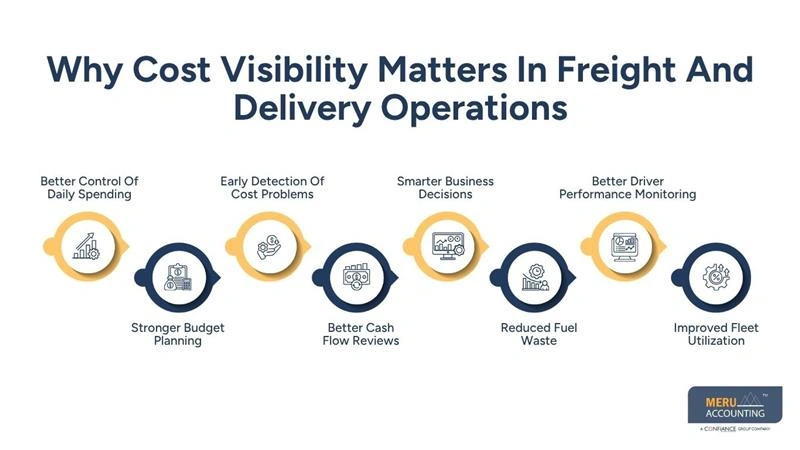
Smarter Business Decisions
Data helps managers choose routes, clients, and fleet usage. It reduces guesswork and improves decision quality in operations. Better insights support long-term planning and cost control.
Reduced Fuel Waste
Fuel tracking helps identify unnecessary usage across fleet vehicles. It highlights patterns of overconsumption and inefficiency clearly. This helps firms reduce fuel costs and improve mileage control.
Better Driver Performance Monitoring
Driver behavior directly impacts fuel use and repair costs. Accounting systems help track driving patterns and efficiency levels. Improved monitoring encourages safer and more cost-conscious driving habits.
Improved Fleet Utilization
Some vehicles may remain underused during regular operations. Transport accounting helps identify idle assets and optimize usage. Better utilization reduces unnecessary fleet expansion and cost pressure.
How Transport Accounting Helps Track Fuel Expenses And Reduce Cost Leakage
Fuel Cost Tracking By Vehicle
Each truck uses fuel at different rates across operations. In accounting for the transportation business, transport accounting tracks costs by vehicle and route. This helps identify vehicles that consume more fuel consistently.
Review Of Fuel Usage Trends
Reports help firms see if fuel use changes over time. Monthly and seasonal variations are analyzed through detailed reports. Managers can compare patterns across different time periods effectively.
Detection Of Fuel Waste
Cost reviews may reveal poor driving habits or route issues. Irregular fuel usage patterns are highlighted through analysis. This helps businesses reduce waste and improve operational efficiency.
Better Mileage Analysis
Mileage reports help firms compare fuel use against route distance. Efficiency is measured for every trip and vehicle. This supports accurate evaluation of vehicle performance across trips.
Support For Cost Reduction Plans
Fuel data helps managers plan ways to lower waste effectively. Cost insights guide better fuel-saving strategies. It also supports long-term fuel-saving decisions for firms.
How Better Cost Tracking Helps Manage Vehicle Maintenance And Repair Expenses
Planned Maintenance Scheduling
Regular checks help firms avoid large repair costs later. Maintenance plans reduce sudden breakdown risks and service delays.
Review Of Repair History
Repair records show if a vehicle creates repeat issues. Historical data helps identify recurring mechanical problems quickly.
Better Fleet Performance Analysis
Some trucks may cost more than others over time. Cost comparison highlights underperforming vehicles in the fleet.
Reduced Emergency Repairs
Planned service often lowers sudden breakdown risks. This reduces costly roadside repairs and service interruptions.
Longer Vehicle Life
Regular maintenance may help trucks stay in service for more years. It improves asset value and reduces replacement frequency.
Improved Transport Accounting Reports
Strong transport accounting reports help firms review repair spending and fleet performance. These reports support better maintenance planning decisions.
How Accounting for the Transportation Business Improves Route Profitability
Route Cost Analysis
Some routes cost more due to tolls or fuel charges. Reports help identify them for better cost control planning. Cost breakdowns highlight inefficient delivery paths clearly across operations.
Client Profit Review
Not every delivery contract creates the same return for firms. Firms can review profit by each customer separately. Focus shifts toward more profitable clients consistently over time.
Better Driver Cost Tracking
Labor cost reviews help firms understand trip expenses more clearly. Driver costs are compared across different routes and trips. Improves control over total trip-level expenses overall.
Route Comparison Reports
Managers can compare routes and identify areas with high cost. Better route choices are supported using accurate data insights. Improves planning decisions for future delivery operations effectively.
Smarter Fleet Allocation
Certain vehicles perform better on specific delivery routes consistently. Assigning suitable vehicles improves efficiency and reduces fuel waste. Leads to better use of fleet resources overall.
Why Freight Businesses Choose Meru Accounting
Freight and delivery firms need more than basic bookkeeping in accounting for the transportation business. They need reports that help them control fleet costs, review route spending, and improve profit. At Meru Accounting, we understand the financial needs of logistics and transport businesses.
Fleet Expense Tracking Support
Our team helps firms track fuel, repair, labor, and trip costs in a structured way. Accurate tracking helps reduce hidden costs and improve financial control.
Route-Wise Cost Reports
We provide reports that help businesses review route profit and identify spending patterns. These insights support better route selection and cost efficiency decisions.
Financial Data Review
We help transport firms organize reports that support stronger business planning. Clean data improves accuracy in budgeting and financial forecasting work.
Industry-Based Knowledge
Our team understands logistics operations and the financial needs linked with freight work. Industry experience helps deliver practical solutions for transport businesses.
Flexible Accounting Support
We provide support based on business size and fleet needs. Services can scale easily as business operations expand.
Our Expert Perspective
From our experience working with fleet and logistics firms, cost challenges are usually driven more by weak tracking systems than by high operating expenses.
Many transport businesses rely on basic records and review financial data only at month-end, which often hides key inefficiencies. Once structured transport accounting is implemented, hidden costs such as fuel inefficiencies, repeated repair expenses, and underperforming routes become visible, enabling better control.
Over time, even small improvements in tracking and reporting consistently lead to stronger cost management, improved financial clarity, and more informed decision-making.
Key Takeaways
- Transport accounting helps freight firms monitor cost activity across fleet operations
- Better reports help reduce fuel waste and repair spending
- Cost visibility helps business owners make stronger financial decisions
- Route reviews can improve profit and reduce unnecessary spending
- Proper accounting systems help firms manage long-term growth plans
- Accounting for the transportation business processes supports stronger financial control
FAQs
Transport accounting is a process used to track and review costs linked with transport and fleet work.
It helps firms track expenses, improve cost control, and understand profit trends.
Fuel tracking helps firms find waste, review mileage, and monitor vehicle use.
Yes. Cost reports help firms compare routes and identify areas with higher spending.
These systems help organize financial records and support better business decisions.