The use of a virtual assistant for CPAs has grown a lot as accounting firms seek better ways to manage workloads and improve client service. The accounting field has changed a lot in recent years, and CPA firms are now expected to provide not only accurate work but also fast replies, clear communication, and quick project delivery. Meeting these expectations requires smooth systems across the firm.
To keep up with these demands, many firms are changing how work is shared across their teams. Instead of having accountants spend valuable time on scheduling, email management, file handling, and other support tasks, firms are assigning these duties to virtual assistants. This approach helps firms make better use of their accounting staff and keeps client work moving without hold-ups.
The growing use of virtual assistants also reflects a wider move toward flexible support models such as offshore accounting. Firms are looking for practical ways to add capacity, improve workflow management, and support growth without greatly raising overhead costs. As a result, virtual assistants have become a useful resource for firms that want to reduce admin burden and improve turnaround times.
What You Will Learn From This Blog
In this blog, you will learn:
- What a virtual assistant for CPAs does
- Why admin work is growing in CPA firms
- How virtual assistants reduce daily workload
- Ways virtual assistants improve turnaround times
- Key benefits of hiring virtual assistants
Understanding the Role of a Virtual Assistant for CPAs
A virtual assistant for CPAs is a trained professional who gives remote support to accounting firms. Their role is to handle routine admin and support tasks so accountants can focus on client work.
Virtual assistants work with cloud tools, accounting software, email systems, and file management platforms. They support firms without the need for office space or full-time in-house staff.
Common duties include:
- Email management
- Calendar scheduling
- Client follow-ups
- Data entry
- File organization
- Appointment scheduling
- Workflow tracking
- Report support
- CRM updates
- Admin help during tax season
Many CPA firms use virtual assistants as part of their team. This helps firms keep service quality high while lowering pressure on staff.
Why Administrative Burden is Increasing for CPA Firms
Admin work has become a major challenge for accounting firms. Several factors add to this growing workload.
Rising Client Expectations
Clients expect quick replies, fast file processing, and easy communication. Meeting these needs takes a great deal of admin effort.
Increased Compliance Requirements
Rules and reporting needs continue to grow. Firms spend more time handling records, files, and communication tied to compliance.
More Digital Systems
While tech helps improve efficiency, it also creates extra work. Firms must manage client portals, software tools, digital files, and online workflows.
Growth in Client Volume
As firms add more clients, admin work grows along with revenue. Without added support, teams often find it hard to keep pace.
Limited Staff Capacity
Skilled accountants often spend valuable hours on routine tasks. This leaves less time for tax planning, advisory work, and client support.
These issues make it harder for firms to stay productive and meet due dates on time.
How a Virtual Assistant for CPAs Helps Reduce Admin Work
A virtual assistant for CPAs can take charge of many repeat tasks that use up staff time.
Managing Emails and Communications
Email inboxes can become crowded very fast. Virtual assistants sort messages, rank requests, and help ensure timely replies.
This helps firms improve communication without requiring accountants to check emails all day.
Scheduling Meetings
Setting meetings often involves several emails and calendar changes. Virtual assistants handle scheduling and meeting coordination with ease.
Organizing Client Documents
Client files must stay organized and easy to access. Virtual assistants manage digital records and help keep files in order.
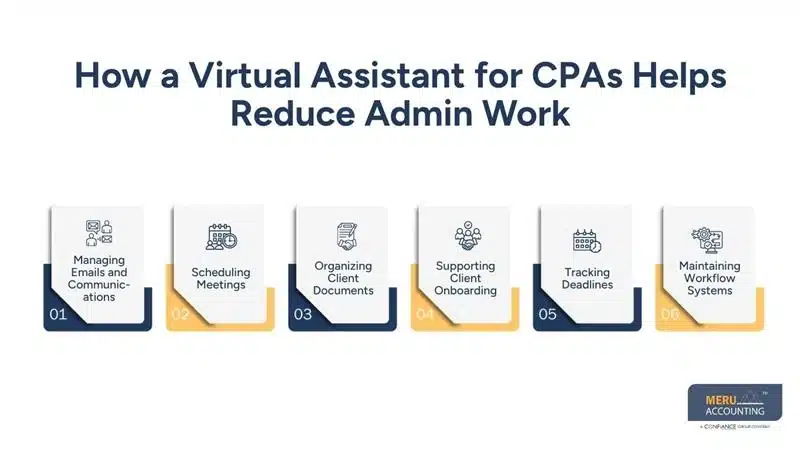
Supporting Client Onboarding
New client setup includes collecting details, creating accounts, and handling forms. Virtual assistants help make this process smooth.
Tracking Deadlines
Accounting firms work with strict due dates. Virtual assistants track deadlines and help keep projects moving forward.
Maintaining Workflow Systems
Many firms use project tools to track tasks. Virtual assistants update these systems and monitor progress across projects.
By removing these duties from accountants, firms create more time for high-value work.
Improving Turnaround Times with a Virtual Assistant for CPAs
Fast turnaround plays a key role in client satisfaction. Delays can affect trust and lower service quality.
A virtual assistant for CPAs helps improve turnaround times in several ways.
Faster Task Processing
Admin requests are handled right away instead of waiting for busy accountants to become free. This helps keep projects moving and reduces wait times for clients.
Better Workflow Coordination
Virtual assistants help tasks move smoothly between clients, accountants, managers, and support staff. This creates a more organized process from start to finish.
Reduced Bottlenecks
Many delays happen when files, approvals, or follow-ups are missing. Virtual assistants help avoid these issues. They also make sure important items are tracked and completed on time.
Improved Tax Season Support
Tax season brings heavy workloads. Virtual assistants help with file collection, client communication, and workflow tracking. This support helps firms manage higher work volumes more effectively.
More Accountant Focus Time
When accountants spend less time on admin work, they can focus more on tax returns, audits, bookkeeping reviews, and advisory services. This helps improve both work quality and turnaround speed.
As a result, firms often finish projects faster and maintain strong service standards.
Benefits of Hiring a Virtual Assistant for CPAs
The benefits of hiring a virtual assistant for CPAs go beyond reducing admin workload.
Increased Productivity
Accountants spend more time on client work and tasks that bring in revenue. This allows firms to get more value from their skilled professionals.
Cost Savings
Hiring a virtual assistant is often less costly than growing an in-house admin team. Firms can control costs while still receiving reliable support.
Improved Client Experience
Clients receive faster replies and more steady communication. Better service often leads to stronger client relationships.
Better Staff Utilization
Firms can use skilled accounting staff for complex work instead of routine admin tasks. This helps teams focus on higher-value responsibilities.
Greater Flexibility
Virtual assistants can grow with business needs. Firms can add support during busy times and adjust help when workloads change. This makes it easier to manage seasonal demand.
Reduced Stress
Heavy workloads can lead to staff burnout. Virtual assistants help spread work more evenly. This creates a more balanced work environment for employees.
Enhanced Operational Efficiency
Routine tasks become more organized and consistent, helping improve overall workflow. Better processes often lead to fewer delays and errors.
Support for Growth
As firms expand, virtual assistants provide support without requiring large investments in office space or equipment. This allows firms to scale operations more efficiently.
These benefits explain why more firms continue to adopt virtual assistant services.
The Connection Between Virtual Assistants and Offshore Accounting
Many accounting firms combine virtual assistant support with offshore accounting solutions.
While virtual assistants focus on admin and support tasks, offshore accounting teams can provide bookkeeping, reconciliations, reporting, and other accounting services.
This combination creates a highly efficient support structure.
Benefits include:
- Lower operating costs
- Greater team capacity
- Faster project delivery
- Access to skilled talent
- Better workflow control
- More room to scale
By combining virtual assistants with offshore accounting, firms can create a balanced support model that covers both admin and accounting needs.
This approach helps firms stay competitive while maintaining strong service quality.
Meru Accounting's Virtual Assistant for CPAs
At Meru Accounting, we understand the daily challenges faced by modern CPA firms. Admin work can take up valuable time and reduce the productivity of your firm.
Our virtual assistant for CPAs helps firms improve efficiency and maintain smooth daily operations.
Our virtual assistants support firms with:
- Email and calendar management
- Client communication
- File organization
- Data entry
- Workflow tracking
- Appointment scheduling
- Admin support during tax season
- Report support
- Process coordination
In addition to virtual assistant services, we provide offshore accounting solutions that help firms manage bookkeeping, financial reports, reconciliations, and accounting operations. Our team works closely with clients to understand current workflows and provide support based on each firm’s needs.
By working with Meru Accounting, CPA firms gain access to skilled professionals who help reduce workload, improve turnaround times, and support long-term growth.
Key Takeaways
- Admin workload continues to grow in CPA firms.
- A virtual assistant for CPAs helps manage routine admin tasks.
- Virtual assistants improve communication, organization, and workflow management.
- Faster task handling leads to better turnaround times.
- Firms gain higher productivity and lower operating costs.
- Combining virtual assistants with offshore accounting creates a more efficient support model.
FAQs
A virtual assistant for CPAs handles admin tasks such as scheduling, email management, file organization, client communication, workflow tracking, and data entry support.
Virtual assistants reduce delays by handling admin work, tracking due dates, coordinating workflows, and helping maintain timely communication with clients.
In many cases, yes. Virtual assistants often provide flexible support at a lower cost than expanding an internal admin team.
Offshore accounting teams handle accounting work such as bookkeeping and reporting, while virtual assistants manage admin tasks. Together they improve efficiency and productivity.
Meru Accounting provides skilled professionals who support admin operations, improve workflow management, reduce workload, and help firms achieve faster turnaround times.