
CPA firms have to deal with taxation, bookkeeping, client needs, and daily office tasks with limited time and staff. There may be changes in the tax rules, client expectations, and workloads. Hiring a virtual assistant for CPA firms is one of the best ways to deal with these situations. Many firms have boosted their output without worrying about the high payroll costs.
Remote team members can help you with accounting and office tasks. For example, they can help with tax prep, bookkeeping, file management, scheduling, and task tracking. They help firms stay on track, meet due dates, and give strong client service. With the right support, firms can get more done while reducing the load on in-house staff.
This blog explains how a virtual assistant for CPA firms helps with tax prep, bookkeeping, and smooth workflow management.
What You Will Learn From This Blog
After reading this blog, you will learn:
- What a virtual assistant for CPA firms does
- Why more CPA firms are hiring virtual assistants
- How virtual assistants help with tax prep work
- The role virtual assistants play in bookkeeping
- The main benefits of outsourcing support tasks
- How to outsource accounting tasks to virtual assistants in an effective way
What Is a Virtual Assistant for CPA Firms?
A virtual assistant for CPA firms is a remote worker who helps with accounting support and office tasks. They work as part of the firm’s team and take care of routine work that often takes up a large part of the day.
Unlike a general office assistant, many virtual assistants who work with CPA firms know basic accounting tasks, bookkeeping steps, tax workflows, and client service processes.
Their duties include:
- Organizing client files
- Managing digital records
- Entering accounting data
- Helping with bookkeeping work
- Tracking tax due dates
- Setting appointments
- Managing emails and follow-ups
- Preparing reports and forms
Since they work from a remote location, firms can gain skilled support without many of the costs tied to full-time in-house hiring.
Today, many CPA firms see virtual assistants as a useful way to improve work flow while keeping service levels high.
Why CPA Firms Are Increasingly Using Virtual Assistants
The accounting field keeps changing. Firms now deal with more data, more tax rules, and higher client demands than they did in the past.
Several key factors are driving the rise in virtual assistant services.
More Work Throughout the Year
Tax season often puts a heavy load on accounting teams. Staff must process many tax returns while staying accurate and meeting strict due dates.
A virtual assistant helps ease this load by taking on support tasks that use up valuable time.
Higher Hiring Costs
Adding more in-house staff can be costly. Pay, benefits, office space, equipment, and training costs can rise quickly.
Virtual assistants give firms a flexible way to get support while helping control costs.
Need for Better Time Use
Many CPAs spend too much time on repeat office work. These tasks are important, but they do not always help grow the firm.
When routine work is assigned to a virtual assistant, CPAs can spend more time helping clients and growing the business.
Growth of Remote Work
Cloud-based accounting systems and secure online tools have made remote work much easier. Virtual assistants can now work with CPA firms from different places while still helping teams stay productive and organized.
How a Virtual Assistant for CPA Supports Tax Preparation
Tax prep is one of the busiest parts of a CPA firm’s work. It takes strong attention to detail, good file management, and careful time tracking.
A virtual assistant for CPA firms can help throughout the tax prep process.
Gathering Client Documents
Tax work starts with collecting client records. Missing files often slow down return preparation.
Virtual assistants can:
- Request tax forms from clients
- Send reminders for missing records
- Track file submissions
- Organize files in secure systems
This helps keep tax work moving without delays.
Data Entry Support
Tax returns involve a large amount of financial data.
Virtual assistants can help:
- Enter tax-related information
- Update client records
- Check details against source files
- Keep data organized
This lowers the amount of routine work handled by tax staff.
Tracking Due Dates
Meeting tax due dates is a major part of running a CPA firm.
Virtual assistants can track:
- Tax filing due dates
- Extension deadlines
- Client response dates
- Internal work schedules
Good tracking helps lower the chance of missed deadlines.
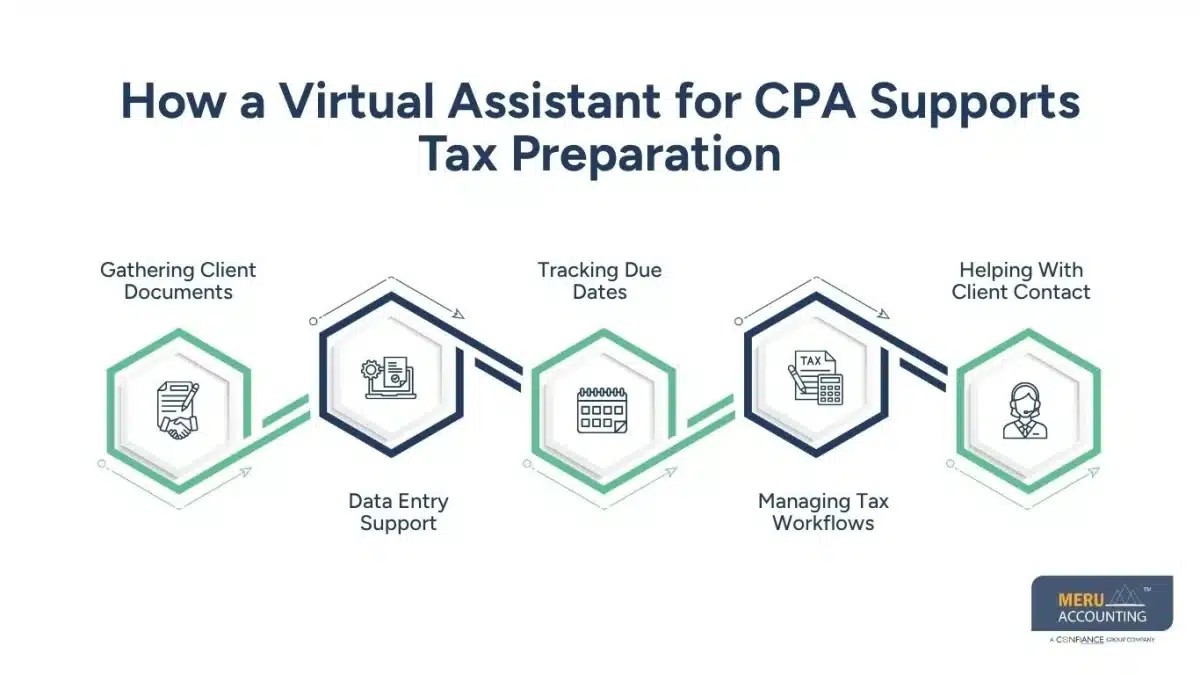
Managing Tax Workflows
A virtual assistant can help move tax returns through each step of the review process.
They can:
- Track return status
- Monitor task progress
- Follow up on open items
- Help teams stay on schedule
This often leads to faster turnaround times during peak tax periods.
Helping With Client Contact
Many client questions involve file requests, appointment times, and return status updates.
Virtual assistants can handle much of this contact, giving CPAs more time for tax review and planning work.
How Virtual Assistants Support Bookkeeping Functions
Bookkeeping is one of the most important parts of accounting. Clean books help create accurate reports and support better business decisions.
A virtual assistant for CPA firms can help with many bookkeeping tasks.
Recording Transactions
Virtual assistants can enter transactions into accounting systems by following firm guidelines.
This may include:
- Income entries
- Expense entries
- Vendor bills
- Customer payments
Timely entries help keep books current and accurate.
Bank Reconciliations
Bank reconciliations are a key part of bookkeeping.
Virtual assistants can:
- Match transactions
- Review account activity
- Find differences
- Prepare support reports
This helps improve the accuracy of financial records.
Accounts Payable Support
Vendor payment management requires strong recordkeeping.
Virtual assistants can assist with:
- Invoice tracking
- Payment scheduling
- Vendor follow-ups
- Record updates
These tasks help support smooth day-to-day operations.
Accounts Receivable Tracking
Strong cash flow depends on timely customer payments.
Virtual assistants can:
- Track unpaid invoices
- Send payment reminders
- Update customer records
- Monitor collection activity
This helps firms stay aware of outstanding balances.
Keeping Records Organized
Well-kept records help support reporting, audits, and tax work.
Virtual assistants help keep files organized and easy to access throughout the year.
Key Benefits of Hiring a Virtual Assistant for CPA Firms
Hiring a virtual assistant offers many benefits beyond simple task support.
Higher Output
When routine work is assigned to support staff, CPAs can spend more time on work that adds value. This helps improve overall firm output.
Better Client Experience
Fast replies and organized service help create a better client experience. Virtual assistants help make sure client requests are handled on time.
Lower Costs
Remote support often costs less than hiring additional in-house employees. Firms gain skilled help without many traditional staffing expenses.
Easy Growth
Workloads often change during the year. Virtual assistants give firms the flexibility to increase support during busy times and scale back when workloads decrease.
Less Office Work for CPAs
Many accounting professionals spend hours each week on office tasks. Delegating these duties creates more time for client work and firm growth.
Stronger Workflow Control
Virtual assistants help teams stay organized, track due dates, and keep work moving. This leads to smoother operations across the firm.
How to Outsource Accounting Tasks to Virtual Assistants Effectively
Learning how to outsource accounting tasks to virtual assistants is an important step for firms that want strong results.
A clear plan helps improve teamwork and long-term success.
Choose the Right Tasks
Start by finding tasks that take time but do not require direct CPA involvement.
Examples include:
- Data entry
- Bookkeeping support
- File management
- Appointment scheduling
- Client follow-ups
Build Clear Work Instructions
Written procedures help create consistency.
Instructions should explain:
- Task steps
- Quality standards
- Reporting needs
- Security rules
Clear guidance helps reduce mistakes.
Use Secure Systems
CPA firms manage sensitive client information.
Secure systems should include:
- Cloud accounting software
- Secure file-sharing tools
- Access controls
- Protected communication platforms
These measures help keep client data safe.
Set Communication Rules
Regular communication helps maintain accountability.
Firms should define:
- Response expectations
- Update schedules
- Meeting times
- Escalation procedures
Clear communication improves teamwork.
Track Results
Measure performance using clear goals.
Review:
- Accuracy levels
- Task completion rates
- Client feedback
- Workflow improvements
Regular reviews help maintain service quality.
Meru Accounting's Virtual Assistant Services for CPA Firms
At Meru Accounting, we know the challenges CPA firms face when managing growing workloads while maintaining high service standards.
Our virtual assistant services help firms handle tax prep support, bookkeeping work, and workflow management more efficiently.
Our team helps CPA firms with:
- Tax file organization
- Client communication support
- Bookkeeping assistance
- Bank reconciliation support
- Data entry services
- Workflow tracking
- Financial record management
- Office support functions
We use modern accounting tools and secure work processes to help firms improve accuracy and efficiency.
By working with Meru Accounting, CPA firms gain access to skilled support professionals who help reduce routine workloads and improve daily operations.
Our flexible service model allows firms to increase support during busy seasons and adjust resources as business needs change.
Key Takeaways
- A virtual assistant for CPA firms helps support tax prep, bookkeeping, and office operations.
- Virtual assistants help improve efficiency by taking care of routine tasks.
- Tax prep support includes file collection, due date tracking, workflow support, and client contact.
- Bookkeeping support includes transaction entry, reconciliations, accounts payable assistance, and record management.
- Understanding how to outsource accounting tasks to virtual assistants helps firms build a reliable support system.
- Virtual assistants help improve workflow efficiency, client service, and staff productivity.
FAQs
A virtual assistant for CPA firms helps with bookkeeping, tax prep support, client communication, file management, scheduling, and other routine tasks that improve firm efficiency.
Yes. Virtual assistants can help collect documents, track due dates, manage workflows, and support client communication during busy tax periods.
Yes. Firms can protect client information by using secure software, controlled access, encrypted file-sharing tools, and documented security practices.
Success starts with selecting the right tasks, creating clear procedures, using secure systems, maintaining communication, and reviewing performance regularly.
The main benefits include better productivity, lower costs, improved client service, stronger workflow management, and flexible support during busy seasons.