Affordable bookkeeping for small business gives owners a way to keep clean financial records without taking on a large accounting bill. Proper bookkeeping records sales, costs, bills, payments, and other key money data. The right service can also give owners clear reports for tax work and daily business decisions.
The price of bookkeeping can vary by the size of the business, number of transactions, number of accounts, and level of service. Some firms charge a set monthly fee, while others charge by the hour or by the work done.
The key is not to find the lowest price. The better goal is to find a service that gives the right work, clear records, fair terms, and useful reports at a cost the business can manage.
The IRS says businesses need records that clearly show income and expenses. Those records also need to support items reported on tax returns.
What You Will Learn From This Blog
- What affordable bookkeeping for small business means.
- How small business bookkeeping costs are set.
- Which factors can raise or lower bookkeeping fees.
- What a basic bookkeeping plan may include.
- Which bookkeeping option may fit your business.
- What to expect from a professional bookkeeping service.
- How Meru Accounting can manage routine bookkeeping work.
What Is Affordable Bookkeeping for Small Business?
Focus On Useful Records
Affordable bookkeeping for small business means getting the core record work done at a fair price. The goal is not to cut needed work just to lower the bill.
A good plan should keep income, costs, bills, payments, and bank data in order. The work should also match the size and needs of the firm.
Match Work To Business Size
A small firm with one bank account may need less work than a firm with many accounts, staff, loans, and sales channels. Paying for work that the firm does not need can raise the monthly bill.
A simple plan can work well for a low-volume firm. A larger plan may be right when sales and money activity grow.
Keep Records Clear
Clear records make it easier to see what the firm earned and spent. They also give tax staff useful data when tax forms need to be prepared.
The IRS notes that a record system should clearly show business income and expenses.
Build A Long-Term Fit
Affordable bookkeeping for small businesses should fit the firm’s current size while leaving room for change. A firm may start with basic monthly work and add more tasks later.
Such a plan can keep costs in line with actual needs. It also avoids paying for a large service package too early.
How Much Does Small Business Bookkeeping Cost?
Monthly Bookkeeping Fees
Small business bookkeeping costs can range from low monthly fees for simple work to much higher fees for firms with more accounts and more transactions. There is no single price that fits every business.
For example, a small firm with a few accounts may need only basic monthly work. A firm with payroll, inventory, loans, and many sales may need a larger plan.
Hourly Bookkeeping Rates
Some bookkeepers bill by the hour. This model can work well when the business needs limited work or short-term clean-up.
The final bill can change each month if the time needed changes. Owners should ask for an estimate of hours and the tasks covered.
Fixed Monthly Plans
Fixed plans are easier to budget because the business knows the regular fee before work starts. Such plans may cover a set number of accounts, transactions, reports, and review tasks.
Affordable bookkeeping for small businesses can be easier to plan when the fee matches a clear list of services. Always check if extra work has a separate charge.
One-Time Cleanup Costs
A new client may have old records that need repair before regular work begins. Bank accounts may not match, old entries may be missing, or transactions may sit in the wrong category.
Cleanup work often costs more than normal monthly work. Asking about this before signing a plan can prevent an unexpected bill.
Compare The Full Cost
Small business bookkeeping costs should be judged by the full service, not only the listed fee. A low base fee may become costly if reports, account checks, or cleanup are billed on top.
Ask for a clear list of included work. Compare that list with what the business actually needs each month.
What Affects Small Business Bookkeeping Costs?
Number Of Transactions
More sales, purchases, refunds, transfers, and payments create more records to review. A firm with 100 transactions may need much less work than one with 1,000.
Transaction volume is one of the main factors behind small business bookkeeping costs. A service quote should take expected volume into account.
Number Of Accounts
Bank accounts and credit cards add more records to review and match. Each account may need regular checks and bank reconciliation.
A firm with many accounts may need more bookkeeping time than a firm with one main business account. Keeping business and personal accounts apart can also make record work easier.
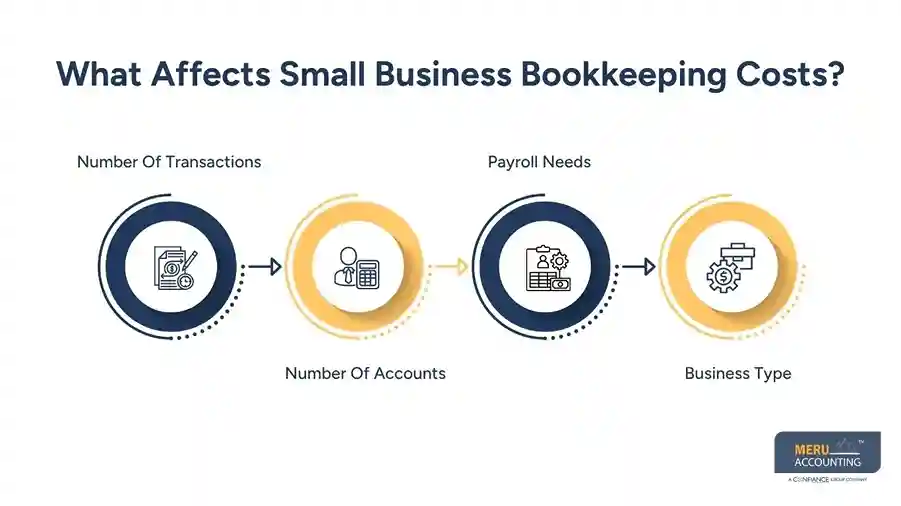
Payroll Needs
Payroll adds work beyond normal income and cost entries. Pay data, taxes, employee records, and payroll reports may need regular review.
Businesses looking for affordable bookkeeping for small businesses should ask whether payroll work is included or priced separately. Employment tax records also have specific retention rules.
Business Type
Retail firms, online sellers, contractors, service firms, and property firms can have different record needs. Inventory, sales tax, project costs, loans, or asset records may add work.
For that reason, small business bookkeeping costs can vary even when two firms have similar sales. The work needed matters as much as revenue.
optional anymore
on running the business
Affordable Bookkeeping for Small Business: What Should You Expect?
Clear Scope Of Work
A professional bookkeeping provider should explain what the monthly plan covers. The scope may list accounts, transaction limits, reports, reconciliation, and other tasks.
Clear terms make it easier to compare providers. They also reduce the risk of surprise charges later.
Regular Communication
Owners should know when books are ready and who to contact with questions. A simple monthly update can be enough for many small firms.
More complex firms may need calls or reviews each month. The right level depends on the business and its needs.
Accurate Monthly Records
Affordable bookkeeping for small businesses should still focus on accurate records. A low fee should not mean that key checks are left out.
Records should match available source data as closely as possible. Unclear items should be flagged rather than guessed.
Useful Financial Reports
Reports should give owners facts they can use. A profit and loss report can show income and costs, while a balance sheet can show assets, debts, and equity.
Reports are more useful when they are kept current. Old reports may not give a clear view of the firm’s present position.
Secure Record Handling
A professional bookkeeping provider should use secure access controls and safe methods for sharing financial files. Owners should ask how records are stored, who can access them, and how data is backed up.
What Is Included In Affordable Bookkeeping for Small Business?
Transaction Recording
Affordable bookkeeping for small business often starts with recording income and expenses. Transactions may come from bank feeds, statements, invoices, receipts, and other records.
The aim is to keep the books current and give the owner a useful view of money activity.
Bank Reconciliation
Bank reconciliation compares the records in the books with bank activity. Differences may come from bank fees, missing entries, timing gaps, or duplicate records.
Regular checks can find errors before they affect reports. The IRS also notes that businesses should reconcile their business checking records.
Expense Classification
Expenses need to be placed in suitable accounts. Rent, software, supplies, insurance, travel, and professional fees should not all sit in one general account.
Proper classification is also important in affordable bookkeeping for small businesses, as it gives owners better reports and tax staff cleaner source data.
Monthly Reports
Many bookkeeping plans include basic financial reports. Common reports include the profit and loss statement and balance sheet.
These reports show income, costs, assets, debts, and equity. The IRS notes that well-maintained records are needed to prepare accurate financial statements.
Records and Documents
A professional bookkeeping service should keep source data organized. Invoices, receipts, paid bills, bank records, and other documents may be needed to support financial entries.
The IRS says supporting documents are important because they support financial records and tax returns.
Affordable Bookkeeping Options For Small Businesses
Do It Yourself
Some owners manage their own books with accounting software. This can suit a firm with few transactions and simple needs.
The trade-off is time. Owners must still record data, check accounts, fix errors, and keep records ready for tax work.
Hire a Local Bookkeeper
A local bookkeeper may work on-site or remotely. This option can suit firms that want direct contact with one person.
The cost may vary based on hours, location, experience, and the amount of work needed. A written scope is useful before work begins.
Use a Remote Bookkeeper
Remote bookkeeping can give small firms access to bookkeeping staff without the cost of a full-time in-house role. Files and reports can be shared online.
Such a model can fit firms that do not need a bookkeeper on-site each day. Clear access rules and data checks should still be in place.
Use an Outsourced Firm
An outsourced accounting firm can handle regular bookkeeping under a set process. The firm may also offer reports, reconciliation, cleanup, and other accounting work.
Affordable bookkeeping for small businesses can be easier to manage when one provider handles a defined set of tasks. Owners should confirm who reviews the work and how questions are handled.
Mix Software and Expert Help
Software can record many routine transactions, while a bookkeeper reviews the data. This can reduce manual work while keeping human review in place.
The right mix depends on transaction volume, business type, and the owner’s comfort with accounting tasks.
How Meru Accounting Provides Affordable Bookkeeping for Small Business
Bookkeeping Plans Based On Need
Meru Accounting sets bookkeeping plans around each business’s actual needs and monthly records. A clear scope makes affordable bookkeeping for small businesses easier to plan and manage.
Accurate Transaction Recording
Our team records income, expenses, bills, payments, and other business transactions. Each entry is placed in the right account based on the records provided.
Regular Bank Reconciliation
Bank and credit card records are checked against the books for missing or unmatched entries. Fees, transfers, refunds, and other differences are reviewed during the process.
Clear Financial Reports
Meru Accounting prepares reports that show income, costs, assets, and liabilities. These reports give owners useful data for monthly review and tax work.
Flexible Outsourced Support
Small firms can get bookkeeping support without hiring a full-time in-house bookkeeper. Outsourced services can make affordable bookkeeping for small businesses more practical.
Support For Growing Firms
Bookkeeping needs can change as sales, staff, accounts, and transactions increase. Meru Accounting can adjust the service scope as the firm’s needs grow.
Our Expert Perspective
Bookkeeping should be chosen based on the work covered, not price alone.
Regular checks can find missing entries, duplicate records, and other errors early.
Simple monthly processes can keep records clear without adding extra work.
Small business bookkeeping costs may rise as accounts, staff, and transactions grow.
Monthly reports should give owners a clear view of income, costs, and cash flow.
Affordable bookkeeping for small business should offer clear work, fair pricing, and dependable records.
Key Takeaways
- Affordable bookkeeping for small business should match the firm’s real needs.
- Small business bookkeeping costs vary by transaction volume, accounts, payroll, and business type.
- Fixed monthly plans can make bookkeeping fees easier to budget.
- Cleanup work may cost more than normal monthly bookkeeping.
- Bank reconciliation is an important part of regular record review.
- Clear expense categories make reports easier to read.
- Financial reports can give owners a better view of income and costs.
- Business and personal expenses should be kept separate.
- The IRS says businesses must keep records that clearly show income and expenses.
FAQs
Affordable bookkeeping for small business means getting essential bookkeeping work at a fair price that fits your business needs and budget.
Small business bookkeeping costs vary based on transactions, accounts, payroll, business size, and the services you need.
Affordable bookkeeping for small businesses may include transaction entry, expense tracking, bank reconciliation, and monthly financial reports.
Small businesses can reduce bookkeeping costs by keeping records organized, separating accounts, and choosing services that match their actual needs.
Small business bookkeeping costs depend on transaction volume, number of accounts, payroll needs, business type, and required bookkeeping tasks.
optional anymore
on running the business