
Managing finance can be hard if the basics are not in place. One strong tool that helps in this is backline accounting. When paired with the right account reconciliation software, it can help you run your business better. This blog breaks down the key parts of accounting and how to make it easy. We will show you the tools, common issues, and how experts can help. It allows firms to maintain order and accuracy without any fuss. When done right, it helps avoid stress and makes audits easier. By using tools, even small teams can stay on track. This guide will walk you through simple steps to improve your financial processes.
What You Will Learn From This Blog
- Understand why account reconciliation is essential for growing businesses.
- Learn how outsourcing improves reconciliation accuracy.
- Discover the relationship between account reconciliation and back-office accounting.
- Explore the operational benefits of outsourcing reconciliation tasks.
- Understand how timely reconciliations improve financial reporting.
- Learn common reconciliation challenges businesses face.
- See how outsourced accounting teams support long-term business growth.
- Understand why professional reconciliation services improve financial confidence.
Why Account Reconciliation Matters for Growing Businesses
As businesses grow, financial transactions become more frequent and complex. Organizations manage customer payments, supplier invoices, payroll, taxes, and bank accounts. They also handle credit card transactions and loan repayments regularly. Without consistent account reconciliation, financial records may contain costly errors. These errors can affect reporting accuracy and important business decisions. Reliable reconciliation confirms records match supporting financial documents accurately. This process identifies missing transactions, duplicate entries, and posting errors. It also detects unauthorized payments and timing differences before escalation. Strong reconciliation practices support accurate reporting through dependable accounting.
What Is Backline Accounting?
Backline accounting includes essential financial tasks performed behind the scenes. These activities keep financial records accurate and reports well organized. They also help businesses track financial information with greater accuracy. Although not customer-facing, these tasks remain essential for business growth. Weak processes can lead to losses, tax issues, and reporting delays. Strong accounting improves financial control and supports better business decisions.
It also reduces operational stress across the finance function. Many businesses outsource these responsibilities to experienced accounting professionals. They also use modern software for greater accuracy. The software helps ensure financial records remain matched and updated. Strong accounting creates a stable financial foundation for business operations. This allows front-end teams to focus confidently on serving customers.
Key Components of Backline Accounting
- Bookkeeping: Bookkeeping tracks all money flow. Clean books help in audits and tax work. It builds trust and avoids fines.
- Payroll: It covers wages, taxes, and reports. Errors here can cost big money. Good payroll avoids staff issues.
- Budgeting: Helps set goals and control costs. Back-office work gives the right data. It keeps firms on the right path.
- It matches bank data with your books. Reconciliation software makes this quick. It avoids big money mistakes.
Benefits of Using Account Reconciliation Software for Smarter Finance
Saves Time
This tool speeds up work by auto-checking data. You spend less time on tasks and more on growth. It cuts manual steps and keeps you focused. Teams gain more hours for planning.
Fewer Mistakes
You see live updates of your books. Quick reports help you act fast and make smart moves. Spot issues early and fix them fast. This builds trust in your numbers.
Real-Time Reports
You get fast updates. That helps you act on time. Smart moves need fresh data. Reports show trends as they happen. This helps guide daily business steps.
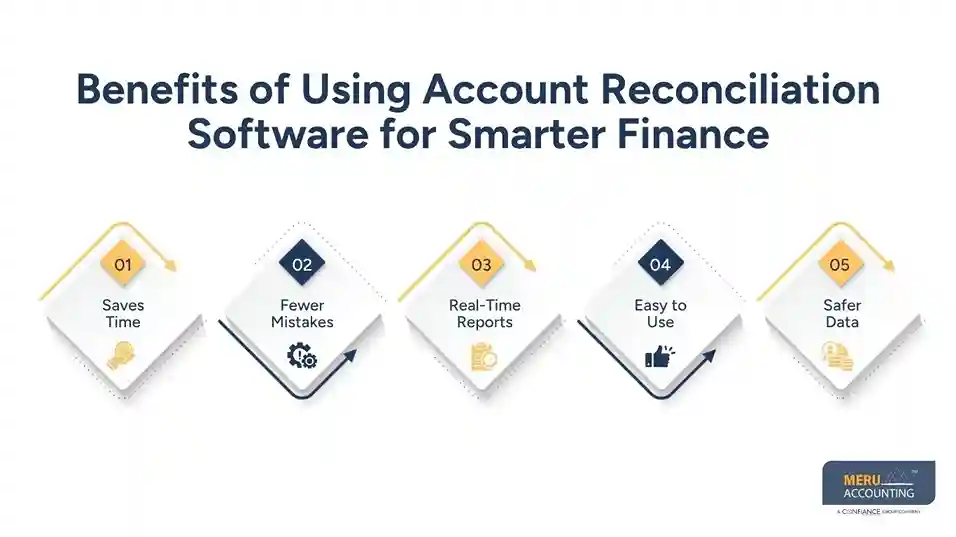
Easy to Use
Most tools are user-friendly. You do not need deep tech skills. Even small teams can use them. Set up is quick, and guides help you learn fast.
Safer Data
Top tools keep your info safe with strong security. Your data stays private and safe. Many tools offer two-step checks and data locks. This shields your firm from threats.
Common Backline Accounting Mistakes and How to Avoid Them
1. Missed Transactions
Not recording small payments can harm your totals. Use alerts and daily updates to catch these early. Even low-value entries matter. Track everything to keep reports clean.
2. Skipping Reconciliations
Skipping checks leads to errors. Use software each month to stay updated. Monthly reviews find gaps fast. This avoids mismatched numbers and late fixes.
3. Poor Backup
Without backup, data loss hits hard. Save your work in cloud storage to stay protected. Set auto-backups to run daily. This ensures quick recovery when issues strike.
4. Ignoring Small Errors
Minor issues grow over time. Fix them as they come to avoid big audit problems. A small slip today could cost more later. Spot and fix errors before they spread.
5. No Review Process
One review is not enough. Add second checks to catch what the first pass may miss. Build a review flow into your system. This builds trust in your final data.
6. Not Updating Software
Old tools miss new risks. Keep your reconciliation software current to stay safe. Updates fix bugs and add features. They also help your system meet new rules.
Choosing the Right Tools for Backline Accounting Success
1. Know Your Needs
- Pick software that fits your daily work. Each task should be easy and save your team time. Think about your workflows and pain points. The right tool must support both basic and complex jobs.
2. Check Features
- Look for tools with auto-match and reports. These features help lower errors and boost clarity. Good tools also provide real-time updates and alerts. This adds speed and accuracy to your work.
3. Test Before You Buy
- Try trial plans before buying. This helps you find what works best for your team or firm. A hands-on test shows if the tool is smooth and fast. It also shows if it fits your setup.
4. See If It Grows With You
- Your tool should work for small teams and scale up. Growth support is key to long-term use. Make sure it allows for new users, added tasks, and updates. This avoids future tool changes.
5. Read Reviews
- User feedback shows real issues and wins. Use this to avoid poor software choices from the start. Look for detailed reviews from firms like yours. Real stories help you make smart picks.
- Meru Accounting gives full support for your back-office accounting tasks. Our skilled team knows what works best for your firm. We guide setup, use smart reconciliation software, and keep your books in order. Whether you need help each day or once a month, we adjust to your needs. Our work is clear, quick, and reliable.
How Outsourced Account Reconciliation Strengthens Backline Accounting
Many organizations find reconciliation requires considerable time and accounting expertise. Internal teams often manage bookkeeping, payroll, reporting, compliance, and administrative tasks. Outsourcing reconciliation enables experienced professionals to complete reconciliations efficiently. This approach also improves overall back-office accounting operations across the business. Professional reconciliation providers follow standardized processes for consistent financial reviews. They use accounting technology and maintain detailed supporting documentation consistently. These practices improve financial accuracy and consistency throughout the organization.
Creates Consistent Accounting Processes
Consistency helps businesses maintain accurate and reliable financial records. Outsourced accounting professionals follow structured reconciliation procedures every reporting period. Every account receives the same careful review, regardless of transaction volume. Standardized reconciliation improves record accuracy across all financial activities. It also supports efficient accounting throughout the entire business.
Improves Month-End Closing
Delayed reconciliations often slow the month-end closing process. Finance teams spend extra time investigating discrepancies and correcting journal entries. They also validate account balances before completing financial statements. Timely reconciliation speeds up month-end closing and reporting activities. Financial records remain updated throughout each reporting period. Strong back-office accounting helps finance teams prepare management reports without delays.
.Reduces Manual Workloads
Manual reconciliation involves reviewing thousands of financial transactions every reporting period. Teams match supporting records, investigate differences, and prepare adjustment entries. These repetitive tasks consume valuable time and internal resources. Outsourcing reconciliation frees internal teams for higher-value financial responsibilities. They can focus on budgeting, forecasting, compliance reviews, and financial analysis. Experienced specialists maintain accurate back-office accounting through regular reconciliation reviews. They also follow documented procedures to ensure consistent financial accuracy.
Common Challenges Solved by Outsourced Reconciliation
As businesses grow, financial operations become more complex and demanding. Higher transaction volumes increase the workload for accounting teams daily. Multiple payment methods add further complexity to financial record management. Growing compliance requirements make maintaining accurate records more challenging. Outsourced reconciliation helps businesses overcome these operational challenges efficiently. It also supports dependable back-office accounting across the entire organization.
Manages High Transaction Volumes Efficiently
Growing companies process hundreds or thousands of financial transactions monthly. Reviewing every transaction internally can delay reporting and increase errors. Professional teams perform account reconciliation using structured and standardized workflows. They verify financial transactions quickly while maintaining excellent accuracy. This approach keeps financial records organized and easy to manage. It also strengthens back-office accounting and supports timely financial reporting.
Reduces Errors Caused by Limited Resources
Small accounting departments often manage several financial responsibilities simultaneously. These include bookkeeping, payroll, tax preparation, reporting, and daily transactions. Heavy workloads can lead to reconciliation delays and data entry errors. Outsourcing provides dedicated professionals with specialized expertise. They focus on verifying financial records with greater accuracy. Their experience helps identify discrepancies early and strengthen back-office accounting. This approach also improves the overall quality of financial data.
Improves Audit Readiness
Businesses should maintain organized financial records throughout the entire year. Preparing records only before audits often creates unnecessary challenges. Missing reconciliations and incomplete documents can delay the audit process. Regular account reconciliation keeps supporting records complete and easily accessible. Well-maintained documentation strengthens accounting with accurate financial records. Every balance remains supported by proper financial evidence. This makes internal and external audits more efficient.
How Technology Improves Account Reconciliation Accuracy
Modern accounting technology has improved financial record management for businesses. Outsourced accounting providers combine experienced professionals with advanced accounting technology. They use cloud-based software and automation tools for greater efficiency. This approach makes account reconciliation faster and more accurate. It also strengthens back-office accounting across daily financial operations.
Uses Cloud Accounting Platforms
Cloud accounting systems provide secure access to financial information from anywhere. Businesses and outsourced teams can review records from different locations. Transactions update faster, making account reconciliation simpler and more efficient. Faster updates also help reduce reporting delays across financial operations. Cloud platforms improve collaboration between business owners and finance teams. They also support consistent back-office accounting across multiple business departments.
Automates Routine Matching
Many accounting systems automatically match bank transactions with accounting records. Automation reduces repetitive manual work and improves overall processing efficiency. Accounting professionals can focus on unusual transactions and discrepancies instead. Technology makes account reconciliation faster and more efficient each reporting period. However, professional review remains essential for confirming financial accuracy. It also helps maintain reliable back-office accounting across the business.
Provides Better Financial Visibility
Business leaders need current financial information to make informed decisions. Regular account reconciliation ensures reports reflect actual account balances instead of outdated or incomplete information.
Reliable financial data improves budgeting, forecasting, cash flow planning, and operational decision-making. Strong backline accounting also provides management with greater confidence when evaluating business performance.
Why Growing Businesses Choose Meru Accounting
Growing businesses need accurate financial records for daily operations and expansion. Meru Accounting provides professional account reconciliation services for growing businesses. Our services help maintain organized financial records and improve accounting efficiency.
Experienced accounting professionals follow standardized reconciliation procedures every reporting period. They verify transactions, identify discrepancies, and maintain complete supporting documentation. We use leading cloud accounting platforms for accurate account reconciliation services. Our services align with your financial reporting schedule and business needs.
Meru Accounting strengthens back-office accounting through comprehensive financial support services. We assist with bookkeeping, reporting, payroll, accounts payable, and receivables. We also support efficient month-end closing and financial record management. Our scalable outsourcing solutions reduce internal administrative workloads significantly. Businesses receive accurate financial records without expanding internal accounting teams. Our reconciliation services improve reporting accuracy and strengthen internal financial controls. They also support confident business decisions during every stage of growth.
Our Expert Perspective
Accurate financial records form the foundation of effective business management. Delayed reconciliations often cause reporting errors and cash flow uncertainty. They also create additional work during the month-end closing process. Professional account reconciliation offers more than simple transaction matching services. It establishes disciplined financial processes that improve reporting accuracy consistently. Strong processes also strengthen internal controls and back-office accounting operations. Businesses gain access to experienced professionals and proven reconciliation workflows. Modern accounting technology further improves financial accuracy and operational efficiency. Internal teams can focus on strategic priorities instead of repetitive tasks. As businesses grow, outsourced reconciliation supports reliable financial operations effectively. It also promotes sustainable growth and long-term business success.
Key Takeaways
- Account reconciliation improves the accuracy of financial records.
- Regular account reconciliation helps detect accounting errors early.
- Outsourcing reduces manual workloads for internal finance teams.
- Strong backline accounting supports reliable financial reporting.
- Timely reconciliations improve month-end closing efficiency.
- Professional reconciliation strengthens internal financial controls.
- Cloud accounting technology improves reconciliation accuracy.
- Accurate financial information supports better business decisions.
FAQs
Account reconciliation is the process of comparing accounting records with bank statements or other financial documents to verify that all transactions are accurate, complete, and properly recorded.
Outsourced account reconciliation improves financial accuracy, reduces manual workloads, strengthens internal controls, supports faster month-end closing, and allows internal teams to focus on business growth.
Backline accounting supports essential financial operations such as bookkeeping, reconciliations, financial reporting, compliance, and record management. Strong backline accounting helps businesses maintain accurate financial information and make informed decisions.
Most businesses perform account reconciliation monthly. However, companies with higher transaction volumes may reconcile accounts weekly or even daily to maintain accurate financial records.
Yes. Regular account reconciliation verifies financial data before reports are prepared. Accurate reconciliations improve reporting quality, reduce errors, strengthen back-office accounting, and provide management with reliable financial information for decision-making.
optional anymore
on running the business