
A real estate audit is a structured review of financial records, property transactions, and compliance data that helps real estate firms identify errors, gaps, and financial risks early.
In many real estate firms, financial records are spread across multiple properties, vendors, and contracts. Small mistakes in rent tracking, vendor billing, or expense classification can turn into major financial issues if not addressed properly.
This is where structured audit practices, combined with support from a real estate outsourcing company, become important for maintaining financial clarity and reducing avoidable risks.
What You Will Learn From This Blog
- How financial risks appear in real estate operations
- Why a structured real estate audit is important for property firms
- Common errors found in property accounting and reporting
- How outsourcing support reduces financial gaps
- Role of a real estate outsourcing company in audit processes
- Practical ways to improve compliance and reporting accuracy
- Real examples of firms improving control through external support
Understanding the Importance of Financial Oversight In Real Estate
Property Level Financial Tracking
A real estate audit begins with tracking income and expenses at the property level. Many firms manage multiple units, and without clear records, cash flow errors can occur. Regular checks reduce misreporting and missing entries.
Revenue Recognition Accuracy
Rental income, lease income, and service charges must be recorded correctly. A structured financial review ensures that revenue is not delayed, duplicated, or incorrectly classified across accounting periods.
Expense Classification Control
Incorrect categorization of maintenance, repairs, and capital expenses often leads to reporting errors. A proper review process checks each transaction to ensure correct classification.
Compliance with Reporting Standards
Real estate firms must follow tax and financial reporting rules. A consistent financial review reduces the chance of penalties and reporting issues by ensuring documentation is complete.
Role of External Financial Review
A real estate outsourcing company can review financial data with an independent view. This reduces internal bias and improves accuracy in audit findings.
Common Financial Risks Faced By Real Estate Firms
Inaccurate Rent And Lease Tracking
Errors in rent collection records or lease terms can distort financial reports. Careful monitoring helps ensure all income is properly accounted for.
Vendor Payment Errors
Duplicate payments or incorrect invoices are common in property operations. A real estate audit reviews vendor records to detect such issues early.
Poor Cash Flow Visibility
Without proper systems, firms struggle to track inflows and outflows. Regular financial reviews bring clarity to cash movement across properties.
Mismanaged Maintenance Costs
Maintenance expenses can become unstructured if not monitored. Periodic reviews ensure costs are properly recorded and justified.
Compliance Gaps
Missing documents or delayed filings can create legal issues. A real estate outsourcing company often assists in reducing such compliance gaps through structured review systems.
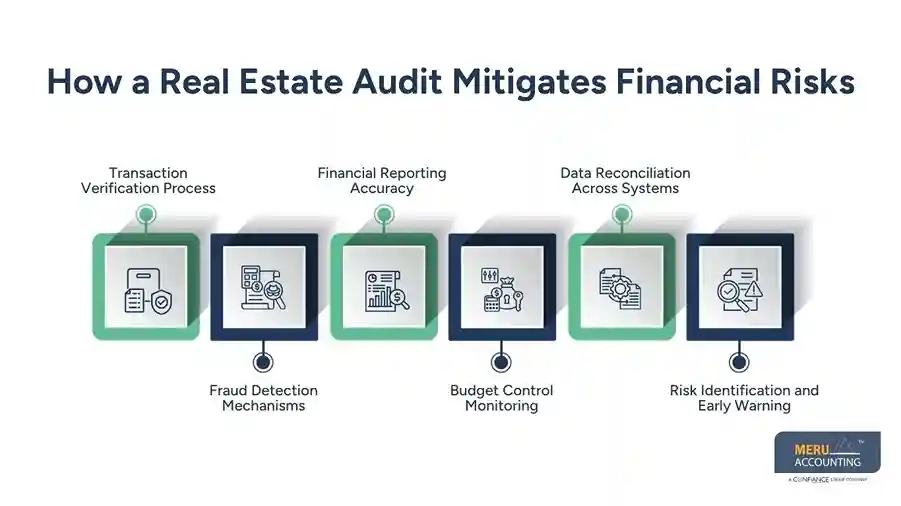
How a Real Estate Audit Mitigates Financial Risks
Transaction Verification Process
Every transaction is checked for accuracy. Entries are matched against invoices, contracts, and bank records to prevent errors. Careful review also ensures that no unauthorized or duplicate entries remain in the system.
Fraud Detection Mechanisms
Irregular payments and unusual entries can be identified through careful review, reducing the chances of internal fraud. A clear record trail makes suspicious activity easier to trace and investigate.
Financial Reporting Accuracy
Review processes ensure that financial statements reflect true performance and reduce the risk of misstatements. Accurate reporting builds confidence for management and stakeholders in decision-making.
Budget Control Monitoring
Planned budgets are compared with actual spending. A real estate audit highlights areas where costs exceed expectations and ensures better financial control.
Analysis of spending patterns helps identify departments or properties that need adjustment.
Data Reconciliation Across Systems
Property management systems and accounting software must align. Regular reconciliations ensure both systems reflect the same data accurately.
Discrepancies caused by manual updates or delayed entries are minimized through systematic review.
Risk Identification and Early Warning
Regular reviews allow firms to spot unusual patterns in spending, payments, or account activity.
Identifying these issues early helps management take corrective measures before they become bigger problems, improving overall financial control.
Role of a Real Estate Outsourcing Company in Audits
External Financial Review Support
Independent financial review services strengthen real estate audit quality and reduce internal errors across accounting records.
Unbiased evaluation of transactions also improves detection of inconsistencies in financial reporting.
Multi-Property Data Handling
A real estate outsourcing company organizes data across multiple properties to ensure a structured audit process. Centralized handling of records reduces duplication and improves accuracy in reporting.
Compliance Documentation Assistance
Proper documentation is essential for audits. Financial records are maintained in an organized format to ensure easy verification during reviews.
Strong documentation practices provided through outsourced audit support reduce delays during compliance checks and external assessments.
Technology-Driven Accounting Support
Modern tools are used for tracking and reconciliation. Software systems are integrated to improve accuracy in financial monitoring and reporting.
An external accounting firm can leverage automation tools to reduce manual errors and improve consistency across datasets.
Continuous Monitoring Services
Instead of yearly reviews, ongoing checks are provided to ensure continuous accuracy for real estate audits. Regular monitoring helps detect issues at an early stage and reduces financial risk exposure.
Frequent reviews also ensure smoother financial control across all operational areas.
Key Considerations When Choosing a Real Estate Outsourcing Company
Industry Experience In Real Estate
Firms should select providers with real estate knowledge. Experienced service providers understand property-level risks and financial challenges more clearly.
Strong industry exposure also helps in handling complex reporting structures across multiple assets.
Data Security And Confidentiality
Financial data must always remain protected through strong security measures. Strict practices and controlled access prevent unauthorized leaks or sensitive misuse.
Accuracy In Financial Reporting
Accuracy is critical during audits to ensure reliable financial statements. Consistent validation of all entries reduces risks of reporting errors during a real estate audit significantly.
Software And Tool Expertise
Modern accounting systems are required for efficiency. Skilled teams work with multiple platforms for better tracking and reconciliation. Proper use of tools improves speed and consistency in financial processes.
Scalability Of Services
As portfolios grow, services must scale. A flexible real estate outsourcing company adapts to changing business needs and expanding property portfolios.
Scalable support ensures smooth handling of increasing transaction volumes without loss of accuracy.
How Real Estate Firms Can Strengthen Compliance Through Outsourced Support
Structured Record Keeping
A structured documentation system makes financial tracking easier across properties. Organized records also reduce errors during verification and review processes.
Outsourced teams ensure all supporting documents remain updated and properly stored.
Timely Financial Reporting
Delays in reporting increase compliance risks across financial operations. Regular reporting schedules help maintain accuracy and transparency in records.
Consistent delivery of financial statements supports better decision-making for management.
Regulatory Alignment Checks
Financial rules vary by region and require careful monitoring for compliance. A real estate audit combined with outsourced support ensures alignment with regulations.
Periodic checks help identify gaps between internal records and regulatory requirements.
Audit Trail Maintenance
Every transaction must be traceable for accurate financial review and validation. A real estate outsourcing company maintains proper audit trails for review.
Clear transaction history supports accountability and simplifies external audit processes.
Risk Reduction Through Monitoring
Regular checks reduce exposure to financial issues across property operations. Continuous monitoring improves early detection of inconsistencies in records.
Outsourced support strengthens long-term financial stability through structured review practices.
Case Studies: Real Estate Firms Benefiting From Outsourced Audits
Multi-Property Portfolio Improvement
A firm managing 50 residential units faced frequent reporting mismatches. Partnering with an external accounting team streamlined record-keeping and reduced errors quickly. Standardized processes also helped the firm prepare reports faster for management reviews.
Commercial Rental Cash Flow Clarity
A commercial rental business experienced inconsistent cash flow tracking across locations. External audit support identified missing entries and improved financial reporting accuracy. Enhanced monitoring practices allowed the company to plan expenses and manage resources efficiently.
How Meru Accounting Supports Real Estate Audit Needs
Meru Accounting provides structured financial services designed for real estate firms managing complex portfolios. Our team of certified experts works on detailed real estate audit processes that focus on accuracy, compliance, and clear financial reporting.
Through dedicated support, Meru Accounting acts as a trusted real estate outsourcing company for firms that need consistent review of property-level accounts. The service model includes transaction checking, vendor reconciliation, and financial statement review.
By combining industry knowledge with accounting systems, Meru Accounting ensures that each real estate audit is aligned with regulatory needs and business goals. This reduces reporting errors and strengthens financial control for clients across multiple regions.
Our Author Perspective
Our experts believe that real estate firms achieve stronger financial stability when audits are combined with outsourced support. Regular review of property-level transactions, vendor payments, and compliance documentation helps prevent errors and improves reporting accuracy. From our experience, firms that adopt structured audits gain better control over cash flow, reduce risks, and make more informed investment and operational decisions.
Key Takeaways
- A real estate audit reduces financial errors and reporting gaps
- Property firms face risks in rent tracking, vendor payments, and compliance
- Outsourced support improves accuracy and financial control
- Regular audits help maintain stable cash flow and reporting clarity
- Strong documentation reduces compliance and legal risks
- External review adds an independent layer of financial safety
FAQs
A real estate audit is a detailed review of financial records in property businesses to ensure accuracy in income, expenses, and compliance.
Audits identify accounting errors, improve reporting quality, and reduce financial risks across multiple property operations.
A real estate outsourcing company manages accounting, reporting, and audit support tasks to maintain accurate financial records for property firms.
Audit frequency depends on portfolio size, with many firms choosing quarterly or annual reviews for consistent financial oversight.
Outsourced support adds an independent review layer that improves accuracy and minimizes financial reporting errors.