



Understanding the Federal Tax USA System
The Federal Tax USA system may seem hard at first, but knowing the basics can help people plan their money well. Individuals, families, and businesses may have questions about tax rules, due dates, and deductions. Even experts with valuable money knowledge can feel stressed.
Learning how the Federal Tax USA works can help you make smart choices and follow the law. This article looks at key parts of the US Federal Tax, shows its types, and gives tips for people and businesses across the country.
What is Federal Tax USA?
The Federal Tax USA is a system of taxes collected by the national government to pay for key services and programs. It may fund defense, roads, health care, and social support. Federal taxes may apply to wages, salaries, business profits, and other types of income. Certain deductions and credits under the US income tax system can cut the total tax you owe. For most people, knowing the Federal Tax USA rules can stop errors, avoid fines, and help with long-term money planning.
Some key aspects of the US Federal Tax include:
- Tax on individual income and business profits.
- Payroll taxes for Social Security and Medicare.
- Estate and gift taxes for transferring assets.
- Excise taxes on goods like alcohol, tobacco, and fuel.
While the US Federal Tax system may seem complicated, learning the rules may make financial management easier. Proper planning may reduce tax liabilities and improve savings.
Types of Federal Tax USA
The Federal Tax USA system may include various types of taxes that individuals and businesses encounter. Understanding each type may make compliance easier.
1. Income Tax
Income tax is a main part of the US income tax system. People pay tax on wages, salaries, tips, and other income. Businesses pay tax on profits made in the year.
The tax system is progressive. Higher income may face higher tax rates. All taxpayers must file a yearly return under the US federal income tax law to report income and deductions. Some expenses can be subtracted to lower taxable income. Income tax rules can change by law, so planning is needed.
2. Payroll Tax
Payroll tax, a part of the US income tax system, pays for Social Security and Medicare programs. Workers and bosses both must pay this tax each year. Taxes are taken out of each worker’s paycheck automatically.
Social Security gives money when workers retire or get sick. Medicare helps pay for health care for older adults. Bosses must file payroll taxes correctly and on time. Knowing payroll taxes helps workers plan savings and budgets.
3. Corporate Tax
Companies in the USA pay tax on profits each year under the US federal income tax law. Federal tax USA rules for firms differ from rules for individuals. Tax rates may change based on size, income, or type.
Companies can claim deductions for normal business costs paid. Tax is filed once a year using IRS forms only. Small firms may use pass-through structures to lower taxes. Good planning helps firms manage their tax load more wisely.
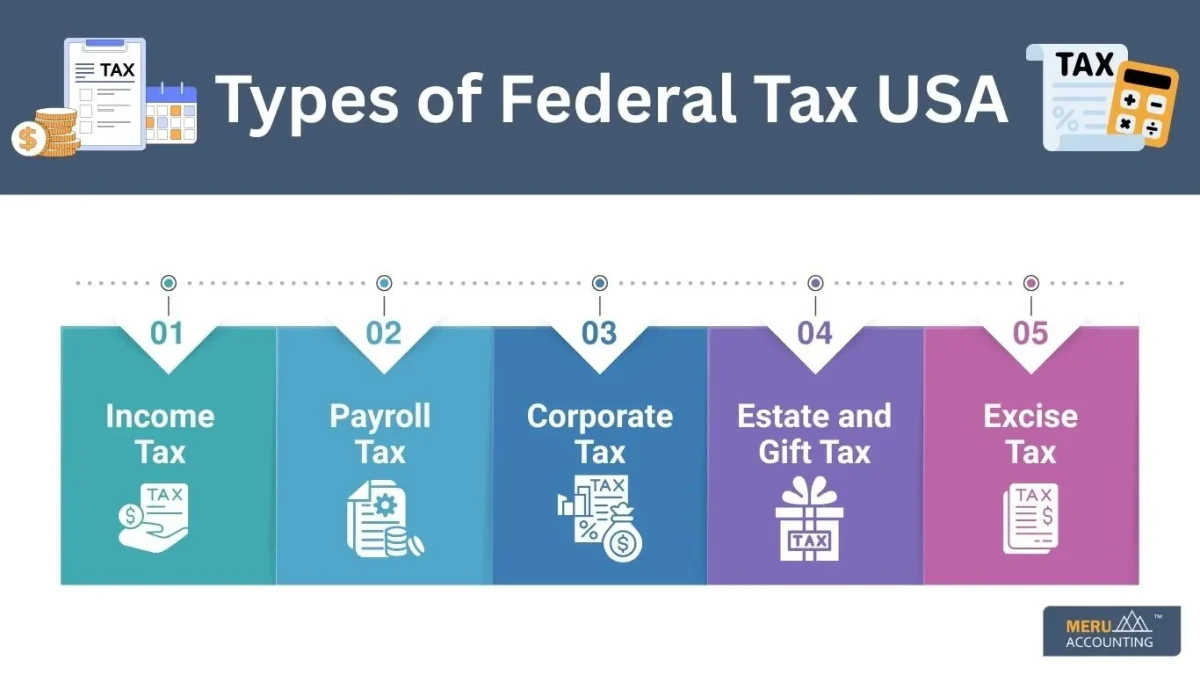
4. Estate and Gift Tax
Large estates and gifts may pay federal taxes each year, as outlined in the US federal income tax law. Federal Tax USA rules apply when assets are moved. Some rules can help cut the total tax owed.
Estate tax depends on the full value of assets. Certain gifts may not need taxes under the law. Careful plans can help cut the taxes you owe. Estate and gift taxes often need help from experts.
5. Excise Tax
Excise taxes may apply to products like fuel, alcohol, and tobacco. These taxes can be included in the price or added later. They often aim to reduce the use of harmful goods.
Producers pay taxes, but costs may reach the buyer. Funds may support federal programs or repair public roads. Excise taxes may be hidden, but they are key for Federal Tax USA.
How US Federal Tax Works for Individuals
Understanding Federal Tax USA may help individuals plan budgets, savings, and investments. Taxes may vary by income level, filing status, and eligible deductions.
Filing Status
Filing status may affect the tax calculation and available credits. Common statuses include:
- Single
- Married filing jointly
- Married filing separately
- Head of household
Choosing the correct status may reduce the tax owed.
Taxable Income
Taxable income may differ from gross income. Deductions, exemptions, and credits can lower the total. Common deductions include:
- Mortgage interest
- Charitable donations
- Medical expenses
Careful record-keeping may help maximize deductions.
Tax Credits
Credits may directly reduce the total tax owed. Some credits may be refundable, meaning taxpayers may receive money back even if taxes are low. Examples include:
- Child tax credit
- Education credits
- Earned income credit
Using credits wisely may result in substantial savings.
Key Tax Rules and Deductions for Businesses
Businesses have rules that differ from normal people. Tax rules can be hard because of forms and costs.
Business Income Tax
Firms report income to the state every year. Small firms may pay taxes through their owners. Good records help avoid fines and other tax problems.
Payroll Obligations
Bosses must take taxes from all workers each month. Errors in payroll can cause fines and extra costs.
Deductions for Businesses
Businesses may deduct expenses like:
- Rent and utilities
- Employee salaries
- Equipment purchases
- Travel expenses
Maximizing deductions may reduce taxable income significantly.
Filing and Payment Process for Federal Tax USA
Filing Federal Tax USA, as required by the US federal income tax law, can be done by mail. Businesses must pay tax each quarter on time. People usually file taxes once each year. Using IRS forms helps keep your filings correct.
Methods of Filing
Electronic Filing
- Cuts errors and speeds up tax work.
Mail Filing
- Paper forms take more time, but are okay.
Payment Schedule
Quarterly Payments for Businesses
- Avoid fines and track your cash.
Annual Filing for Individuals
- Filing once per year keeps you safe.
Filing Extensions
- You can ask for more time in special cases. Extra time stops late fines but not interest.
Common Mistakes to Avoid
Even skilled taxpayers sometimes make mistakes when following the US income tax system, which can raise taxes.
Missing Deadlines
- Filing late leads to fines or penalties.
- Track deadlines to avoid extra tax charges.
Incorrect Deductions and Credits
- Wrong deductions increase the total tax owed.
- Correct credits reduce taxes owed legally.
Underreporting Income
- Report all income to the IRS correctly.
- Mistakes can trigger audits or fines.
Ignoring Law Updates
- Tax rules change every year and need attention.
- Ignoring updates often leads to extra penalties.
How to Avoid Mistakes
- Review filings carefully before sending to IRS.
- Ask tax experts for complex cases.
Tips to Manage US Federal Tax
Knowing the US income tax system helps plan and control finances.
Record-Keeping
- Keep clear records of income and expenses.
- Organized records make audits easier and safer.
Consulting Tax Professionals
- Experts handle taxes accurately and quickly.
- They ensure all deductions and credits apply.
Tracking Law Updates
- Watch yearly changes in federal tax rules.
- Following updates lowers the risks of fines.
Planning Deductions and Credits
- Identify deductions before filing taxes each year.
- Plan spending to reduce total taxes owed.
Impact of Federal Tax USA on Investments
Types of income follow rules that change each year. Taxes under the US income tax system affect how much money you keep from your work.
Tax on Income
- Interest is fully taxed under U.S. law today.
- Dividends may have lower tax rates for some people.
- Capital gains apply when you sell stocks or property.
Planning Your Investments
Think about taxes before you buy or sell assets. Good plans can raise returns and cut money lost.
Benefits of Understanding Federal Tax USA
Know Your Tax Rules
Knowing tax rules gives clear gains for all people. It makes money planning simple and cuts worry over errors.
Predict Tax Payments
Tax knowledge helps plan payments and avoid high fines. Planning ahead cuts money, stress, and keeps your budget safe.
Plan for Retirement
Tax knowledge helps save for retirement in smart ways. It helps pick savings that lower taxes and grow funds.
Make Smart Business Choices
Knowing taxes guides good choices for all business owners. It helps track costs, risks, and profit each month.
Lower Risk of Mistakes
Knowing tax rules cuts errors when filing forms carefully. It keeps you in line with federal tax laws.
Overall Benefit
Knowing Federal Tax USA makes money stronger for people. It helps plan funds clearly for businesses and individuals.
The Federal Tax USA system may seem hard, but learning its basics can help people and businesses. Knowing the types of taxes, filing rules, and breaks may improve money planning. Effective knowledge of the US federal income tax law may cut taxes, prevent errors, and help long-term plans. Citizens and businesses may gain from keeping up with Federal Tax USA laws and using expert help when needed.
At Meru Accounting, we offer clear and reliable money and record services for both businesses and individuals. Our trained team can handle taxes, paychecks, and reports with care. We keep your records correct, up to date, and easy to read. By working with us, you can focus on growing your business while we manage the details of your money. We track income, costs, and other data so your business runs well. Trust Meru Accounting to keep your money and records neat, correct, and ready when you need them.
FAQs
- What is the US federal tax system and how does it work?
It is the national system for tax on pay, business gains, payroll, estates, and some goods. It funds roads, health care, and Social Security. - Why is understanding the Federal Tax USA important?
It helps avoid fines, plan taxes, and manage money. Knowing the rules keeps money safe and stress low. - Who is required to pay federal taxes in the United States?
People who earn pay and businesses that make gains must pay tax.
All must report income to the IRS each year. - How does the US federal income tax system calculate taxable income?
Taxable income is total pay minus deductions, exemptions, and adjustments. This shows how much tax a person or business owes under the US income tax system. - What are the current federal income tax rates for individuals?
Rates rise as income rises. High earners pay more. The IRS sets rates and brackets each year. - What counts as taxable income under US tax law?
Wages, salaries, tips, business gains, and dividends are taxed. Some small payments may not be taxed under US federal income tax law. - Are payroll taxes part of the US federal tax system?
Yes. Payroll taxes pay for Social Security and Medicare and are taken from pay. Both workers and bosses pay each period. - How can deductions reduce my federal tax liability?
Costs like mortgage interest, medical bills, and donations cut taxable income. Keep receipts to claim the maximum deduction. - What are refundable tax credits under US federal tax rules?
Credits like the Earned Income Tax Credit cut taxes owed and may give a refund. Some credits can raise the refund even if the tax is low. - How is corporate tax calculated under federal income tax law?
Firms pay tax on profit each year. They can subtract normal business costs. Effective records help ensure the right tax is paid. - Do small businesses have different tax rules under federal law?
Yes. Small firms may pass gains to the owner’s return for tax. This can cut the total tax rate for the owner. - What is the estate and gift tax in US tax law?
Large estates and some gifts may pay tax. Planning can lower it. Effective planning can cut taxes for heirs. - Are excise taxes included in the US federal tax system?
Yes. Goods like fuel, alcohol, and tobacco have an extra tax. The cost is often in the price. - How often must individuals file US federal tax returns?
Most file yearly. Some businesses file quarterly for pay and gains. Deadlines must be met to avoid fines. - Can missing federal tax deadlines cause penalties?
Yes. Late filing or payment leads to fines. Extensions help, but interest may still apply. - How do I choose the right filing status in the US tax system?
Statuses like single, married, joint, or head of household change tax and deductions. The right status can lower the tax owed. - Does federal income tax affect retirement income?
Yes. Pensions, 401(k) withdrawals, and savings may be taxed. Plan ahead to cut tax on retirement income. - Can a tax professional help with compliance under US tax law?
Yes. Experts file right, claim credits, and track law updates. They save time and avoid mistakes. - How can I plan investments to reduce federal tax liability?
Time asset sales and use tax-free accounts to pay less tax. Smart planning can raise returns. - What records should I keep for US federal tax filings?
Keep pay receipts, and proof of deductions for 3–7 years. Effective records make audits easy and safe.
